
In a competitive market, operational efficiency isn't just an advantage; it's essential for survival. Outdated workflows, repetitive manual tasks, and disorganized client onboarding create hidden costs that quietly drain your budget, frustrate your team, and damage customer relationships. Many small and medium-sized businesses accept these bottlenecks as a normal part of their operations, but they don’t have to be. What if you could systematically eliminate these inefficiencies?
This guide breaks down the top 10 business process improvement techniques that successful organizations use to transform how they work. We will move beyond theory and provide a practical roadmap to help you build more streamlined, automated, and effective workflows. You will learn actionable strategies to reduce waste, improve quality, and deliver a better client experience.
From Lean Management to Business Process Automation, each section offers clear explanations, implementation tips, and real-world examples. Whether you are a law firm managing client documents, a real estate agency processing applications, or an HR team onboarding new hires, you will find proven methods to optimize your core operations and drive meaningful growth.
1. Lean Process Management
Lean process management is a powerful business process improvement technique focused on one core idea: maximizing customer value while minimizing waste. Originating from the Toyota Production System, this methodology relentlessly identifies and eliminates any step in a process that doesn't add value from the customer's perspective. It’s about creating more with less by streamlining workflows, reducing errors, and accelerating delivery.
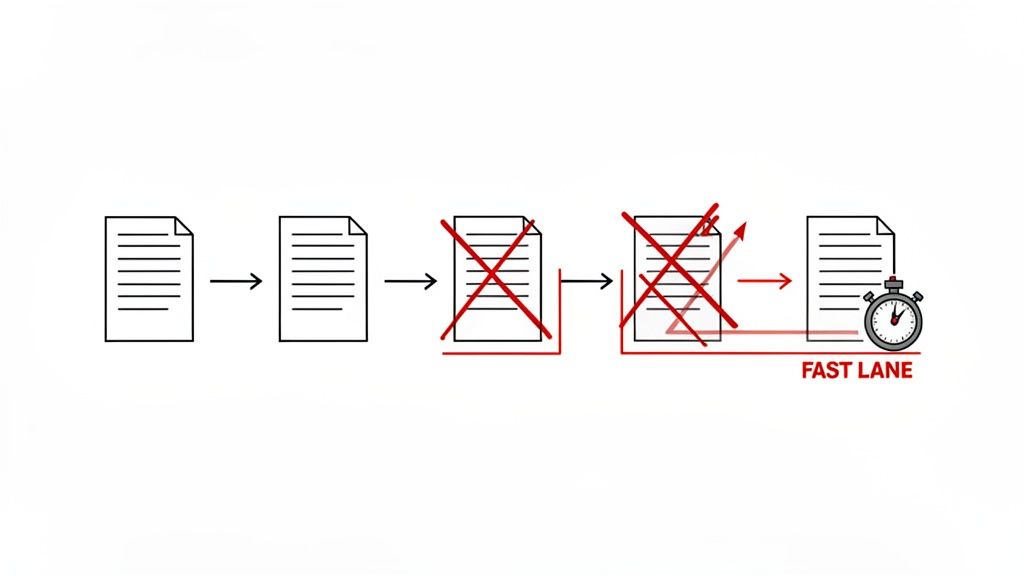
This approach is particularly effective for document-heavy processes. For example, a legal firm might use Lean to map its client onboarding process and discover redundant verification steps. By eliminating them, the firm could slash onboarding time from ten days to just three, significantly improving the client experience.
How to Implement Lean Process Management
Applying Lean principles starts with a clear understanding of your current state and a commitment to continuous improvement, or Kaizen.
- Map Your Workflow: Before making changes, visually map every step of your current process. This helps identify bottlenecks, delays, and non-value-added activities.
- Identify and Eliminate Waste: Look for the "eight wastes" of Lean, including defects (submission errors), waiting (delays in follow-up), and over-processing (unnecessary steps).
- Standardize Processes: Use tools like pre-built templates to ensure every request is consistent. For document collection, platforms like Superdocu can standardize requests and automate reminders, directly cutting out manual follow-up waste.
- Measure and Refine: Track key metrics such as document submission times and error rates. Use this data to measure the impact of your changes and identify new areas for improvement. Focus initial efforts on high-volume, high-impact document types to see the quickest results.
2. Six Sigma Methodology
Six Sigma is a disciplined, data-driven business process improvement technique aimed at eliminating defects and reducing process variation. Its ultimate goal is to achieve near-perfect quality, targeting just 3.4 defects per million opportunities. Popularized by Motorola and General Electric, this methodology uses a structured framework, most commonly DMAIC (Define, Measure, Analyze, Improve, Control), to solve problems systematically.
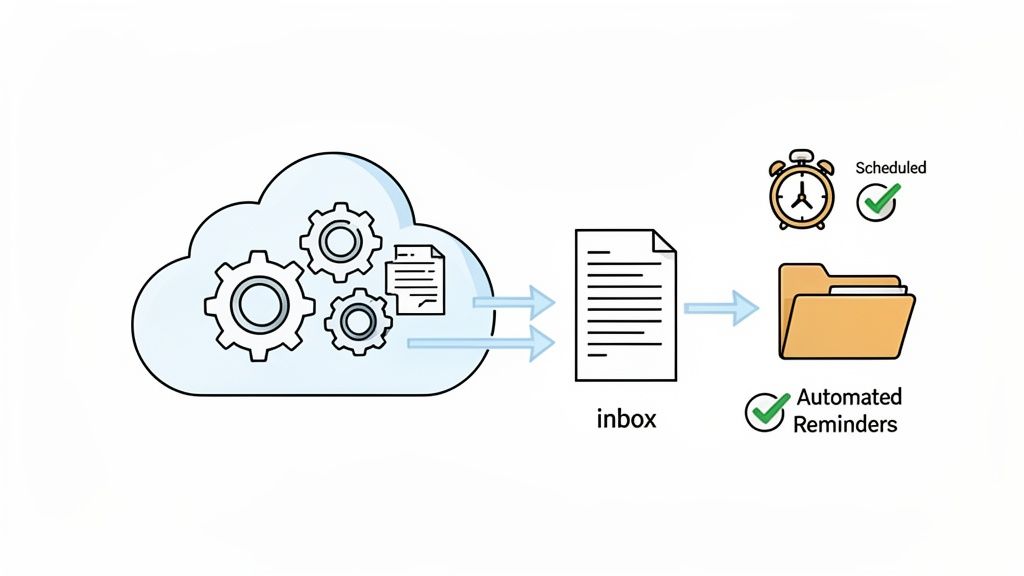
This approach is invaluable for document collection processes where accuracy is non-negotiable. For instance, a financial services firm could use Six Sigma to reduce loan application errors from 8% to under 0.5%, preventing costly delays. Similarly, an immigration law firm might use it to standardize visa application packages, dramatically improving first-time approval rates by ensuring perfect compliance.
How to Implement Six Sigma Methodology
Applying Six Sigma requires a focus on statistical analysis and a structured approach to problem-solving. It’s about making decisions based on data, not guesswork.
- Define and Measure: Clearly define the problem, such as "high error rates in client onboarding documents." Then, measure the current process performance to establish a baseline. What is the current defect rate?
- Analyze the Data: Use the data you've collected to identify the root causes of defects. Why are documents being submitted with missing information or incorrect formatting?
- Improve and Control: Implement solutions to address the root causes. For document management, you can define clear acceptance criteria and use a platform like Superdocu to enforce them with validation rules. Finally, establish controls to monitor the new process and ensure the improvements are sustained over time.
- Start Small: Begin with a high-impact document type where errors are most costly or frequent. Train team members on the basic DMAIC phases to build a culture of quality.
3. Business Process Automation (BPA)
Business Process Automation (BPA) is a powerful business process improvement technique that leverages technology to execute recurring tasks or processes automatically. Instead of relying on manual intervention, BPA uses software to manage repetitive, rule-based workflows, particularly in document collection. This approach dramatically reduces human error, accelerates processing times, and frees up valuable team members to focus on more strategic, high-value activities.
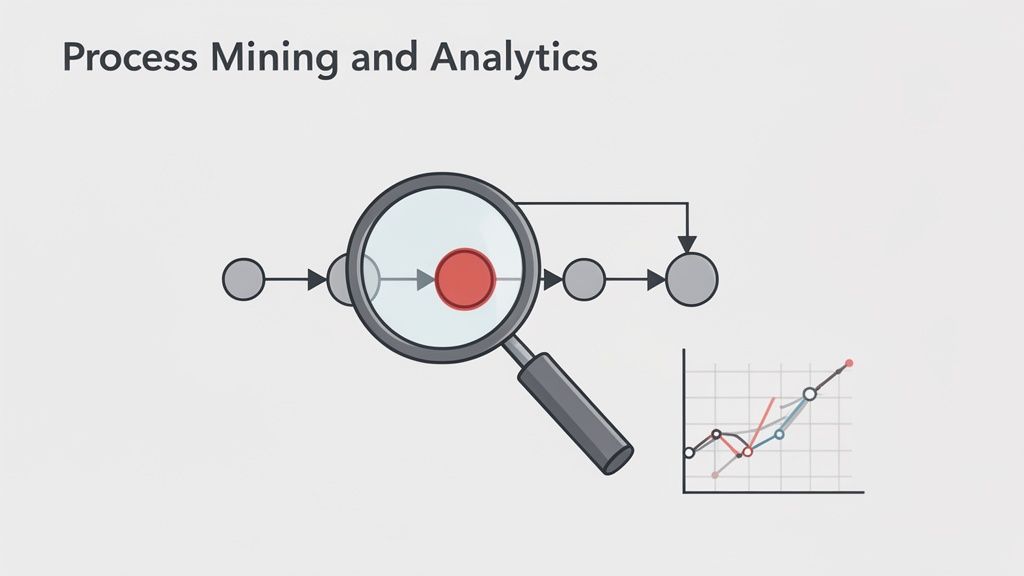
This method is highly effective for any business handling significant paperwork. For instance, a mortgage broker can automate the entire loan document collection process, cutting processing time from seven days down to just two. Similarly, an HR agency can automatically send onboarding document requests to new hires, improving completion rates from 60% to over 95% by eliminating manual follow-ups.
How to Implement Business Process Automation
Successfully applying BPA requires a strategic approach that starts with identifying the right processes for automation.
- Map Manual Touchpoints: Before automating, create a detailed map of your entire document collection workflow. Identify every manual step, from the initial request to the final verification, to pinpoint the best opportunities for automation.
- Use Pre-Built Templates: Accelerate your BPA deployment by using tools with pre-built templates. Platforms like Superdocu offer standardized request forms and workflows, ensuring consistency and saving significant setup time.
- Set Up Automated Reminders: Configure automated reminders at strategic intervals (e.g., 1, 3, and 7 days after the initial request). This simple step ensures timely submissions without any manual effort. For a deeper dive, you can explore our guide to document workflow automation.
- Monitor Performance: Regularly track key automation metrics, such as submission speed and error rates. Use this data weekly to identify bottlenecks and continuously refine your automated processes for maximum efficiency.
4. Total Quality Management (TQM)
Total Quality Management (TQM) is a comprehensive business process improvement technique centered on continuous improvement in all aspects of an organization to achieve customer satisfaction. It involves every employee, from top management to the frontline, in a collective effort to enhance processes, products, and services. The core idea is that quality is a shared responsibility aimed at achieving long-term success.
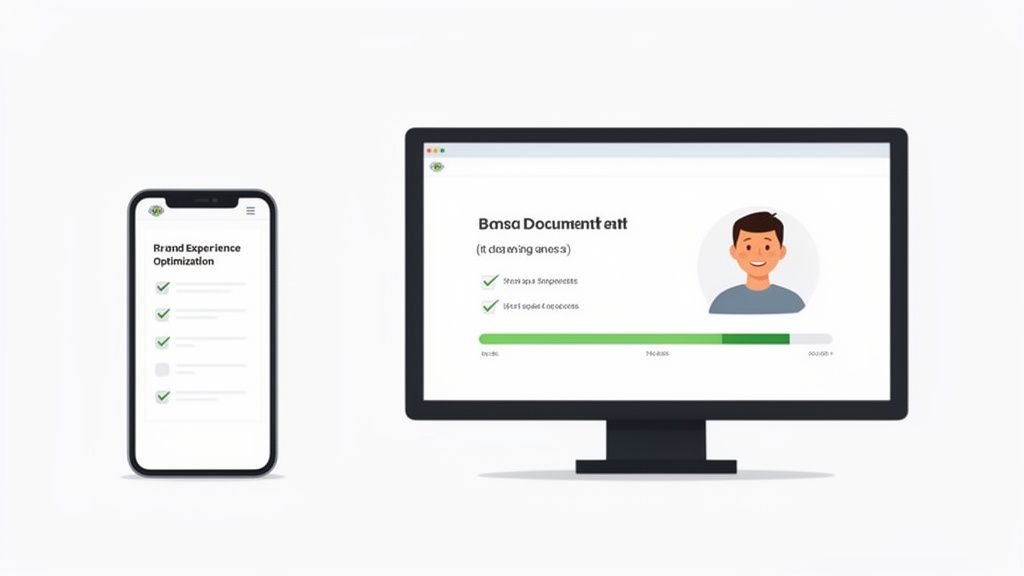
This method is highly effective for document-centric workflows where accuracy and completeness are critical. For instance, an immigration law firm might use TQM to ensure every visa application document meets strict regulatory requirements on the first submission, drastically reducing rejection rates. This focus on first-time quality significantly improves client outcomes and firm reputation.
How to Implement Total Quality Management
Applying TQM requires a cultural shift towards a quality-first mindset, supported by structured processes and tools.
- Establish Clear Quality Standards: Define what constitutes a "quality" document submission. This includes criteria for clarity, completeness, and accuracy. Use a platform like Superdocu to set up validation rules that automatically check documents against these standards.
- Empower Employees: Conduct regular training for all staff on quality expectations and their role in maintaining them. Form a quality committee to oversee document collection processes and champion continuous improvement initiatives.
- Focus on the Customer Experience: Use tools like branded client portals to create a consistent, professional, and seamless experience. A positive interaction is a key component of overall quality perception.
- Gather and Act on Feedback: Regularly collect feedback from clients and internal teams about the document collection process. Use these insights to identify recurring issues and refine your workflows for better performance and higher satisfaction.
5. Workflow Optimization
Workflow optimization is a business process improvement technique that involves redesigning a process to improve its efficiency, reduce bottlenecks, and enhance outcomes. The goal is to analyze the entire workflow from start to finish and restructure its steps for maximum speed and accuracy. It’s less about removing waste (like in Lean) and more about intelligent redesign for better flow.
This approach is highly effective for complex, multi-step processes. For instance, a staffing agency can optimize its candidate document collection by processing different documents in parallel rather than sequentially. This change alone could reduce the hiring cycle from 30 days to just 14, getting qualified candidates placed faster and improving client satisfaction.
How to Implement Workflow Optimization
Effective workflow optimization starts with understanding the current state and identifying opportunities for smarter routing and automation.
- Interview Stakeholders: Begin by talking to the people who actually use the process. They can provide invaluable insights into current pain points, delays, and frustrations that a high-level map might miss.
- Visually Map Your Workflow: Create a visual diagram of your existing process. This makes it easier to spot redundant steps, loops, and areas where tasks can be reordered or run in parallel.
- Prototype and Test Changes: Use flexible tools to model and test your proposed changes before a full-scale rollout. This allows you to validate improvements and gather feedback without disrupting operations. Platforms like Superdocu let you easily build and adjust document-based workflows.
- Monitor Key Metrics: Track metrics like submission time, completion rate, and error rate to measure the impact of your changes. For more details on structuring a better process, learn more about designing a document approval workflow.
6. Kaizen (Continuous Improvement)
Kaizen is a Japanese philosophy that champions small, ongoing improvements from everyone in an organization, from the C-suite to the front line. Instead of pursuing disruptive, large-scale changes, this business process improvement technique focuses on making incremental enhancements every single day. The core principle is that a multitude of small, consistent improvements will ultimately lead to significant, long-term transformation.
This approach is highly effective for refining recurring administrative tasks. For example, an HR team could use Kaizen to suggest weekly tweaks to its onboarding document templates. By continuously adjusting fields and instructions based on common applicant errors, they could incrementally reduce the document rejection rate by 30% over a year, saving countless hours of rework.
How to Implement Kaizen
Applying Kaizen requires fostering a culture where every employee feels empowered to identify and suggest improvements to their daily work. It’s about building a collective commitment to getting better together.
- Establish a Feedback System: Create a formal, easy-to-use system for employees to submit improvement ideas, no matter how small. This could be a shared document, a dedicated chat channel, or a simple suggestion box.
- Encourage Small, Daily Changes: Empower teams to make minor adjustments to their own processes. For instance, legal staff could refine reminder email language to improve document submission rates without waiting for a major project.
- Track and Share Success: Keep a visible change log to document all the small improvements made over time. Celebrate successes and share best practices across different departments to multiply their impact.
- Measure Incrementally: Use data to guide your efforts. Review analytics to identify subtle friction points, test changes with small document batches, and monitor the cumulative effect of your refinements.
7. Robotic Process Automation (RPA)
Robotic Process Automation (RPA) is a business process improvement technique that uses software "bots" to mimic human actions and automate repetitive, rule-based digital tasks. Unlike complex system integrations, these bots interact with applications through the user interface, just like a person would. RPA excels at connecting legacy systems, automating data entry, and processing transactions without changing the underlying IT infrastructure.
A mortgage firm, for example, could deploy RPA bots to automatically extract applicant data from submitted documents and populate their loan management system. This eliminates manual data entry, reduces the risk of human error, and dramatically speeds up the loan application review process, freeing up staff to focus on more complex, value-added activities.
How to Implement Robotic Process Automation (RPA)
Successful RPA implementation hinges on identifying the right processes to automate and preparing your organization for the change.
- Identify High-Impact Tasks: Start with high-volume, low-complexity, rule-based tasks. Good candidates include moving files between systems, extracting data from forms, or updating databases based on document submission status.
- Document Processes Meticulously: Before building a bot, map out every single step of the process in detail. The bot will only do what it's told, so clear documentation is crucial for accurate automation.
- Integrate with Your Core Systems: Use platforms like Superdocu as the primary document collection layer, then implement RPA for downstream processing. This ensures a clean, standardized starting point for your bots to work from.
- Plan for Change Management: Communicate clearly with employees whose roles will be affected. Frame RPA as a tool that assists them by handling tedious work, allowing them to focus on more strategic responsibilities.
8. Process Mining and Analytics
Process mining and analytics is a data-driven business process improvement technique that uses software to analyze event logs from your existing systems. It visualizes how your processes actually run in reality, not just how they were designed on paper. This approach uncovers the root causes of bottlenecks, deviations from standard procedures, and hidden inefficiencies that are otherwise invisible.
For document-heavy workflows, this technique is transformative. A mortgage brokerage could use process mining to analyze their loan application event logs. They might discover that applications with specific missing documents consistently stall for an average of six days at the underwriting stage. Armed with this data, they can redesign their initial document request templates to be clearer, preventing those specific errors and dramatically accelerating the entire loan approval timeline.
How to Implement Process Mining and Analytics
Getting started with process mining involves leveraging the data you already have to gain actionable insights. The goal is to turn raw event logs into a clear map for improvement.
- Extract and Analyze Data: Use your system's audit trails and logs as your data source. Platforms with robust reporting, like Superdocu, can provide detailed exportable data on submission times, validation results, and user interactions.
- Track Key Metrics: Focus on metrics that directly impact performance, such as cycle time (from request to approval), error rates for specific document types, and completion rates. This helps pinpoint the most critical areas for intervention.
- Visualize the Process: Use process mining tools to create visual maps of your workflows. These visualizations make it easy to show stakeholders exactly where delays and deviations occur, building a strong case for change.
- Combine with Qualitative Feedback: Enhance your data analysis by gathering feedback from the employees who execute the process daily. They can provide crucial context that numbers alone cannot explain.
- Iterate and Measure: After implementing changes based on your findings, re-run the analysis quarterly. This continuous loop ensures your improvements are effective and helps you identify new optimization opportunities as they arise.
9. Value Stream Mapping (VSM)
Value Stream Mapping (VSM) is a lean management technique used to analyze and design the flow of materials and information required to bring a product or service to a consumer. As a business process improvement technique, it provides a visual blueprint of your entire workflow, from start to finish, making it easier to spot inefficiencies. VSM distinguishes between value-adding activities and non-value-adding waste, offering a clear path to optimization.
This method is highly effective for visualizing complex document-centric workflows. For instance, an HR department could map its entire employee onboarding process. This map would reveal bottlenecks, such as delays waiting for signed contracts or redundant data entry, allowing the team to streamline steps, automate document collection, and significantly reduce the time-to-hire.
How to Implement Value Stream Mapping
Effective VSM requires a collaborative approach to chart the current process and design a leaner future state.
- Map the Current State: Begin by creating a detailed visual map of your existing process as it actually happens, not as it should happen. Involve frontline staff who execute the process daily to ensure accuracy.
- Identify Waste and Bottlenecks: Analyze each step in the map. Classify activities as value-add (what the customer cares about), non-value-add (waste), or necessary but non-value-add (e.g., compliance checks).
- Design the Future State: Create a new map that eliminates waste, streamlines steps, and improves flow. This is your ideal process. Focus improvements on the activities with the longest lead times and most waste.
- Create and Execute an Action Plan: Develop a step-by-step plan to transition from the current state to the future state. For document collection, this might involve using a platform like Superdocu to automate requests and visualize workflow progress, directly addressing identified bottlenecks.
10. Client Experience Optimization (CXO)
Client Experience Optimization (CXO) is a strategic business process improvement technique centered on enhancing every client interaction throughout a process. Instead of focusing solely on internal efficiency, CXO prioritizes making the client’s journey as simple, clear, and satisfying as possible. This involves improving communication, user interface design, and support responsiveness to create a frictionless experience.
This approach is highly effective for processes requiring client input, like document collection. A staffing agency, for example, could optimize its onboarding portal's user experience, leading to a jump in candidate satisfaction ratings from 6.5 to 9.2 out of 10. By making the process easy for the client, businesses see higher completion rates, fewer support tickets, and stronger relationships.
How to Implement Client Experience Optimization
Successful CXO requires a deep understanding of your client's perspective and a commitment to refining their journey. It's a key part of effective client onboarding automation.
- Gather Client Feedback: Regularly ask clients about their experience using surveys or brief interviews. Use their direct feedback to identify pain points and areas for improvement in your document submission process.
- Test Usability: Before a full rollout, have actual clients test your portals or communication templates. This helps catch confusing instructions or technical glitches that internal teams might miss.
- Prioritize Mobile-First Design: Ensure your client portals and document submission tools are fully functional and easy to navigate on a smartphone, as many clients will use mobile devices.
- Personalize and Brand Communications: Use branded invitation emails and clear, personalized reminder messages. This reinforces professionalism and provides a cohesive experience that builds trust and encourages prompt action.
Top 10 Business Process Improvement Techniques — Comparison
| Approach | Implementation complexity 🔄 | Resource requirements ⚡ | Expected outcomes 📊⭐ | Ideal use cases 💡 | Key advantages ⭐ |
|---|---|---|---|---|---|
| Lean Process Management | Medium — needs process mapping & change planning | Low–Medium — time for mapping/training | Faster turnaround; fewer redundant steps; ⭐⭐⭐⭐ | High-volume document flows needing speed | Eliminates waste; scalable across document types |
| Six Sigma Methodology | High — DMAIC and statistical analysis required | High — training, analytics tools, project management | Very low error rates; measurable quality gains; ⭐⭐⭐⭐⭐ | Regulated environments where accuracy is critical | Quantifiable defect reduction; strong compliance control |
| Business Process Automation (BPA) | Medium — system setup and configuration | Medium — automation tools, integrations, maintenance | Faster processing; higher completion rates; ⭐⭐⭐⭐ | Repetitive tasks and 24/7 submission needs | Reduces manual work; consistent communications & integrations |
| Total Quality Management (TQM) | High — organization-wide cultural change | High — long-term training and governance | Consistent quality and higher client satisfaction; ⭐⭐⭐⭐ | Organizations seeking holistic, long-term quality improvements | Builds client trust; reduces rework; improves employee engagement |
| Workflow Optimization | Medium — requires analysis and redesign | Medium — design tools and stakeholder time | Reduced cycle time; better resource use; ⭐⭐⭐⭐ | Processes with bottlenecks or complex routing needs | Customizable workflows; enables parallel processing |
| Kaizen (Continuous Improvement) | Low — incremental, employee-driven changes | Low — minimal cost, continuous small efforts | Gradual, cumulative improvements; ⭐⭐⭐ | Teams focused on steady improvement and engagement | Low upfront cost; increases ownership and continuous gains |
| Robotic Process Automation (RPA) | High — bot development and maintenance | High — RPA tools, licenses, detailed process docs | Rapid task completion; strong consistency; ⭐⭐⭐⭐ | Multi-application/manual transfer tasks and legacy systems | Automates complex multi-step tasks without deep integration |
| Process Mining & Analytics | High — data extraction, tooling & analysis | High — analytics tools, clean event logs, expertise | Data-driven insights; identify hidden bottlenecks; ⭐⭐⭐⭐ | Diagnosing process gaps and prioritizing fixes | Objective visualization of real process performance |
| Value Stream Mapping (VSM) | Medium — time-intensive mapping workshops | Medium — facilitator time and cross-functional input | Clear waste identification and future-state design; ⭐⭐⭐⭐ | End-to-end process redesign and alignment projects | Comprehensive view of value vs non-value activities |
| Client Experience Optimization (CXO) | Medium — UX design, testing, and iteration | Medium–High — design resources, testing, possible dev work | Higher submission completion and satisfaction; ⭐⭐⭐⭐ | Customer-facing document journeys where UX matters | Improves completion rates, reduces support requests |
Putting Improvement into Practice: Your Next Steps
You've explored a powerful arsenal of business process improvement techniques, from the waste-elimination focus of Lean and the defect-reduction power of Six Sigma to the continuous, incremental gains offered by Kaizen. We've seen how modern approaches like Business Process Automation (BPA), Robotic Process Automation (RPA), and Process Mining can supercharge these traditional methodologies, providing the data and tools needed to drive significant change. The common thread connecting all these strategies is a commitment to seeing your operations not as static, but as dynamic systems ripe for enhancement.
The key takeaway is that you don’t need to implement all ten methods at once. The most successful improvements often start with a single, well-defined problem. Is your client onboarding process slow and prone to errors? Value Stream Mapping could be your starting point. Are repetitive data entry tasks consuming your team's valuable time? RPA might offer the most immediate return on investment. The goal is to choose the right tool for the job at hand.
From Theory to Tangible Results
The true value of mastering these business process improvement techniques lies in their cumulative impact. A small tweak to a single workflow might save ten minutes a day. But when that mindset is applied across departments, the compounded effect is transformative. It leads to reduced operational costs, faster service delivery, and a notable increase in both employee morale and client satisfaction.
Remember, the journey begins with three core actions:
- Identify: Pinpoint a specific process that is causing friction, delays, or unnecessary costs. Start with something that has a clear impact on your clients or team.
- Analyze: Use a framework like VSM or Process Mining to understand the current state. Where are the bottlenecks? What steps add no value?
- Implement: Select a technique that directly addresses the root cause of the problem. Start small, measure the results, and gather feedback before scaling the solution.
This cycle of identifying, analyzing, and implementing is the engine of continuous improvement.
Building a Culture of Efficiency
Ultimately, adopting these methodologies is about more than just optimizing a workflow; it's about building a culture. When your entire team is empowered to look for and suggest improvements, you create a resilient, adaptable organization. The principles of Total Quality Management (TQM) and Client Experience Optimization (CXO) remind us that quality and client-centricity should be woven into the fabric of your company, not treated as a one-off project.
Don't let the scope of these techniques intimidate you. The most powerful changes begin with a single step. Choose one process this month, apply one of the methods we've discussed, and commit to seeing it through. By consistently applying these principles, you will not only solve immediate problems but also build a formidable competitive advantage that is difficult for others to replicate.
Ready to jumpstart your process improvement journey? Many of the techniques discussed, especially BPA and Workflow Optimization, begin with streamlining how you collect information. See how Superdocu can automate your document and data collection, eliminating manual follow-ups and creating a seamless experience for your clients from day one. Start your free trial of Superdocu today and take the first step toward a more efficient business.