
So, what exactly is client onboarding? Think of it as the welcome mat for your business. It's the entire process you use to bring a new client into the fold, guiding them from the moment they sign on the dotted line to the point where they're a happy, successful partner.
This is about so much more than just sending a welcome email and collecting paperwork. It's your first real chance to set clear expectations, gather the information you need to do a great job, and prove they made the right choice in hiring you.
Your First Impression Is Everything

Imagine buying a new house. The realtor wouldn't just toss you the keys and wish you luck. They'd walk you through, show you how the thermostat works, point out the circuit breaker, and make sure you feel comfortable before they leave.
That's what great client onboarding does. It builds confidence and makes your clients feel secure. A smooth, organized process immediately shows them you're competent and sets a foundation of trust that will last for the entire relationship.
The Real Goals Of A Great Onboarding Process
A thoughtful onboarding experience isn't just a nice-to-have; it's a strategic system with clear goals that directly benefit your business.
At its core, onboarding aims to:
- Set Crystal-Clear Expectations: Get everyone on the same page about project scope, timelines, how you'll communicate, and what the final deliverables will be. This one step prevents countless future headaches.
- Gather All The Necessary Information: Efficiently collect every document, piece of data, or access credential you need. This lets your team get started right away without frustrating delays.
- Deliver A Quick Win: Show your client some immediate value. It could be a small but helpful resource or a quick resolution to a minor problem. This simple action confirms they invested wisely.
- Build A Real Relationship: Introduce the client to the key people on your team. Putting faces to names creates a personal connection that makes the work feel less like a transaction.
A great first impression is directly tied to client loyalty and business growth. When clients feel supported and informed from day one, they are far more likely to remain engaged and advocate for your brand.
How Onboarding Directly Affects Your Bottom Line
Getting this wrong can cost you—literally. Research shows that a staggering 86% of customers stick with companies that invest in a solid onboarding experience. It makes sense, right? No one likes feeling confused or ignored after making a big purchase.
Even more, a Gartner study points out that 20% of your current clients could be responsible for 80% of your future revenue. That makes nailing the initial experience absolutely critical for long-term growth.
This is especially true for small and mid-sized businesses where every single client relationship is vital. A structured onboarding system isn't just about being organized; it's about preventing churn, reducing friction, and setting the stage for a profitable, long-lasting partnership. For a deeper dive, check out our guide on customer onboarding.
The True Cost Of A Poor Onboarding Process
Think about the excitement you feel right after closing a new deal. Now, imagine your new client’s excitement vanishing into thin air, replaced by a storm of confusing emails, endless requests for the same documents, and a total lack of direction. That's the sound of a bad onboarding process killing your momentum.
This initial friction does more than just slow things down. It chips away at the trust you just spent weeks or months building. Projects stall, deadlines get pushed back, and your brand's reputation takes a hit. What should be a moment of "Yes, I made the right choice!" for your client becomes a period of "What have I gotten myself into?"

The Ripple Effect Of A Bad Start
A single poor onboarding experience doesn't just affect one client; it sends ripples across your entire business. The fallout impacts everything from your team's sanity to your bank account.
A terrible first impression almost always leads to:
- Higher Client Churn: Clients who struggle right out of the gate are much more likely to bail. They haven't seen your value yet, so cutting their losses feels easy.
- Wasted Team Resources: Your team gets stuck chasing down missing files, fixing data entry mistakes, and hand-holding confused clients. They're doing busy work instead of the high-impact work you hired them for.
- A Damaged Reputation: Unhappy clients don't stay quiet. They leave bad reviews and tell their friends, making it that much harder to attract new business.
- Lost Revenue Opportunities: A client who feels neglected from day one will never trust you enough to buy more services or upgrade their plan. You’ve just capped their lifetime value.
The Financial Impact Is Real
This isn't just about hurt feelings; it's about real money. Inefficient onboarding is a massive drain on revenue. In fact, 70% of financial firms admit to losing clients because their processes are too slow.
These delays lead to an average client abandonment rate of 10%. In some industries, getting a new corporate client fully set up can take more than six weeks. It’s no wonder that over 90% of clients believe companies could do a much better job with their onboarding. You can learn more about how slow onboarding impacts financial firms.
The initial onboarding experience is the make-or-break moment. It sets the tone for the entire relationship and can be the single deciding factor between creating a lifelong brand advocate or an early critic.
At the end of the day, ignoring your onboarding process is like building a house on a shaky foundation. It doesn't matter how great your product or service is—the relationship is set up for failure. A smooth, professional, and clear onboarding workflow isn't just a nice-to-have; it's a direct investment in keeping clients happy, making your team efficient, and growing your business for the long haul.
Building Your Winning Onboarding Workflow
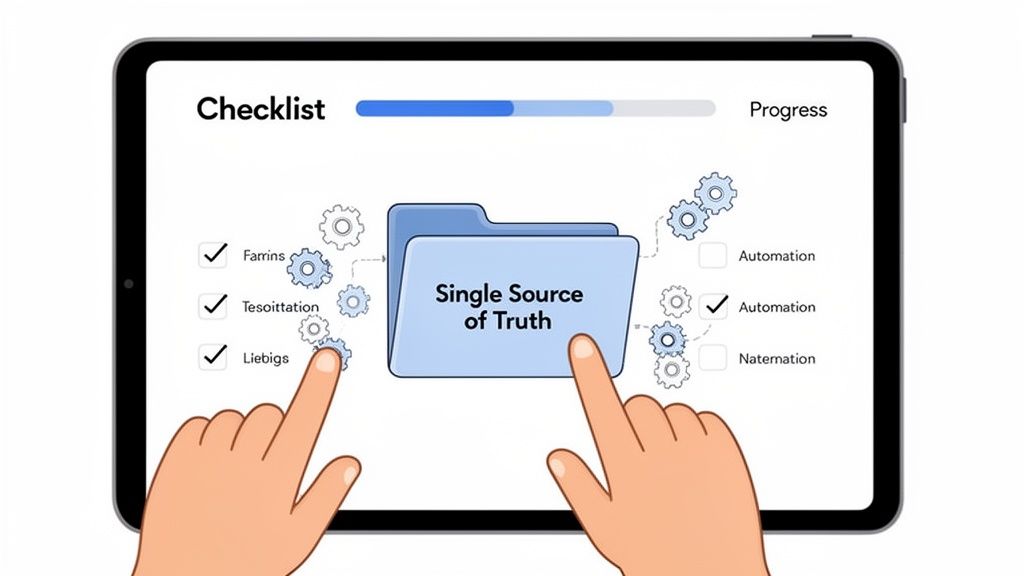
It’s one thing to know the risks of a bad start, but it's another thing entirely to build a system that prevents them. A winning onboarding workflow isn’t about flashy gestures. It’s about creating a clear, repeatable process that feels completely seamless for both your client and your team. This is how you transform that initial excitement into real, tangible progress.
The first step is to ditch the scattered email chains and disjointed spreadsheets. What you really need is a single source of truth—a central hub where everyone involved can see the project status, track submitted documents, and know exactly what comes next. It’s the ultimate solution to the dreaded "Did you get my email?" dance.
This centralized system instantly makes your process feel predictable and professional, reassuring clients from day one that they’re in good hands.
Crafting Your Step-by-Step Framework
A great workflow is simply a series of well-defined steps that guide your client smoothly from one milestone to the next. While the details will definitely change depending on your industry, every solid onboarding framework needs a few core components. Think of it as your blueprint for a successful partnership.
The foundation of this blueprint is a clear checklist. It breaks down the entire process into small, manageable tasks, giving both you and your client a clear path forward. For a deep dive into what to include, check out our comprehensive client onboarding checklist.
Here are the essential building blocks for your workflow:
- A Personalized Welcome: Ditch the generic template. A welcome kit—whether digital or physical—that introduces key team members, outlines what’s next, and reinforces why they chose you goes a long, long way.
- Smart Information Gathering: Use smart forms or a secure client portal to collect all the necessary documents and data right at the start. This stops that slow drip of information that grinds projects to a halt.
- The Kickoff Meeting: Get a formal kickoff call on the calendar. This is your chance to align on goals, set communication expectations, and answer any early questions. It's absolutely crucial for building rapport and getting everyone on the same page.
- Automated Communication: Set up automated reminders for pending documents and regular progress updates. This keeps the momentum going without your team having to chase people down manually.
A repeatable process is the key to scalability. By standardizing your workflow, you ensure every client receives the same high-quality experience, reduce the chance of human error, and free up your team to focus on high-value work.
Measuring What Matters Most
So, how do you know if your workflow is actually working? You have to track the right things. Just getting through the onboarding process isn’t the goal. The real goal is to do it efficiently and effectively, delivering value to your client as quickly as possible.
Focus on these key performance indicators (KPIs) to measure your success:
- Time to Value (TTV): If you only track one thing, make it this. TTV measures how long it takes for a new client to get their first meaningful result from your service. A shorter TTV is the clearest sign of an efficient process.
- Onboarding Completion Rate: Keep an eye on how many clients actually complete every step. A low completion rate is a huge red flag, signaling that there are friction points or confusing parts of your workflow that need fixing.
- Client Satisfaction (CSAT/NPS): As soon as onboarding is complete, send a short survey. This gets you direct feedback on their experience while it’s still fresh in their mind.
Client Onboarding In Action Across Industries
The basic idea of client onboarding—setting expectations, getting the right info, and building a solid relationship—is the same everywhere. But how that looks in practice can be wildly different depending on the industry. A creative process for a marketing agency just won't cut it for a law firm handling sensitive case files.
Seeing how different professions tailor their onboarding is where the concept really clicks. It shows that a great process isn't a one-size-fits-all template. It’s a flexible system designed to handle specific challenges, compliance hurdles, and what a client truly needs.
Legal and Financial Services
When you're dealing with law or finance, the stakes are sky-high. Onboarding is more than just a welcome handshake; it’s a critical step for meeting strict regulations and protecting highly confidential information. One slip-up can lead to a compliance nightmare or shatter a client's trust before you've even started.
For a law firm bringing on a new litigation client, the process is meticulous. It has to be.
- Secure Document Collection: They can’t just use email. A branded, encrypted portal is essential for collecting evidence, signed retainer agreements, and personal IDs securely.
- Conflict Checks: Before any real work begins, they must run exhaustive checks against their records to make absolutely sure there are no conflicts of interest.
- Clear Fee Structures: Detailed engagement letters are non-negotiable. They lay out billing rates, payment schedules, and the entire fee structure to prevent any misunderstandings down the road.
It's a similar story for a financial advisor setting up a retirement plan. They have to navigate a complex web of Know Your Customer (KYC) and Anti-Money Laundering (AML) rules. This means collecting bank statements, proof of income, and identity verification. Making this intense data-gathering feel smooth and professional is where a well-oiled digital process makes all the difference.
Real Estate and Mortgage Brokering
The real estate market moves incredibly fast. Delays don't just cause frustration; they can kill deals. For real estate agents and mortgage brokers, onboarding is all about speed, accuracy, and keeping everyone in the loop.
In real estate, a slow or confusing onboarding process can be the difference between a client closing on their dream home and losing it to another buyer. Efficiency here isn't a luxury; it's a competitive edge.
Think about a mortgage broker. They need to collect a mountain of paperwork from a loan applicant—bank statements, tax returns, letters from employers, you name it. Trying to manage this over email is a recipe for chaos, full of lost documents and missed deadlines.
A winning onboarding system in real estate usually involves:
- A Centralized Checklist: A simple, digital checklist that shows clients exactly what's needed. They can upload files directly, and everyone knows where things stand.
- Automated Reminders: Gentle, automatic nudges for any missing documents keep the process moving without anyone having to play phone tag.
- Progress Tracking: A transparent dashboard lets the client, the agent, and the broker see the application's status in real-time. This cuts down on those anxious "just checking in" calls.
Staffing and Human Resources
For HR departments and staffing agencies, the "client" is the new hire. The goal is simple: get them ready for their first day with zero friction. A clunky, paper-heavy process makes for a terrible first impression and can even delay a new employee's start date, which costs the company money.
Onboarding here is focused on quickly collecting things like I-9 forms, background check authorizations, and payroll details. By automating this with a dedicated portal, new hires can fill out everything from their phone or computer, on their own time. They show up on day one ready to go, and the company knows all its compliance boxes are checked.
Onboarding Document Needs By Industry
While the goals of onboarding are similar, the specific documents and compliance pressures vary significantly from one sector to another. This table highlights some of the key differences you’ll find in professional services.
| Industry | Key Documents Required | Primary Compliance Concern |
|---|---|---|
| Legal | Retainer agreements, conflict checks, ID verification, case files, evidence | Attorney-client privilege, data privacy (GDPR, CCPA), conflict of interest rules |
| Finance & Accounting | KYC forms, AML checks, W-9/W-8BEN, financial statements, investment risk profiles | Anti-Money Laundering (AML), Know Your Customer (KYC), FINRA, SEC regulations |
| Real Estate | Purchase agreements, loan applications, proof of funds, ID, tax returns, bank statements | RESPA, TILA, Fair Housing Act, state-specific disclosure laws |
| HR & Staffing | I-9 forms, W-4s, direct deposit info, background check consent, NDAs, employee handbooks | E-Verify, employment law (FLSA), IRS payroll regulations, data protection |
| Immigration Services | Passport copies, visa applications, birth certificates, proof of relationship, G-28 forms | USCIS regulations, strict form version control, data accuracy, confidentiality |
| Transportation | Driver’s licenses, vehicle registration, insurance proofs, Bills of Lading, DOT numbers | Department of Transportation (DOT), Federal Motor Carrier Safety Administration (FMCSA) |
As you can see, each industry operates under a unique set of rules. The paperwork isn't just administrative—it's the foundation of a compliant and trustworthy client relationship.
How Automation Can Transform Your Onboarding
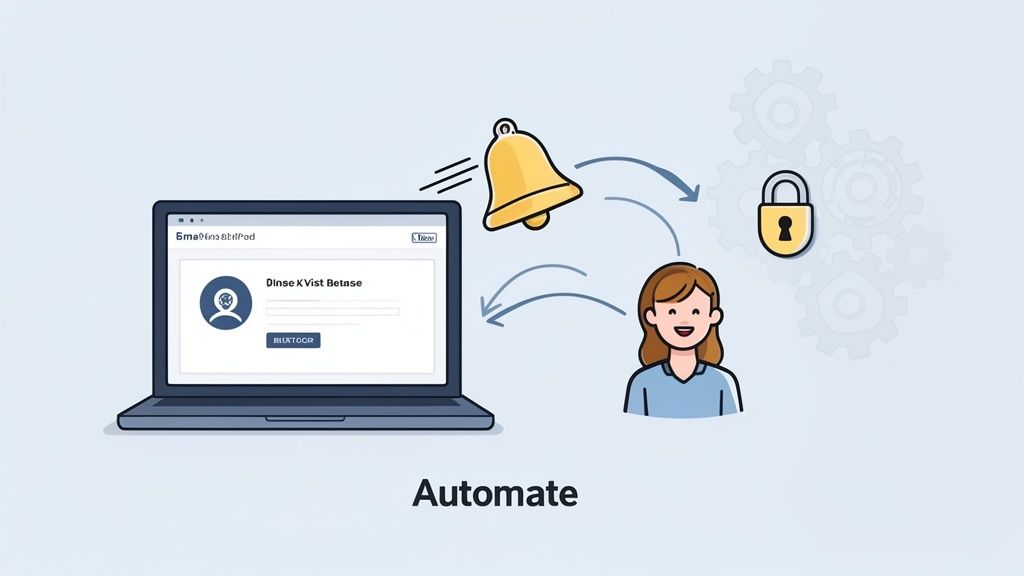
Let's be honest: juggling client onboarding with endless email threads and spreadsheets is a recipe for disaster. It's like trying to build a house with a hammer and a handful of nails—slow, messy, and bound to have a few mistakes. This is where technology steps in, turning a clunky, manual process into a smooth, professional system that makes a great first impression.
Automation is the engine that drives a modern onboarding strategy. The goal isn't to replace the human element; it's to free up your team from the repetitive, administrative work that gets in the way of building real client relationships. With the right software, you can focus on high-value conversations instead of chasing down paperwork.
Solving Onboarding Headaches With Technology
Modern onboarding platforms are built to fix the very issues that frustrate both you and your clients. They bring much-needed structure, security, and speed to every stage.
Here’s how automation makes a tangible difference:
- Automated Reminders: Instead of your team manually sending follow-up emails for missing documents, the system handles it. These gentle nudges keep the process moving without making anyone feel like a bill collector.
- Branded Client Portals: A secure, professional portal gives clients one central hub to upload files and see their progress. This ends the chaos of confusing email chains and gives them confidence that their sensitive data is in safe hands.
- Pre-built Workflow Templates: You can set up repeatable checklists for different services or client types. This ensures nothing gets missed and creates a consistent, scalable process you can rely on every single time.
By automating the small, repetitive tasks, you not only reclaim countless hours but also dramatically reduce the risk of human error. A forgotten follow-up or a misplaced file can derail an entire project, but automation makes sure those crucial details are handled perfectly.
It’s no surprise the demand for these tools is exploding. The global client onboarding software market was valued at USD 1.5 billion in 2023 and is expected to reach USD 4.2 billion by 2032, growing at a rate of 12.1% per year. This growth is a clear signal that businesses are feeling the pressure to deliver a better experience, especially with regulations getting tighter. You can learn more about the trends in the client onboarding software market.
The Power of an Integrated System
The real magic happens when your onboarding process connects seamlessly with the other tools you already use. An integrated system creates a single, unified workflow that eliminates duplicate data entry and boosts your team's efficiency.
Platforms like Superdocu provide a clear, at-a-glance dashboard showing client progress, so you instantly know what’s done and what’s still outstanding.
If you'd like to dig deeper into the nuts and bolts, check out our complete guide on client onboarding automation.
Ultimately, automation hands you back your most precious resource—time. All while delivering a client experience that builds trust and sets you up for a successful, long-term partnership.
Got Questions About Client Onboarding? We've Got Answers.
Even with the best-laid plans, questions always pop up when you start putting a new onboarding process into practice. Getting clear answers to these common sticking points can help you build your workflow confidently and sidestep a lot of frustration down the road. Let's tackle the questions we hear most often.
How Long Should Client Onboarding Take?
There's no magic number here—it really depends on your industry. A marketing agency might get a client up and running in a few hours, while a complex legal case or financial setup could take several days or even weeks.
The real goal isn't hitting a specific timeline but shortening the Time to Value (TTV). You want your client to feel the benefit of working with you as quickly as possible. The key is to maintain momentum. Use clear milestones and automated check-ins so the client always feels like things are moving forward. A good platform can slash your timeline by eliminating the manual back-and-forth that drags everything out.
The most critical part of client onboarding is setting clear expectations right at the start. When expectations are managed properly from day one, it prevents misunderstandings and builds a foundation of trust that will support the entire relationship.
This means being upfront about the project scope, what you need from them (like specific documents), and giving them a realistic timeline they can count on.
Can I Automate Onboarding on a Small Budget?
Absolutely. It’s a huge myth that automation is only for big corporations with deep pockets. Modern, cloud-based tools are designed for businesses of all sizes, and many offer affordable plans or free trials so you can get started without a huge upfront investment.
Think of it this way: what’s the cost of not automating? The hours you waste, the expensive mistakes you make, and the clients you lose from a clunky experience add up fast. Investing in a platform isn't just buying software; you're buying back your time and making your clients happier.
How Do I Know if My Onboarding Is Actually Working?
You can’t improve what you don’t measure. Keeping an eye on a few Key Performance Indicators (KPIs) will give you a clear, honest look at how your onboarding is performing and point you to exactly what needs fixing.
Focus on these core metrics:
- Client Satisfaction (CSAT/NPS): Send a quick survey right after onboarding wraps up. This is the best time to get fresh, honest feedback on their experience.
- Time to Value (TTV): How long does it take for your client to get that first "aha!" moment or tangible result? The shorter, the better.
- Early Churn Rate: Keep an eye on how many clients leave within the first 90 days. A high number here is a massive red flag that your initial experience is falling flat.
- Onboarding Completion Rate: Are clients actually finishing all the steps? If people are dropping off midway, you’ve found a point of friction that needs to be smoothed out.
Tracking these numbers gives you the hard data you need to stop guessing and start making smart improvements to your process.
Ready to turn your client onboarding from a manual headache into a smooth, professional experience? Superdocu gives you the tools to automate document collection, send reminders, and create a branded client portal that impresses from day one. Start your free trial and see how easy it can be.