
Vendor onboarding software is your secret weapon for bringing new suppliers into the fold efficiently and safely. Think of it as a digital platform that organizes everything—collecting info, checking compliance, and plugging vendors into your systems. It gets rid of messy email threads and mountains of paperwork, replacing them with a single, clean workflow. This isn't just about new tech; it's about starting your supplier relationships off on the right foot.
What Is Vendor Onboarding Software

Ever tried to coordinate a big project using just sticky notes and phone calls? It’s a recipe for disaster. Papers get lost, key details are forgotten, and everything slows to a crawl. For many businesses, that's exactly what managing new vendors feels like: chaotic, risky, and a huge time-sink.
Vendor onboarding software is the digital project manager for your supplier network. It gives you one central hub to handle every single step of bringing a new partner on board. This turns a clunky, manual process into a smooth, clear, and secure experience for everyone involved—your team and your new vendors.
The Core Function of Onboarding Tools
At its core, this software automates the whole process of getting a supplier set up. No more chasing down W-9s or manually typing bank details into ten different spreadsheets. The platform does the heavy lifting for you. This unified approach makes sure nothing gets missed, from the first hello to the final system setup.
Here’s what these tools typically handle:
- Automated Document Collection: A secure portal for vendors to upload essential documents like tax forms, insurance certificates, and banking information.
- Compliance Verification: Automatically flags missing certifications and checks that all the information provided meets your company’s standards.
- Workflow Management: Lets you build custom, step-by-step onboarding checklists for different types of vendors, whether it’s a solo freelancer or a massive corporation.
- Centralized Communication: All conversations and updates happen in one place, so you can say goodbye to confusing, mile-long email chains.
This kind of structure is becoming non-negotiable as companies grow. The global vendor management software market is expected to jump from $10.32 billion in 2024 to $11.93 billion in 2025, growing at a rate of 15.6%. This boom shows just how many businesses are moving online to manage their supply chains, where one small manual error can cause massive headaches.
From Administrative Burden to Strategic Advantage
Ultimately, bringing in vendor onboarding software is about more than just saving time. It’s a smart move that makes your business more agile, more secure, and better at building solid supplier relationships. When a new vendor has a smooth, professional onboarding experience, it sets a positive tone right from the start. For a deeper look into the specifics, you can check out this guide on supplier onboarding software.
By swapping manual chaos for automated clarity, vendor onboarding software frees up your team to focus on what really matters: building strong, strategic partnerships instead of chasing paperwork. It turns a risky, time-consuming task into a real competitive edge.
What Are the Real Benefits of Automating Vendor Onboarding?
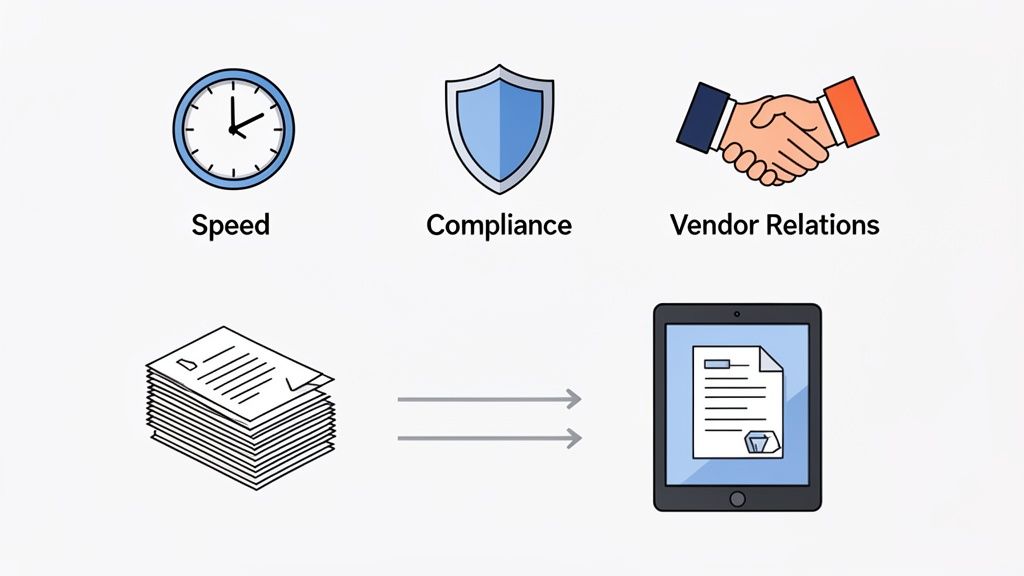
Think of it this way: switching to vendor onboarding software is like trading a winding country road for a superhighway. You're still heading to the same place—a fully integrated, compliant supplier—but the journey is suddenly faster, safer, and a whole lot smoother. It’s about moving your team from being bogged down in administrative muck to focusing on strategic work that actually matters.
These benefits aren't just buzzwords on a sales page; they create real, measurable results for your business. By automating how you collect and verify supplier information, you crush the bottlenecks that slow down projects and open you up to unnecessary risks. This simple change turns a reactive paper-chasing drill into a proactive, relationship-building process right from day one.
Imagine a fast-growing tech company that needs to bring on freelance developers to hit a tight deadline. The old way—manually collecting contracts, tax forms, and payment details for each person—creates massive delays. With dedicated software, each freelancer gets a link to a secure portal to upload everything themselves. The company can get them working on projects in hours, not weeks.
Drastically Cut Down on Administrative Work
The most immediate win you'll see is the huge drop in manual work. Traditional onboarding is an endless cycle of emailing forms, chasing down signatures with follow-up calls, and then painstakingly typing all that data into different systems. It's not just a time sink; it's a perfect recipe for employee burnout and costly typos.
An automated system takes over the grunt work. It sends out document requests, nudges vendors with automatic reminders for missing info, and flags anything that’s incomplete. This frees up your procurement or AP teams from chasing paperwork so they can focus on bigger things, like negotiating better terms or strengthening supplier relationships.
We've seen manual onboarding drag on for anywhere from two weeks to several months. Automation absolutely demolishes that timeline. One team, for example, cut its onboarding time in half simply by automating its verification process. That kind of speed gives you a real competitive edge, letting you move faster without getting tripped up by administrative red tape.
Strengthen Compliance and Reduce Risk
Making sure every single vendor meets all the necessary legal, financial, and industry standards is a massive responsibility. When you rely on manual checks, it’s far too easy for things to fall through the cracks. A missed insurance certificate or an expired tax form can expose your business to huge liabilities.
Vendor onboarding software basically becomes your automated compliance watchdog. It creates a digital, easy-to-audit trail for every supplier you bring on.
- Centralized Documents: Every required file, from business licenses to insurance policies, is stored securely in one spot, ready for any audit.
- Automated Verification: The software can automatically check documents for validity and track expiration dates, alerting you when it's time for a renewal.
- Standardized Workflows: You can set up consistent onboarding rules for different types of vendors, ensuring no crucial compliance step is ever missed.
A frictionless onboarding process does more than just save time; it sets the tone for the entire supplier relationship. When vendors have a simple, professional, and respectful first experience, it builds a foundation of trust and collaboration that pays dividends for years to come.
This structured approach takes the guesswork out of risk management and turns it into a systematic process. It’s about protecting your company from fines, legal headaches, and damage to your reputation.
Build Positive, Lasting Vendor Relationships
Your first impression matters—a lot. A clunky, confusing, and slow onboarding experience sends a clear message of disorganization and can get the relationship off on the wrong foot. At the end of the day, suppliers want to work with partners who are professional and efficient.
Giving your vendors a clean, simple portal where they can quickly submit their information shows that you respect their time. That positive first touch encourages better communication and collaboration down the road, transforming what could be a purely transactional setup into a true strategic partnership.
Manual vs. Automated Vendor Onboarding
The difference between the old way and the new way is night and day. This table breaks down just how stark the contrast is.
| Process Step | Manual Onboarding (The Old Way) | Automated Software (The New Way) |
|---|---|---|
| Data Collection | Endless email chains and attached PDFs. | A single, secure portal for all uploads. |
| Verification | Manual review of each document; easy to miss details. | Automated checks for completeness and validity. |
| Approval | Physical paperwork routed between departments. | Digital workflow with instant notifications. |
| Communication | Disjointed emails and phone calls; updates get lost. | Centralized messaging and real-time status tracking. |
| Time to Onboard | Weeks or even months. | Hours or days. |
As you can see, automation isn't just a minor improvement—it fundamentally changes the efficiency, reliability, and quality of your entire vendor management process.
Must-Have Features in Vendor Onboarding Software
Choosing the right vendor onboarding software is like picking a tool for a mission-critical job. You wouldn't try to tighten a screw with a hammer, right? In the same way, not all platforms are built the same. The features they offer will make all the difference in how much time you save and how secure your process becomes.
To find the right fit, you have to look beyond the slick marketing and zero in on the core functions that actually solve problems. These are the make-or-break features that turn a simple digital folder into a powerful automation tool.
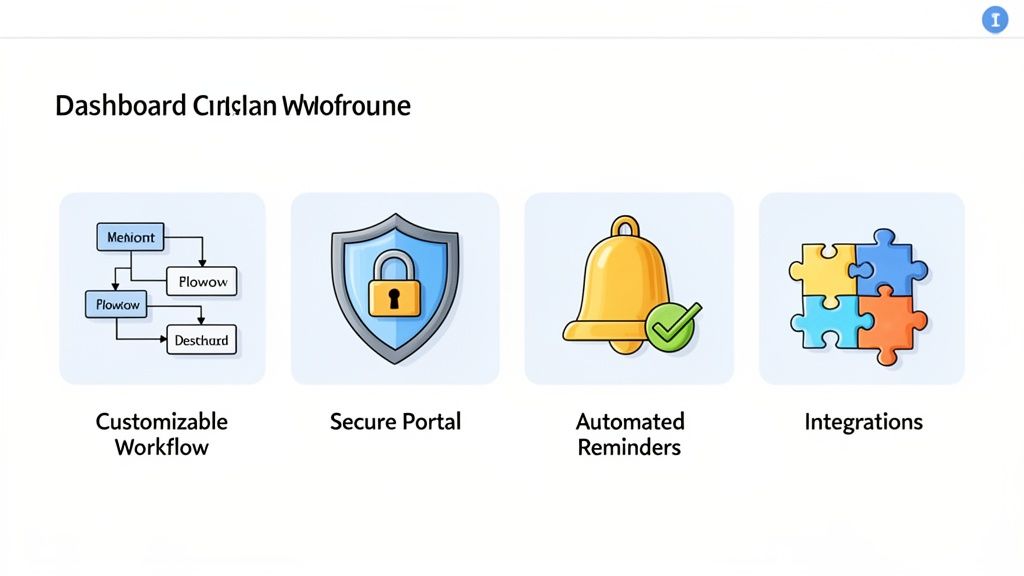
The screenshot above, from Superdocu, is a great example. It shows a clean dashboard where a business can easily create and track document requests. The simple layout gets right to the point—making a complex process feel effortless for both you and your vendors.
Customizable and Automated Workflows
Let's be honest: no two vendors are the same. The documents you need from a freelance copywriter are a world away from what’s required for a multinational logistics provider. A one-size-fits-all checklist just won’t cut it; it only leads to confused vendors and more cleanup work for your team.
This is where customizable workflows are absolutely essential. The best software lets you build unique, step-by-step onboarding processes for different types of vendors. You can set up a simple path for contractors and a more detailed, multi-stage journey for major corporate suppliers.
An effective platform doesn't just digitize your old, clunky process. It helps you reinvent it by building smart, automated sequences that guide vendors through exactly what you need, killing the guesswork and endless email chains.
Once you’ve designed a workflow, the system should take over. The software should automatically trigger the next step—from sending the initial welcome packet to routing documents for internal sign-off—as soon as the previous one is done. It’s a hands-off approach that guarantees speed and consistency every time.
A Secure and Branded Vendor Portal
Asking a new partner to email sensitive info like bank details and tax forms is a huge security risk. On top of that, it just doesn't look professional. A dedicated, secure vendor portal is the modern way to handle this.
A portal gives vendors a single, safe place to:
- Upload all their documents without worrying about email security.
- Fill out digital forms right in their browser.
- Check the status of their onboarding anytime they want.
Even better, top-tier platforms let you brand the portal with your company's logo and colors. It's a small detail, but it creates a polished, professional experience that builds trust from day one.
Automated Reminders and Notifications
One of the biggest time-sucks in manual onboarding is chasing people down. Constantly sending follow-up emails and making calls drains your team's energy and can start a new partnership off on the wrong foot.
Automated reminders are a total game-changer here. You can set up the software to send polite, periodic nudges to vendors who haven't finished their tasks. This feature works quietly in the background, making sure you hit your deadlines without any manual effort from your team.
Internal notifications are just as important. The platform should automatically ping the right people on your team when a vendor submits their documents or when something is ready for approval, keeping everything moving smoothly.
Seamless System Integrations
Your vendor onboarding software can't be an island. To get the most out of it, it needs to talk to the other tools you rely on every day. Seamless integrations are what tie everything together into one cohesive system.
Look for a platform that connects easily with your:
- Accounting Software: To create new vendor profiles in your payment system automatically.
- CRM Systems: To keep all your supplier information synced and in one place.
- Project Management Tools: To kick off new projects the moment a vendor is officially on board.
For small and medium-sized businesses, simply automating document collection can slash administrative time by up to 70%. That’s a massive win, freeing up your team to focus on growth instead of paperwork. To really appreciate what a good system can handle, it helps to review a complete vendor onboarding document checklist and see how all the pieces fit together.
How Different Industries Use This Software
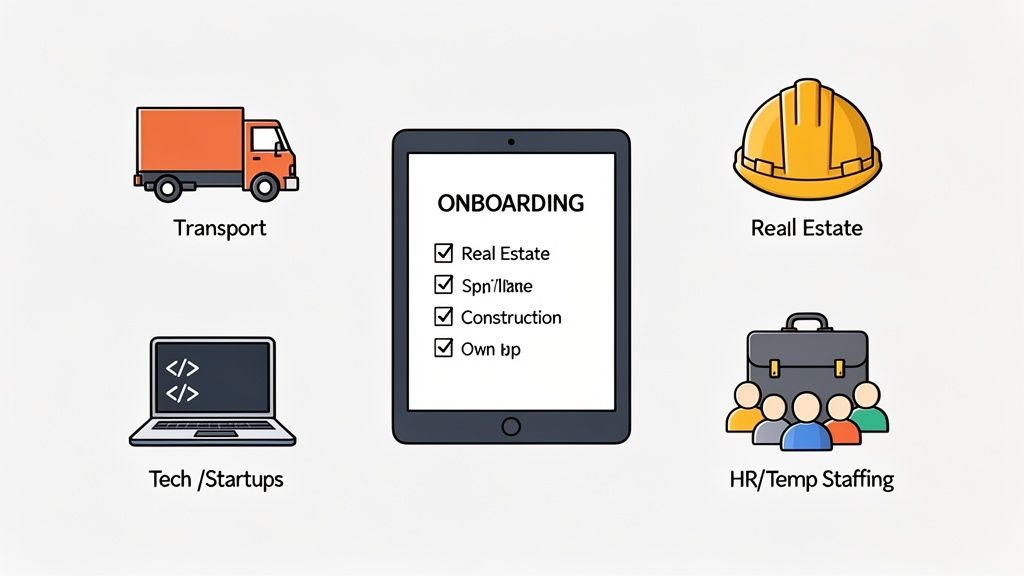
Vendor onboarding software isn't some rigid, one-size-fits-all tool. Think of it more like a Swiss Army knife that adapts to solve very different problems depending on the industry. While the end goal is always about bringing new partners on board efficiently, the reason for doing so changes quite a bit from one sector to the next.
Let's move past the theory and look at how this plays out in the real world. For some businesses, the biggest headache is staying compliant with strict regulations. For others, it’s simply about not drowning in paperwork when dealing with a constant stream of temporary partners. Each example shows how these platforms can be dialed in to meet specific needs.
Transportation and Logistics
The transportation world is built on a mountain of time-sensitive paperwork. If a single driver's license expires or an insurance policy lapses, a truck can be pulled off the road. That means lost revenue and serious legal trouble. Trying to track all of this manually is just asking for something to fall through the cracks.
This is where vendor onboarding software really shines as a compliance watchdog. Imagine a logistics company managing a large fleet of independent owner-operators.
Here’s a snapshot of how they'd use the software:
- Automated Document Collection: The system automatically sends each driver a secure link where they can upload their commercial driver's license, vehicle registration, and proof of insurance.
- Expiration Tracking: The software flags the expiration date for every document and shoots out reminders to both the driver and the company weeks ahead of time. No more last-minute scrambles.
- Compliance Dashboard: Fleet managers get a clear, at-a-glance view of every driver's status, making it easy to spot anyone with missing or expired credentials.
This proactive system stops compliance issues before they can start. For industries like transportation and construction, automating these checks can slash onboarding time from weeks down to a matter of days and increase supplier engagement by 25-35%. You can dig deeper into the vendor management software market to see just how big this impact is.
HR and Staffing Agencies
HR and staffing firms wrestle with a completely different beast: sheer volume. It’s not uncommon for them to onboard dozens, sometimes hundreds, of temps, contractors, or freelancers for a single client project. Collecting I-9s, contracts, and banking details for every single person by hand is a recipe for administrative chaos.
With vendor onboarding software, an HR agency can build a repeatable, scalable system to manage this turnover. They can even create a unique onboarding workflow for each client, guaranteeing that every new hire submits the right documents before their first day.
By turning a high-volume, repetitive task into a self-service process, staffing agencies can dramatically reduce their administrative overhead and get talent placed faster. This speed is a huge competitive advantage in the fast-paced world of recruitment.
The software acts as a gatekeeper, ensuring no temporary worker slips through the cracks without the proper paperwork, which protects both the agency and its clients.
Real Estate and Property Management
Property management firms are constantly juggling a rotating cast of vendors—plumbers, electricians, landscapers, cleaning crews, you name it. Before any of them can step foot on a property, they need to provide proof of insurance, business licenses, and signed service agreements.
By using onboarding software, a property management company can maintain a list of pre-vetted, approved vendors. When a leaky pipe is reported, the manager can dispatch a trusted plumber instantly without having to chase down their insurance certificate. This not only leads to faster repairs and happier tenants but also shields the firm from liability. The software becomes the single source of truth for all contractor credentials.
How to Choose and Implement Your Solution
Picking the right vendor onboarding software can feel like a huge decision, but it doesn't have to be a headache. The trick is to break it down into two simple phases: first choosing the right tool, then rolling it out smoothly. A good plan here will help you find a solution that not only solves today's problems but grows with you down the road.
Think of it less like buying software and more like hiring a digital assistant for your team. You need to make sure it has the right skills, plays well with your other systems, and won't be a nightmare to get up and running. It’s all about finding a tool that solves your core challenges without creating a bunch of new ones.
A Checklist for Choosing the Right Software
Before you even watch a single demo, take a step back and figure out what a "win" looks like for your team. What problems are you actually trying to solve? Having a clear set of criteria will be your north star, guiding you to the right platform and helping you ignore the ones that don't fit.
Use this checklist as you evaluate your options:
-
Ease of Use for Everyone: The software has to be dead simple for both your internal team and your vendors. If your suppliers get confused, you’ll just swap manual email follow-ups for manual tech support. Look for a clean, intuitive interface that guides people through the process.
-
Scalability and Flexibility: Your business is going to grow, and your software needs to keep up. Can the system handle a sudden jump in vendor numbers? Can you easily tweak workflows for different types of suppliers without calling in an IT expert?
-
Security and Compliance: This one is a deal-breaker. The platform must have rock-solid security, like data encryption, and comply with regulations like GDPR. Your vendors are trusting you with sensitive information, so you need a software partner that takes that responsibility as seriously as you do.
-
Integration Capabilities: A great tool doesn’t work in a silo. It needs to connect effortlessly with the software you already use, whether that's for accounting, CRM, or project management. Proper integration is what creates true automation and stops people from wasting time with manual data entry.
Crafting a Simple Implementation Plan
Once you've picked your software, the next challenge is getting it rolled out. A phased, deliberate approach is the best way to avoid chaos and get everyone on board. If you rush this part, you'll run into confusion and pushback, so it's worth taking your time to do it right.
A successful rollout is about more than just technology—it's about people. The goal is to make the switch as painless as possible for everyone involved.
Start with a Pilot Project
Don't try to move every single vendor over on day one. Start small. Pick a single department or a specific group of vendors to be your guinea pigs. This gives you a low-risk way to test your new process, get feedback, and work out any kinks before you go live for everyone.
A successful rollout hinges on a simple principle: define your process before you automate it. Map out your ideal onboarding journey on paper first, then use the software to bring that vision to life. This ensures the technology serves your strategy, not the other way around.
Define Workflows Before You Build
Before you start clicking buttons and setting up the software, grab a whiteboard and map out your ideal onboarding journey. What documents do you need? Who signs off on what? What are all the steps from start to finish? Having this blueprint makes configuring the software infinitely faster and more effective. For a deeper dive, our comprehensive guide on vendor onboarding software can provide additional insights.
Keep Training Simple and Focused
Nobody on your team or at your vendors' offices needs to become an expert on the entire platform. Create short, simple training guides tailored to each role. For your internal team, show them how to send requests and review submissions. For vendors, a quick one-pager on how to use the portal to upload documents is all they need.
Historically, the high cost of on-premises software scared many businesses away, but modern cloud solutions have changed the game. Today, 60% of these deployments are hybrid. This shift has been a huge win for industries like immigration and real estate, where automated tracking for expiring documents helps prevent compliance mistakes—lapses that cost industries an estimated $5-10 billion every year in disruptions. You can find more insights about these industry trends on appsruntheworld.com.
Frequently Asked Questions
Thinking about switching to a dedicated vendor onboarding software? It's natural to have questions about the cost, the setup process, and how it will actually work for your team and your suppliers. Let's tackle some of the most common ones we hear.
Is Vendor Onboarding Software Too Expensive for a Small Business?
Not anymore. While the old, enterprise-level systems could break the bank, today's cloud-based tools are often built with small and medium-sized businesses in mind. Most offer flexible, subscription-style pricing that grows with you, so you only pay for what you need.
Think of it this way: the real cost is in the manual work you're already doing. When you add up the hours spent chasing documents, the delays in starting projects, and the risks of compliance mistakes, the software often pays for itself surprisingly quickly.
How Long Does Implementation Take?
Gone are the days of months-long software rollouts. Modern cloud platforms are designed to get you up and running fast—often in a matter of days, not weeks.
Many solutions even come with ready-to-go templates for specific industries like real estate or HR, which can speed things up even more. It’s entirely possible to have your first automated workflow running and collecting documents within just a few hours.
Will My Vendors Find It Difficult to Use?
This is a huge concern, and good software developers know it. The best platforms are built with your vendors' experience as a top priority because a clunky system just creates more headaches for everyone.
A smooth, professional onboarding experience reflects positively on your company and is the first step in building a strong, collaborative supplier relationship. Vendors appreciate partners who respect their time.
Most tools provide a clean, simple portal where vendors can easily upload documents, fill out forms, and sign agreements from any device—even their phone. The whole point is to make it as painless as possible for them.
Can This Software Integrate With My Existing Tools?
Absolutely. In fact, integration is essential. For an onboarding tool to be truly useful, it needs to talk to the other software you rely on every day.
You'll find that most platforms offer direct connections to popular tools for:
- Accounting: like QuickBooks or Xero
- CRM: such as Salesforce or HubSpot
- Project Management: including Asana or Trello
And for everything else, integration services like Zapier can act as a bridge, connecting your onboarding software to thousands of other apps. This lets you build a truly automated system that eliminates manual data entry for good.
Ready to eliminate paperwork and streamline how you bring on new partners? Superdocu makes it easy to automate document collection, cut down on admin work, and give your vendors a great first impression. Start your free trial today and see how simple it can be. Learn more about Superdocu.