
At its core, a file request is simply the act of asking someone to send you a document. But how you ask, and how they send it, can make all the difference for your business's efficiency, security, and the impression you leave on your clients.
What Is a File Request and Why Is the Old Way Broken?
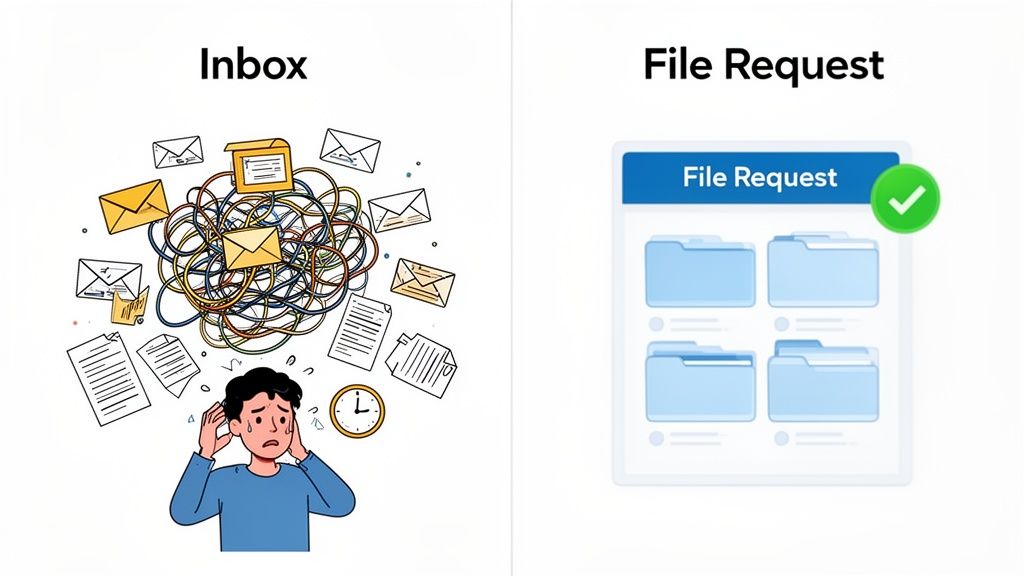
Think about building a piece of furniture, but the parts and instructions show up in dozens of different packages. A few screws arrive by mail, the wooden panels get dropped off by a courier, and the manual is buried in a random email you got last week. That frustrating, piecemeal experience is what most clients go through when you ask them for documents the old-fashioned way.
This broken system usually involves endless email chains, cryptic attachment names, and someone trying to keep it all straight in a spreadsheet. It’s a recipe for inefficiency and risk.
The Chaos of Manual Collection
When your business needs documents—for onboarding a new client, preparing a legal case, or processing a loan—the go-to method is often a long, confusing email. But that first email is just the start of a messy, back-and-forth headache.
Professionals in demanding fields like law, finance, and HR feel this pain every day. The manual file request process is a familiar nightmare:
- Scattered Information: Documents get lost in long email threads, making it impossible to know what you’ve received and what’s still missing.
- Version Confusion: Clients send multiple versions of the same file (e.g., "Contract_Final_v2_final_FINAL.docx"), and it's easy to accidentally use the wrong one.
- Constant Follow-Up: Your team wastes hours sending polite (and not-so-polite) reminders, chasing down missing files, and manually ticking off items on a checklist.
- Security Risks: Sending sensitive data like bank statements or personal IDs through unsecure email is a massive compliance gamble.
This unstructured approach doesn't just waste time; it creates a terrible client experience and opens your business up to serious risks. A single misplaced document or a data breach can stall projects, ruin your reputation, and result in hefty fines.
A Better Way to Request Files
Thankfully, modern file requests offer a way out of this mess. Instead of drowning in emails, you can use a dedicated, centralized platform that creates a smooth workflow for everyone. The process is transformed from a disorganized chore into a secure, professional, and refreshingly simple experience.
By giving clients a single, secure portal to upload their documents, businesses can automate reminders, check submissions as they come in, and keep a clear audit trail. This structured approach ensures all the necessary pieces arrive in the right place, at the right time. You can finally get back to building your project without a frustrating hunt for missing parts.
The Hidden Costs of Manual Document Collection
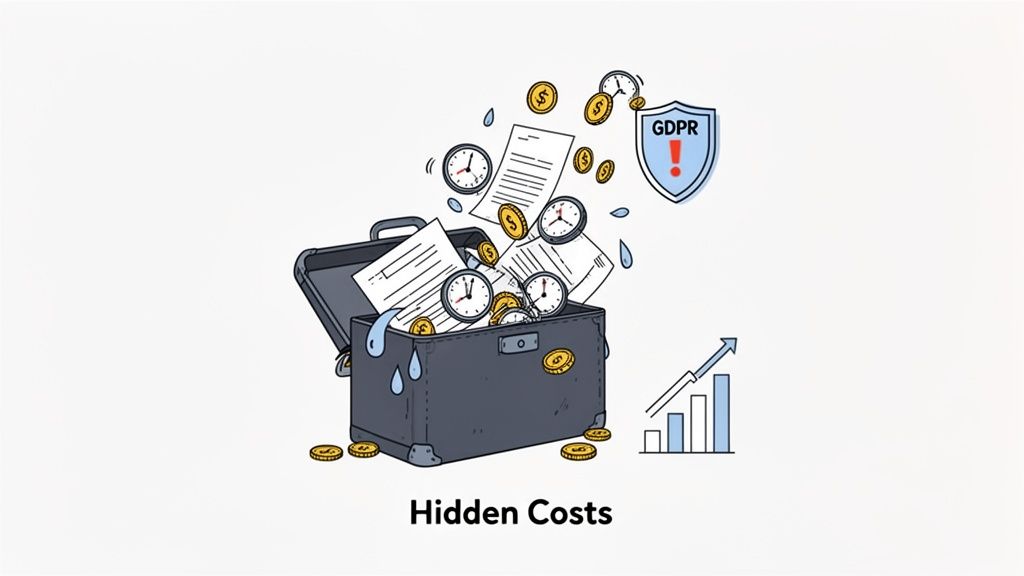
It’s easy to dismiss a messy file request process as a minor annoyance. But the truth is, the problems go way beyond frustration. A disorganized system doesn't just waste time; it quietly bleeds money, opens the door to serious compliance risks, and chips away at the trust you've built with your clients.
These hidden costs often do far more damage than the obvious administrative headaches.
Think about a mortgage application. A single missing pay stub, buried deep in an email thread, can stall the entire closing process for days, even weeks. This isn't just frustrating for the client—it directly impacts the loan officer's commission and messes with the firm's cash flow. It’s a domino effect of inefficiency, all starting from one clumsy document request.
Or consider an HR department onboarding a new hire. Chasing down I-9s, tax forms, and signed agreements via email is chaotic. It makes a terrible first impression and leaves the company exposed if an audit ever reveals missing or improperly stored records.
Quantifying the Financial Drain
When you start to add it all up, the financial toll of these outdated methods is genuinely shocking. This isn't just about one employee’s wasted time. It’s a cumulative drain on your entire operation.
Studies have found that knowledge workers can spend up to 2.5 hours every day just looking for information. When that information is scattered across countless emails and local hard drives, you're essentially paying your team to search, not to produce. That lost productivity is a direct hit to your bottom line.
Then there's the catastrophic cost of non-compliance. A single data breach from sensitive documents sent over an unsecured email can trigger massive fines. Under regulations like GDPR, penalties can climb as high as 4% of a company's annual global turnover. The risk tied to simple human error has never been greater.
The real cost isn't just the time spent chasing a document. It's the delayed project, the lost client, the compliance fine, and the damaged reputation that follow.
The Damage to Client Relationships
Every confusing email and every repetitive follow-up sends your clients a clear message: you’re disorganized. This slowly erodes the professional image you’ve worked so hard to create. People expect a smooth, secure, and modern experience, and a clunky file request workflow is an immediate red flag.
This friction can lead directly to client churn and negative reviews. In a competitive market, the client experience is everything. A secure and straightforward document collection process demonstrates that you respect your client's time and take their data security seriously.
The table below breaks down the stark difference between the old way of doing things and a modern, automated approach.
Manual vs Automated File Request A Cost-Benefit Analysis
This table compares the direct and indirect costs, risks, and benefits of traditional manual file request methods versus a modern automated platform.
| Metric | Manual Process (Emails & Spreadsheets) | Automated Platform (Superdocu) |
|---|---|---|
| Speed & Efficiency | Slow, with constant manual follow-up and searching for files. | Fast, with automated reminders and a central dashboard for tracking. |
| Client Experience | Confusing and frustrating, with multiple email threads and unclear instructions. | Professional and simple, with a branded portal and clear submission steps. |
| Security & Compliance | High risk of data breaches and compliance failures (e.g., GDPR, CCPA). | Secure by design with end-to-end encryption and a full audit trail. |
| Accuracy & Completion | Prone to human error, missing documents, and incorrect file versions. | High accuracy with required fields and real-time validation checks. |
| Reputational Impact | Negative, suggesting disorganization and a lack of modern tools. | Positive, reinforcing professionalism, security, and efficiency. |
Ultimately, clinging to manual methods isn't just a habit—it's a business decision with clear financial and reputational consequences. These costs aren't just hidden; they are actively holding your business back.
What to Look for in a Modern File Request Platform
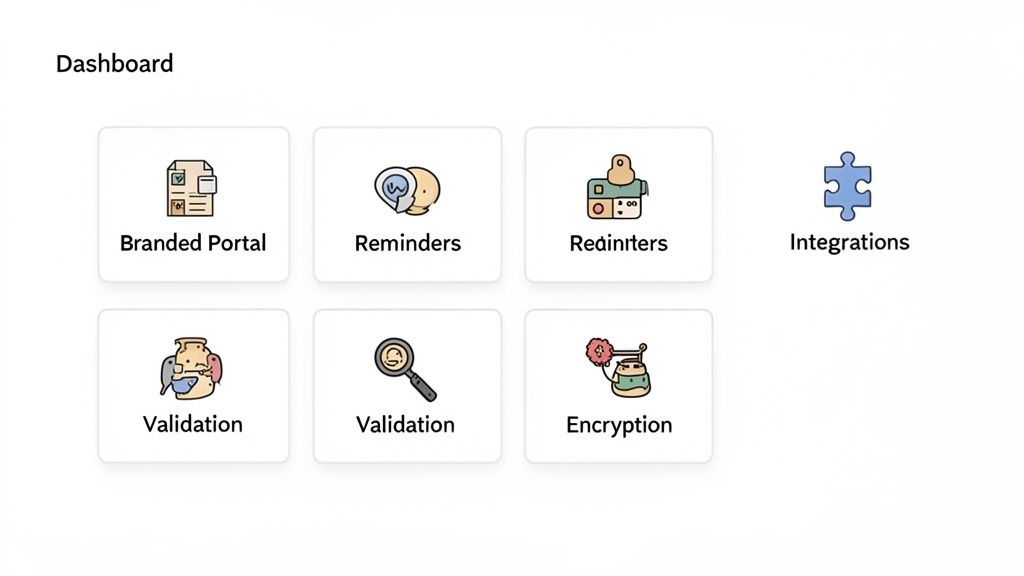
When you're choosing a file request platform, you're not just picking a new place to store documents. The real goal is to find a system that actually solves the deep-rooted problems of doing it all by hand—the inefficiency, the security risks, and the frustrating back-and-forth with clients. A great solution isn't just a digital inbox; it’s a smart engine for your workflow.
As you look at different options, you’ll find that some features are simply non-negotiable. These are the tools that turn a repetitive chore into a smooth, secure, and professional process. They all work together to save you time, slash errors, and build trust with your clients from the very first click.
Create a Professional and Trustworthy Experience
First impressions matter, especially when you’re asking for sensitive information. A generic, unbranded upload link can feel impersonal and, frankly, a bit sketchy. A good platform puts your brand front and center, giving your clients a seamless and reassuring experience.
A Branded Client Portal is your digital front door. It’s a secure, white-labeled space where clients can see exactly what you need, upload their documents, and check their progress. This completely replaces chaotic email chains with a single, professional hub that reinforces your company’s credibility.
Think of it like this: would you rather meet a client in a cluttered back room or a polished, professional office? A branded portal sends a clear message that you're organized, secure, and respectful of their time and data.
This professional look isn't just for show. It directly boosts your client's confidence and willingness to cooperate. When people feel like they're in a secure, dedicated environment, they're far more likely to get you the right documents on time.
Put Your Follow-Ups on Autopilot
Let’s be honest, the single biggest time-waster in manual document collection is the constant chasing. A modern file request system should act like your own virtual assistant, handling the tedious job of nudging clients for missing files so your team doesn't have to.
Automated Reminders are the hero here. You can set up a schedule of polite, customized notifications that go out automatically until every required document is in. This ensures you hit your deadlines without anyone on your team having to manually send a single "just checking in" email. It's a simple feature that can reclaim countless hours.
Key automation features should include:
- Customizable Schedules: Set reminders to go out at specific times, like three days before a deadline or weekly for anything overdue.
- Personalized Messaging: Tweak the reminder emails to match your company’s voice and give crystal-clear instructions.
- Smart Triggers: The system should be smart enough to stop the reminders the moment a client finishes their submission.
This kind of automation keeps every project moving forward and ensures nothing ever falls through the cracks.
Ensure Quality and Compliance from Day One
Getting the files is only half the job. You also have to make sure they’re the right files and that they’re being managed securely. The best platforms come with built-in tools for quality control and rock-solid security to protect sensitive data.
A Validation Dashboard acts as your central command center for quality. As files come in, you can quickly review them, approve the correct ones, or reject incorrect ones with specific feedback for the client. This catches mistakes early before they become bigger headaches down the road. No more confusing email threads trying to explain what’s wrong.
And of course, security is the bedrock of this whole process. Make sure any platform you consider offers:
- End-to-End Encryption: This scrambles the data while it’s being sent and while it’s stored, making it unreadable to anyone who shouldn't see it.
- Compliance Certifications: Following standards like GDPR is essential for protecting data privacy and avoiding hefty fines.
- Seamless Integrations: The platform should play nicely with the tools you already rely on, like DocuSign for e-signatures or your CRM, to create one smooth workflow.
A system that brings all these features together is more than just a convenience. It’s a complete secure document intake platform that protects both your business and your clients.
How to Create Your First Automated File Request
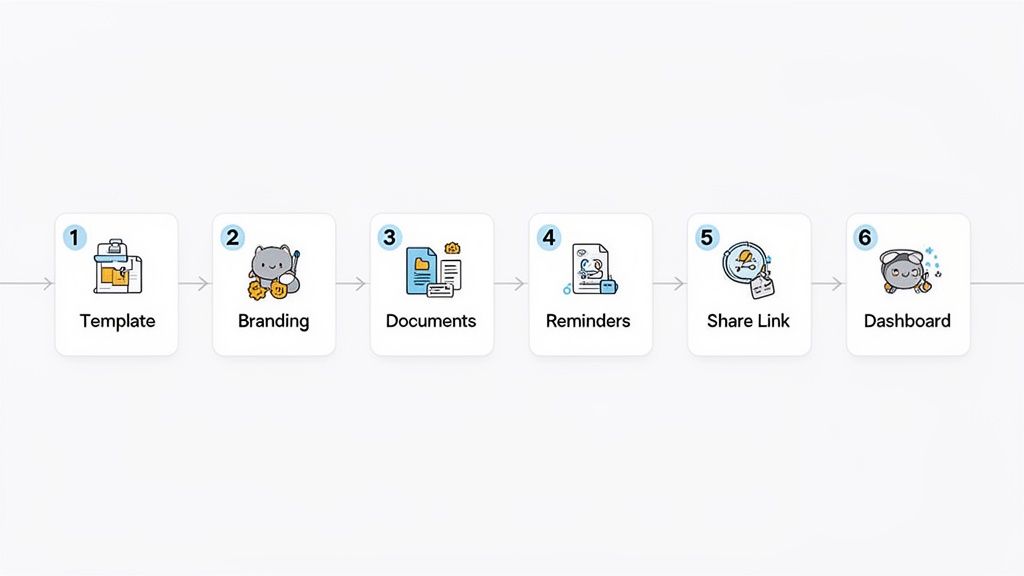
Alright, let's move from theory to practice. Getting your first automated file request up and running is much easier than you might imagine—no developers or lengthy setup required. To make it real, we’ll walk through a common, high-stakes scenario: New Client Onboarding for a Legal Firm.
The goal here is to trade in those messy, back-and-forth email chains for a clean, professional, and automated system. It’s all about creating a repeatable process that saves you time, slashes errors, and leaves a fantastic first impression on your clients.
Step 1: Start Fast with a Pre-Built Template
Why start from scratch when you don’t have to? The quickest way to get going is to grab a pre-built template. Modern platforms like Superdocu offer libraries of these, designed for specific industries and use cases. For our law firm, we could pick an "Immigration Client Intake" or "New Client Onboarding" template.
Think of it as using a professional architect's blueprint for a house instead of just sketching something on a napkin. You get a solid foundation with all the right document slots and instructions already in place.
Step 2: Customize Your Branding and Messaging
Next up, you’ll want to make this file request feel like it’s yours. This isn't just about aesthetics; it’s about building immediate trust, especially when you're asking for sensitive information.
You can easily add your firm's touch by customizing a few key elements:
- Your Logo: Pop your firm's logo right at the top of the portal.
- Brand Colors: Adjust the color scheme to align with your website.
- Welcome Message: Write a clear, friendly welcome that explains what you need and reassures the client their data is safe.
This simple step transforms a generic upload page into a polished, professional experience. It reinforces your firm’s credibility from the very first click.
Step 3: Define Documents and Set Submission Rules
This is where you get specific about exactly what you need. For a new legal client, the list can be long: a signed retainer agreement, proof of identity, financial records, and other case-specific files. A well-structured checklist prevents confusion and stops the endless email follow-ups.
For each item on your list, you can set rules to make sure you get the right information the first time:
- Required vs. Optional: Clearly mark which documents are absolute must-haves.
- File Type Restrictions: Specify that "Proof of Identity" has to be a PDF or JPG, for example.
- Naming Conventions: Have the system automatically rename uploaded files to keep your records tidy (e.g., "ClientName-Passport.pdf").
This kind of precision is critical. In immigration law, a single missing document can be devastating. In FY 2024, USCIS denied 47,496 family-sponsored green card applications, many due to incomplete paperwork. With a backlog of over 500,000 cases, a small mistake can trigger months of delays and incredible stress for your client.
Step 4: Configure Automated Reminders
Now it's time to put an end to the soul-crushing task of chasing down documents. You can set up an automated reminder schedule that gives your client a gentle nudge until everything is submitted. This keeps deadlines on track without you having to play the bad guy.
Pro Tip: A smart reminder schedule could be: one reminder three days after sending, another a week later, and a final heads-up two days before the deadline. It’s persistent yet polite, keeping things moving without any manual effort from your team.
This feature alone can save your admin staff dozens of hours every month, letting them focus on work that actually adds value. If you want to go deeper, check out our guide on choosing an automated document request tool.
Step 5: Share a Single Secure Link
Once your request is all set up, the system gives you a single, secure link. That’s it. That’s all you send to your client. No more confusing emails with huge lists of instructions and attachments.
The client clicks the link and lands on your branded portal. They see a simple checklist of what to provide, can upload files from their computer or phone, and watch their progress. Most importantly, they feel confident their sensitive information is being handled professionally.
Step 6: Monitor Progress in a Central Dashboard
The moment your client starts uploading, you can see everything happening in real-time from one central dashboard. Forget about digging through your inbox to piece together what you've received.
The dashboard instantly shows you:
- Which documents have been submitted.
- Which files are still pending.
- Which uploads are ready for your review and approval.
This bird's-eye view gives you complete control. You can spot a bottleneck, see if a client is struggling, and step in to help, transforming a clunky administrative chore into a smooth, efficient workflow.
Real-World File Request Workflows in Different Industries
A powerful file request system isn't a one-size-fits-all solution. Its real strength shines when it’s adapted to the unique, often high-stakes, demands of different industries. The core challenge is always the same—getting the right documents from the right people, securely and on time—but the specifics can vary dramatically.
Let’s look at how automated workflows solve real problems across a few key sectors. You'll see how they turn a common administrative headache into a serious operational advantage.
Real Estate: Tenant Screening and Onboarding
In real estate, speed and accuracy are everything. When a property manager screens a new tenant, they need a mountain of sensitive documents. We're talking rental applications, pay stubs, background check authorizations, and government-issued IDs.
Chasing these files down through email isn't just slow; it's a security nightmare. A single misplaced document can delay a lease signing, costing the property owner rental income. A modern file request workflow completely changes the game by creating a single, secure portal for each applicant.
- How it works: The property manager sends one link. The applicant gets a simple checklist guiding them to upload their application, proof of income, and ID.
- The benefit: The whole process is faster and more secure, and it leaves a great professional impression. You can make certain fields required so nothing critical gets missed, and automated reminders keep the application moving without any manual nagging.
This organized approach lets managers process applications in a fraction of the time, fill vacancies faster, and cut down on administrative busywork.
Human Resources: New Hire Paperwork
The first few days of a new job set the tone for an employee's entire experience. A messy onboarding process, with confusing emails asking for tax forms, I-9 documents, and signed policy agreements, creates a terrible first impression.
An automated file request system makes onboarding feel smooth and professional. HR teams can build a standardized "New Hire Packet" to ensure every new employee submits their paperwork correctly and on time. This means full compliance from day one.
By centralizing how you collect new hire documents, HR departments can eliminate the risk of missing critical compliance paperwork. It transforms a scattered, manual task into a seamless, auditable, and welcoming experience for the new team member.
Logistics and Transportation: Keeping a Fleet Compliant
The logistics industry runs on documentation. For a trucking company, every single driver must have a valid commercial driver's license (CDL), up-to-date vehicle registration, proof of insurance, and completed safety certifications. Managing these files for a big fleet is a massive compliance challenge.
If a document expires, it can lead to hefty fines, legal trouble, and even vehicles being taken off the road. An automated system doesn't just collect these files once. It can track expiration dates and automatically send a new file request weeks before a document is set to expire. This proactive approach is essential for keeping a fleet compliant and on the move.
Immigration Law: High-Stakes Visa Applications
Nowhere is getting the right document on time more critical than in immigration law. A single missing or incorrect form can have devastating consequences, from application denials to life-altering delays.
Law firms and university HR departments handle staggering amounts of paperwork, including visa petitions, financial statements, academic transcripts, and proof of legal status. For example, the international student sector is a huge area where document management is key. The U.S. hosted 1,177,766 international students for the 2024-2025 academic year, and each one required meticulous paperwork like I-20s. With 57% of institutions reporting declines in new international enrollment due to visa issues, an efficient process is more important than ever. You can see more data on the global student trajectory on aacrao.org.
An automated file request portal gives immigration clients a secure, checklist-driven way to submit everything. It ensures every piece of evidence is uploaded correctly, named properly, and lands in a central dashboard for the legal team to review. This level of organization isn't a luxury; it's a fundamental requirement for success in this field.
While these examples are specific, the underlying principles apply almost anywhere. The table below shows how different industries can create templates to tackle their unique document collection hurdles.
Industry-Specific File Request Templates and Use Cases
| Industry | Common Documents Requested | Key Challenge Solved |
|---|---|---|
| Financial Services | Loan applications, bank statements, tax returns, proof of identity | Streamlines client onboarding and underwriting, ensuring compliance with KYC/AML regulations. |
| Healthcare | New patient forms, insurance cards, medical history records, HIPAA consent forms | Secures sensitive patient health information (PHI) and reduces administrative intake time. |
| Education | Student applications, transcripts, financial aid forms, letters of recommendation | Simplifies the admissions and enrollment process for both staff and prospective students. |
| Legal | Client intake forms, evidence files (photos, videos), signed retainer agreements | Creates a secure, auditable trail for case evidence and client documentation. |
| Construction | Contractor licenses, insurance certificates, project bids, safety compliance forms | Ensures all subcontractors are properly vetted and compliant before they step on-site. |
As you can see, the need to collect documents efficiently and securely is universal. By creating tailored, automated workflows, businesses can not only save time and reduce errors but also deliver a far better experience for their clients, employees, and partners.
So, How Does Superdocu Fit Into All This?
Throughout this guide, we've unpacked the real costs and security headaches that come with collecting documents the old-fashioned way. Superdocu was built from the ground up to get rid of those problems. It turns your file request process from a messy, manual chore into a smooth, secure, and professional operation.
Forget about digging through endless email threads for attachments. Our platform gives you one central place to manage every single request. Things like branded client portals, automatic reminders, and clear validation dashboards aren't add-ons; they're baked right in. This means you can stop burning hours on admin work and give your clients a process they can actually trust.
Making Sophisticated Workflows Feel Easy
We’ve created pre-built templates for industries like legal, HR, and real estate to give you a running start. These are much more than simple checklists. They're complete, battle-tested workflows designed to solve specific industry pains right out of the box. You'll collect the right documents, in the right format, every single time.
This is a game-changer for any field that gets buried in paperwork. Take immigration, for example. When USCIS receives 103,211 H-1B petitions in just one month, or when immigrant visas jump by 8.75%, manual file chasing just doesn't work anymore. Superdocu's templates are designed to handle that kind of volume without letting critical errors slip through the cracks. You can learn more about these immigration data trends on niskanencenter.org.
Superdocu is more than just a tool—it's a system built on trust. With top-tier security, European hosting, and full GDPR compliance, we ensure your clients' sensitive data is always protected.
Ready to Change How You Work?
Tired of the email and spreadsheet chaos? It’s time to trade in that clunky, outdated process for a secure, automated system that saves you time, cuts down on risk, and leaves a great impression on your clients.
Stop chasing paperwork and start focusing on the work that actually matters. Begin your free trial of Superdocu today and see just how simple your document collection can be.
Got Questions About File Request Systems? We’ve Got Answers.
Even after seeing all the benefits, you might still wonder how a dedicated file request platform actually works day-to-day. Let's tackle some of the most common questions we hear.
How Is This Really More Secure Than Just Using Email?
Think of it this way: email is like sending a postcard. It wasn't built with security in mind. Attachments can get intercepted, accidentally forwarded to the wrong person, or just sit on an unsecure server indefinitely. It’s a huge risk for sensitive information.
A real file request system uses end-to-end encryption, which is more like an armored truck. Your files are locked down the moment they're uploaded and stay that way in storage. On top of that, you get a full audit trail. You can see exactly who touched a file and when, giving you a level of control and proof that email just can't provide. This isn't just a nice-to-have; it's essential for meeting compliance standards like GDPR.
Is This Going to Be Complicated for My Team to Set Up?
Not at all. Modern file request tools are designed for regular business people, not IT wizards. The entire process is incredibly straightforward.
- Pick a Template: Grab a pre-built workflow for your specific need.
- Make it Yours: Add your logo and a quick welcome note.
- Ask for What You Need: Use a simple drag-and-drop builder to list the documents you require.
- Send the Link: Share one secure link with your client, and you're done.
Honestly, you can go from signing up to sending your first professional file request in under 10 minutes. The whole point is to make this kind of powerful automation easy for anyone to use.
Can This Connect to the Other Tools We Already Use?
Absolutely. Integration is one of the biggest perks. Most platforms can connect to thousands of other apps using tools like Zapier.
This means you can automate what happens after you get the files. For example, you could automatically send collected documents to your cloud storage, update a client's record in your CRM, or even create a new task in your project management software. A popular one is connecting to DocuSign to add an e-signature step right into your collection flow, making the entire process seamless from start to finish.
Ready to stop chasing documents and start building smarter workflows? With Superdocu, you can create a secure, professional, and automated file request process in minutes. See what a difference a dedicated platform can make.