
Let’s start with the basics. A file request is simply a way to ask someone for specific documents. Think of it as the digital version of requesting a folder of paperwork. Instead of physical files, you're gathering digital ones—like PDFs, images, or spreadsheets—that are essential for getting work done.
What a File Request Really Means for Your Business
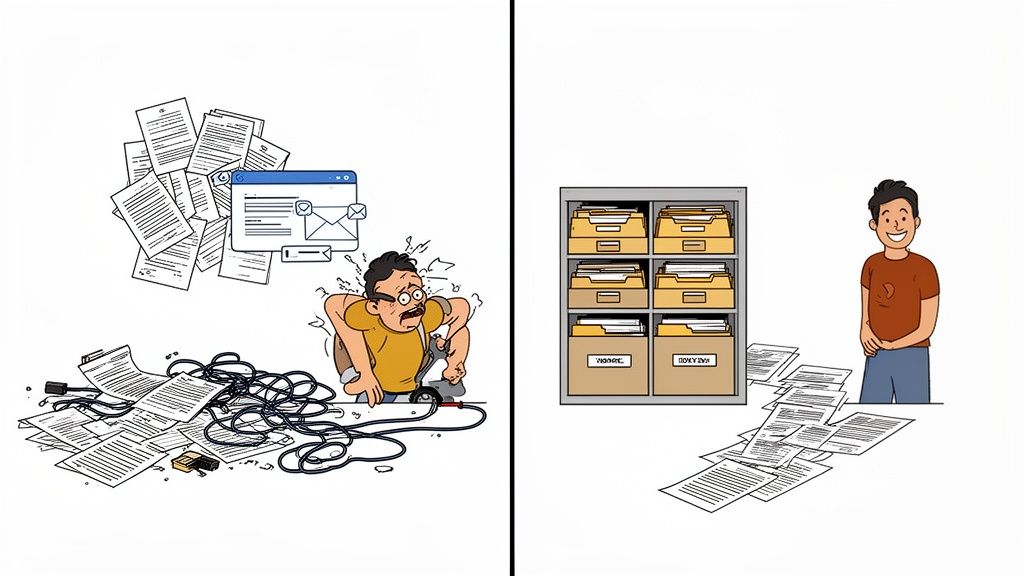
This simple "ask" is actually the first, and arguably most important, step in countless business processes. It's what kicks off client onboarding, what builds the foundation of a legal case, and what gets the ball rolling in HR. If this initial step is messy, everything that comes after it will be, too.
Trying to collect documents through endless email chains is like attempting to cook a gourmet meal in a kitchen where ingredients are scattered everywhere, recipes are missing, and utensils are hidden in random drawers. It’s chaotic, inefficient, and a recipe for disaster.
The Daily Grind of a Manual Process
For most businesses, the reality of managing file requests is a series of nagging headaches. This scattered approach creates major bottlenecks that slow down entire teams and leave clients feeling frustrated. Sound familiar?
- The Endless Chase: You're constantly sending "just following up" emails and making phone calls to track down documents that were never sent.
- The Wrong Format Fiasco: The client sends a file, but it’s in a format you can't use. Now you have to go back and ask them to send it again.
- The Security Nightmare: Sensitive information is flying back and forth in unsecured email attachments, creating serious risks for data breaches and compliance violations.
A disorganized file request system does more than just waste time—it creates a terrible client experience and puts sensitive data in jeopardy. Every manual follow-up chips away at your efficiency and your professional image.
From Chaos to Clarity
The alternative is to move to a structured, centralized system built for one thing: collecting documents. This is how you turn a major source of frustration into a smooth, predictable workflow.
By creating a single, secure portal for every file request, you remove all the guesswork for both your team and your clients. Instead of a cluttered inbox filled with confusing email threads, you get an organized dashboard where every document is neatly accounted for. This isn't just about making things easier; it's about building a reliable, professional, and secure foundation for how you do business.
The True Cost of a Broken File Request Process
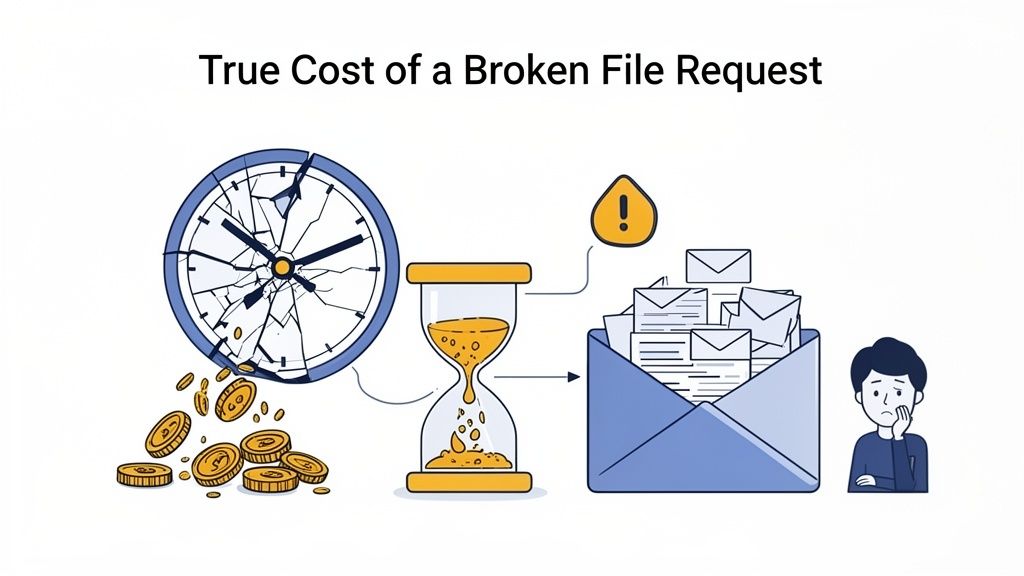
Relying on old-school methods like email attachments and shared folders might feel comfortable, but this comfort comes with some steep, hidden costs that quietly bleed your business dry. These problems are more than just small annoyances; they're a major drag on your team's productivity, your company's security, and even your reputation.
When every file request is a manual chore, you set off a chain reaction of wasted time and resources. Let's break down the real business impact into three critical areas.
The Productivity Drain
The most obvious cost is the loss of your team's precious time. Chasing documents manually is a black hole for administrative tasks, pulling your best people away from the work that actually generates revenue.
Just think about the hours that vanish every week on things like:
- Manual Follow-Ups: Writing and sending that same "just checking in" email over and over.
- Document Herding: Digging through endless email threads to find the one correct attachment.
- Status Tracking: Juggling spreadsheets just to see who sent what and what's still missing.
This isn't a one-time thing. It's a constant, compounding drain that keeps your team stuck doing low-value work instead of focusing on what really matters.
Manually chasing documents is more than just inefficient—it’s a direct hit to your bottom line. Every hour spent on follow-ups is an hour not spent on client service, growth, or innovation.
Escalating Security and Compliance Risks
Beyond the lost hours, using email for a sensitive file request throws the door wide open to serious security problems. Email was never built to be a secure vault for private information. When you lean on it for this, you're exposing both your business and your clients to massive risks.
Every single unsecured attachment is a potential liability. A data breach from one misdirected email can lead to crippling financial penalties, legal battles, and permanent damage to your brand. For businesses in regulated industries like healthcare (HIPAA) or finance (GDPR), the "I think they sent it" nature of email just doesn't cut it.
A Damaging Client Experience
Finally, a clunky file request process makes for a terrible client experience. When your clients have to navigate confusing email chains, fight with attachment size limits, and get hit with repetitive follow-ups, it's just plain frustrating. It chips away at their confidence in your ability to get the job done right.
All that friction leads straight to project delays and bottlenecks, making your whole operation look disorganized. In today's market, giving clients a smooth, simple, and secure experience isn't a bonus—it's a basic requirement. A messy process can be the very thing that sends a great client to a competitor who makes it easier to do business with them.
How Automation Transforms Your Document Workflow
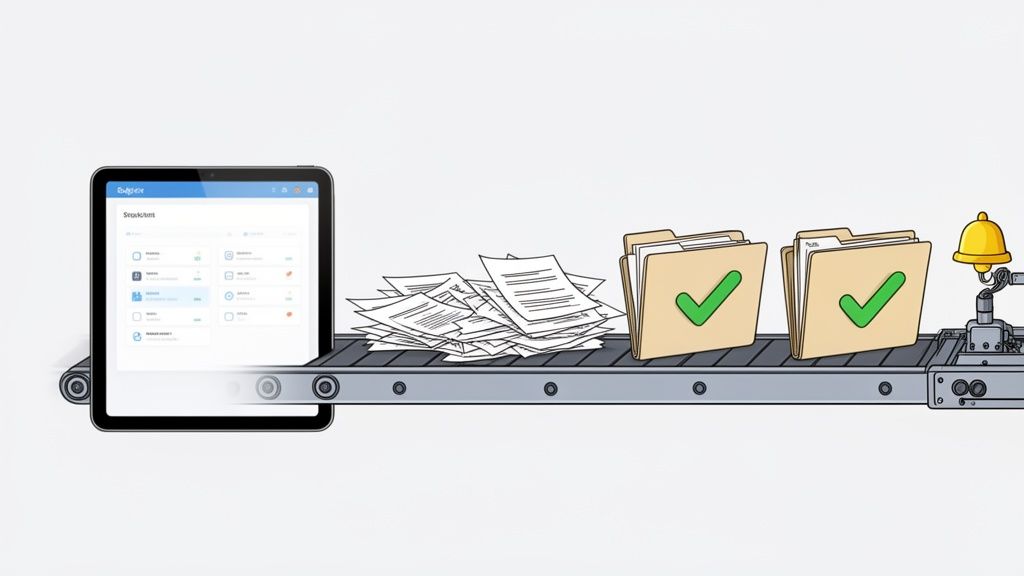
We’ve all been there—stuck in endless email threads, chasing clients for missing documents. It’s a frustrating grind that eats up time and introduces friction. But dedicated platforms are designed to completely overhaul this experience for everyone involved.
Instead of messy, confusing exchanges, you can build a clean, professional workflow that practically runs itself. The secret sauce is automation, which takes over all the repetitive, low-value tasks that drain your team’s energy.
It’s a fundamental shift away from a reactive "did you send it yet?" model. You move to a proactive, organized system that just works. A modern solution helps you build a faster, smarter, and far more reliable process for every single file request.
Branded Portals and Automated Reminders
The first thing your clients see is a polished, professional interface. A good file request platform lets you create a custom-branded portal that looks and feels like your company. It provides a smooth experience on any device, allowing clients to simply drag and drop files into a secure area—no accounts or software downloads needed.
But that simple front-end is just the tip of the iceberg. Under the hood, smart automation is doing the heavy lifting.
- Automated Reminders: Forget manual follow-ups. The system can automatically send polite, persistent reminders to clients until every last document is in. This frees up your team for work that actually matters.
- Pre-Built Templates: Why start from scratch every time? You can use industry-specific templates for legal, HR, or finance to launch a new request in minutes.
- Expiration Tracking: The platform can even keep an eye on documents with expiration dates, like licenses or certifications, and automatically request updated versions before they become a problem.
Gaining Control with a Validation Dashboard
Maybe the most powerful feature of all is the central validation dashboard. Think of it as your mission control center for every outstanding file request. You get a real-time snapshot of what's been submitted, what's still pending, and what needs a quick look. It's a game-changer when you want to collect documents easily and without the usual headaches.
A validation dashboard stops errors before they snowball. You can review each submission, approve correct files, and reject incorrect ones with a single click, giving the client clear feedback without starting yet another email chain.
This level of control ensures every document is right the first time, putting an end to the back-and-forth that kills project timelines. It turns a messy, unpredictable chore into an organized, efficient workflow you can actually count on.
Real-World Wins: How Top Industries Use Smart File Requests
It’s one thing to talk about the benefits of a good file request system, but it’s another to see it working in the real world. Across all sorts of industries, companies are ditching messy email threads for clean, automated workflows. This isn't just about being more organized; it's about solving specific, expensive problems that slow them down.
Let's look at a few examples. Whether you're in law, HR, or finance, the basic challenge is the same: get the right documents from the right people, on time. A dedicated system brings much-needed structure to that process, making it predictable, secure, and far more professional.
Immigration Law: Taming the Paperwork Mountain
Immigration firms live and breathe paperwork. A single missing document can throw a client's life into chaos, causing devastating delays. For them, a smart file request system isn’t a luxury—it’s essential for managing the sheer volume of documents for visa applications, green cards, and citizenship cases.
Instead of trying to manually track hundreds of files for every single case, firms can build a simple, step-by-step checklist for each applicant. This gives everyone a single source of truth, drastically cutting down on human error. It also gives clients a secure, easy-to-use portal to upload incredibly sensitive documents like passports, birth certificates, and financial records. The whole process becomes faster and more accurate, which is a huge deal when you're trying to avoid costly rejections.
Think about this: recent USCIS data shows a mind-boggling backlog. Pending work permits have shot up by 87% to over 2 million cases. Traditional methods just can't keep up, and incomplete files only make the delays worse. In just one fiscal year, over 47,000 family-sponsored green card applications were denied, with a 9% denial rate often tied directly to missing paperwork. This is exactly why features like automated reminders and validation dashboards are game-changers. You can discover more about these immigration trends.
Human Resources: Making a Great First Impression
For any HR department, the onboarding process is the company's first real handshake with a new employee. A clumsy experience, with endless email attachments for tax forms, I-9s, and contracts, starts things off on the wrong foot. Automating document collection turns that around completely, creating a smooth, welcoming start.
A dedicated platform lets HR teams:
- Send one simple link with a complete checklist of every document needed.
- Gently nudge new hires with automatic reminders if they forget something.
- Securely gather and organize sensitive personal information in a way that’s fully compliant.
This changes onboarding from a frantic administrative task into an efficient, professional workflow. It sends a message that the organization is buttoned-up and ready, ensuring every new person can hit the ground running on day one.
Mortgage Brokers: Closing Loans Faster
In the mortgage world, time is money. Speed and accuracy are everything. Brokers are chasing down a long list of financial documents—bank statements, pay stubs, tax returns, you name it. Using email for this is painfully slow and frankly, not very secure. These delays can literally cost a client their dream home.
A purpose-built file request platform gives clients a secure, central hub to upload all their financial data. Brokers can set up templates for different loan types, so they always ask for the right documents from the get-go. With a validation dashboard, they can see at a glance what’s been submitted, catching incomplete applications before they gum up the works. The result? A faster, smoother experience for everyone involved.
Keeping Client Data Secure and Compliant
When your business handles sensitive documents, security isn't just a feature—it's the foundation of trust. A modern file request platform is built with this reality at its core, designed from the ground up to protect your client’s data and keep your operations compliant.
Relying on email to collect sensitive files is like sending a postcard with your bank details written on the back. It’s wide open and incredibly vulnerable. A dedicated platform, on the other hand, works like a digital armored truck, protecting every document from the moment it leaves your client's hands until it's securely stored in yours.
For any business serious about preventing data breaches and meeting tough regulations like GDPR, making this switch is a must. The good news is that automating your intake process doesn't weaken your security; it actually makes it much stronger.
Core Security Pillars of a Modern Platform
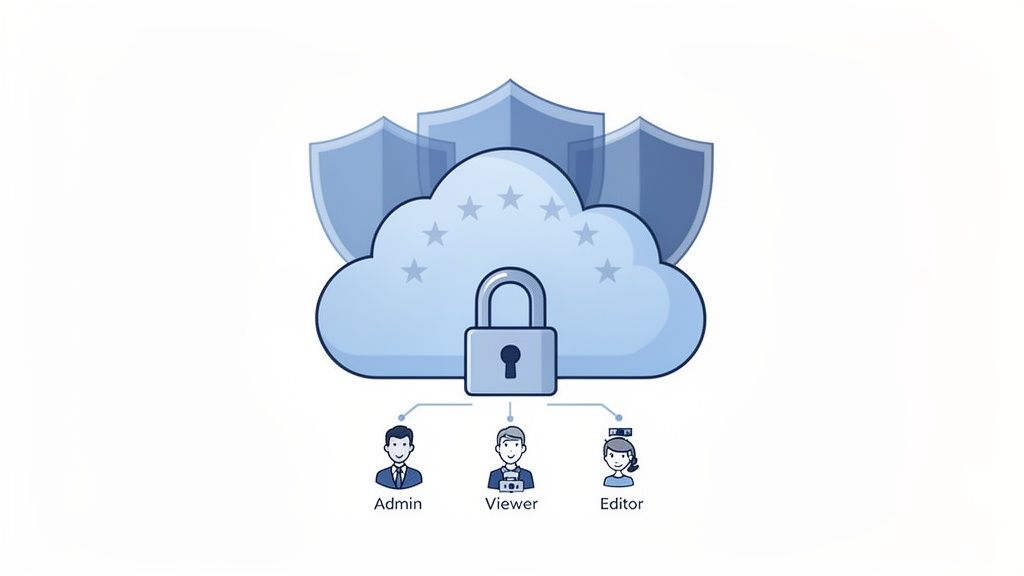
To properly safeguard sensitive information, a platform needs multiple layers of defense. These features all work together to create a secure bubble for every file request, ensuring the data stays private and unaltered.
- End-to-End Encryption: Think of this as a digital lockbox. It scrambles the data while it’s traveling over the internet and while it’s stored, making it completely unreadable to anyone without the key.
- Secure European Cloud Hosting: If you do business under GDPR, where your data lives matters. Hosting in Europe is essential for compliance, keeping data within the right legal jurisdiction.
- Role-Based Access Controls: You get to be the gatekeeper. You decide exactly who can see, edit, or manage sensitive files, which stops unauthorized access from both inside and outside your organization.
These elements are non-negotiable for a truly secure document intake platform that can keep up with today's demands.
This is especially critical in fields that handle huge volumes of documents across international borders. For example, global visa applications are on the rise. In just one recent fiscal year, the U.S. State Department issued over 612,000 immigrant visas, an 8.75% jump from the previous year. With denial rates around 9-10%—often due to simple paperwork mistakes—a secure, GDPR-compliant platform becomes indispensable for managing the flow. You can discover more details about these immigration statistics.
A secure file request process isn't just about protecting data—it's about building and maintaining client trust. Every security feature demonstrates your commitment to safeguarding their most important information, turning compliance into a competitive advantage.
By choosing a platform built on these security principles, you shift from a position of risk to one of confidence. You can look your clients in the eye and assure them their information is handled with the highest level of care, building a stronger, more resilient business relationship.
Getting Started with a New File Request System
Jumping into a new system for collecting files can feel like a massive undertaking, but you don't have to boil the ocean. A bit of planning and a phased approach can make the transition surprisingly smooth for your team and your clients.
First things first: take a hard look at how you collect documents right now. Where do things always seem to grind to a halt? Are you forever sending follow-up emails for the same W-9s or correcting mistakes on intake forms? Pinpointing these friction points is the key—it shows you exactly where an automated system can make the biggest difference.
Start Small with a Pilot Project
Instead of flipping the switch for everyone at once, try a test run with a small, manageable group. Pick one team or a single client project to be your guinea pig. This gives you a safe space to iron out any wrinkles and get honest feedback before the big launch.
Running a pilot project is smart for a few reasons:
- You'll find your champions. Some people will naturally click with the new system. They'll become your biggest advocates when it's time to roll it out to everyone else.
- It's the perfect time to build templates. You can create and tweak your first file request templates based on real-world use, making sure they're crystal clear for clients.
- Success builds momentum. A smooth pilot project is your best internal case study. It's much easier to get the rest of the company on board when you can show them it actually works.
At the end of the day, a successful rollout is less about the technology and more about the people. Be open and clear about what’s happening, why you're making the change, and—most importantly—how it will make everyone's job a little bit easier.
Once you’ve nailed the pilot, you can start creating branded templates that look and feel like your company. A professional portal goes a long way in building client confidence. With a solid plan and clear communication, you’ll be on your way to a new system that saves time, cuts down on errors, and makes your whole workflow run better.
Answering Your Questions About File Request Platforms
Jumping into new technology always brings up a few questions. If you're thinking about ditching the old email-and-spreadsheet shuffle, you're probably wondering about things like security, how your clients will take to it, and how long it'll take to get running. Let's tackle the big ones.
A lot of businesses hesitate, worried that a new system will be a hassle for their clients. But the truth is, a good platform actually makes their life easier, creating a much clearer and simpler experience than digging through a messy inbox.
Is It Really More Secure Than Email?
Absolutely, and it's not even close. Think about it: email is often unencrypted and is still the number one playground for cyberattacks. A dedicated file request platform is built differently from the ground up. It uses things like end-to-end encryption and secure servers to lock down sensitive information from the moment it leaves your client's computer.
This isn't just about feeling safe; it's a must-have for meeting compliance rules like GDPR and protecting your business from the nightmare of a data breach.
Will My Clients Find It Difficult to Use?
Not at all. The best portals are designed for people who aren't tech experts. Most offer a simple drag-and-drop interface that works on any phone, tablet, or computer. Crucially, it doesn't force your clients to create yet another account or download an app.
It’s just a clean, simple link. The whole process is usually much faster and way less confusing than trying to find the right attachment in a long, rambling email chain. For a closer look, check out our guide on choosing the right client document request software.
People often assume a new system automatically means more complexity. The reality is the opposite. A well-designed file request portal gets rid of the friction and confusion for everyone involved, making the whole process crystal clear for both your team and your clients.
How Quickly Can I Set It Up?
You can be up and running way faster than you’d expect. Many platforms come with pre-built templates for common needs in accounting, legal, or HR. This means you can launch your first automated file request in just a few minutes.
From there, adding your own branding and setting up automatic reminder schedules is simple. You'll start getting time back in your day almost immediately.
Ready to stop chasing documents and start focusing on what matters? Superdocu offers a simple, secure, and professional way to handle every file request. Start your free trial today and see the difference.