
Tired of chasing clients for paperwork through endless email chains and confusing spreadsheets? Document collection software is the answer. It’s a tool designed to completely automate how you request, collect, and organize files from clients, partners, or anyone else.
Think of it as your dedicated project manager for paperwork, but one that never sleeps. It replaces the chaos of manual follow-ups with a secure, centralized hub for every document you need.
What Is Document Collection Software?
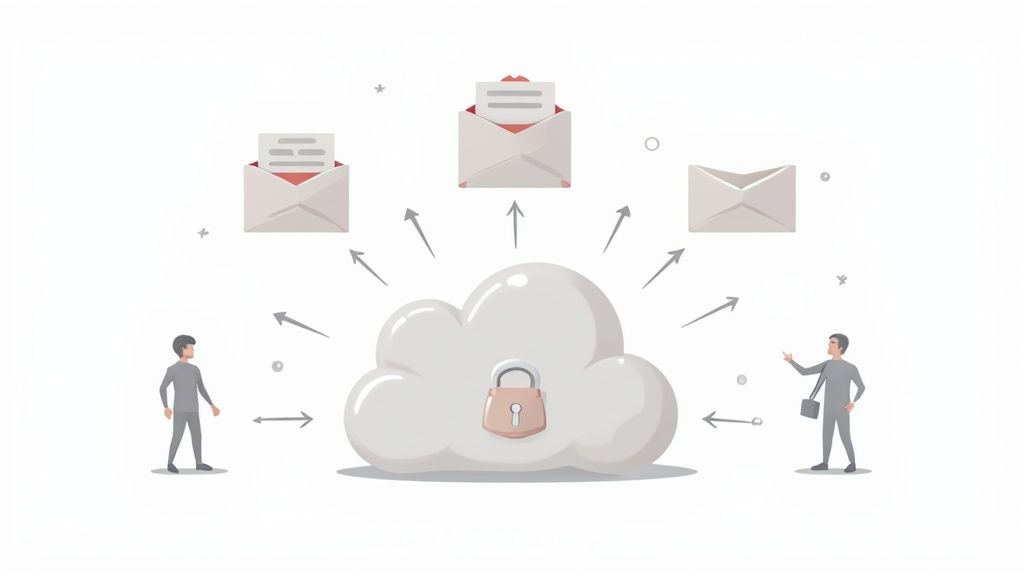
Let's be honest, the old way of gathering documents is a mess. You send an email with a list of what you need. The client sends back a few files. You reply asking for the rest. They send another email with a forgotten attachment. Before you know it, you're digging through a dozen emails, downloading attachments one by one, and trying to track everything in a clunky spreadsheet. It’s a huge time-sink, and frankly, it's a security nightmare.
Document collection software fixes this fundamentally broken process.
Instead of sending scattered emails, you create a simple, clear request list inside the platform. The software then sends your client a single, professional-looking link. They click it and are taken to a secure portal where they see exactly what's needed, with clear instructions for each item. They just drag, drop, and submit.
For you, everything lands in one organized place. No more guesswork. For your client, the experience is smooth and professional. This shift toward smarter systems is why the global document collection software market is expected to more than double, growing from $2.51 billion to over $5.2 billion by 2035. It's not a niche tool anymore; it's becoming essential.
From Manual Chaos to Automated Clarity
Making the switch from manual methods to a dedicated software solution isn't just a small tweak—it's a complete operational upgrade. You're not just saving a few minutes here and there; you're building a more secure, professional, and reliable way of doing business.
A huge part of this is moving sensitive information out of vulnerable email inboxes and into a system built for security. A well-designed client document collection portal, for example, gives your clients a branded, intuitive space to upload their files, which immediately builds trust and makes their life easier.
The difference between the old way and the new way is night and day. Let's break it down.
Manual Document Collection vs Automated Software
The table below gives you a clear, side-by-side look at how a dedicated software solution stacks up against the traditional email-and-spreadsheet shuffle.
| Aspect | Manual Process (Email & Spreadsheets) | Document Collection Software |
|---|---|---|
| Process | Disorganized, relies on manual follow-ups, and is extremely prone to human error. | A centralized dashboard with automated reminders and structured checklists keeps everyone on track. |
| Security | Insecure email attachments are a primary target for data breaches and interception. | End-to-end encryption and secure, access-controlled portals keep sensitive data safe. |
| Client Experience | Confusing and frustrating. Clients are bombarded with multiple emails and unclear instructions. | A simple, professional, and unified portal for all document submissions makes it easy for clients. |
| Tracking | Requires constant manual updates to spreadsheets, making it impossible to see the real-time status. | Live dashboards instantly show what's been submitted, what's pending, and what's approved. |
| Efficiency | Consumes countless hours of administrative time chasing, downloading, and organizing files. | Drastically reduces manual work, freeing up your team for more important, high-value tasks. |
Ultimately, moving to an automated platform means trading administrative headaches for smooth, predictable efficiency. You get back time, reduce risk, and give your clients a much better experience.
What to Look For: The Must-Have Features of a Great Document Collection Platform

Not all document collection tools are built the same. While they all promise to make gathering paperwork easier, the best ones share a core set of features that genuinely stamp out manual work, boost security, and give your clients a truly professional experience.
Think of these features as the engine and navigation system for your new, streamlined process. Each one is designed to solve a specific headache that comes with using old-school methods like email, turning a chaotic chore into a smooth, predictable system.
Automated Workflows and Smart Reminders
Let's be honest: the single biggest time sink in collecting documents is the endless follow-up. Modern software tackles this problem head-on with automated workflows. You simply set up the sequence of requests and reminders once, and the system takes over from there.
Imagine you're onboarding a new employee. Instead of manually sending five different emails for their I-9, tax forms, and banking details, you just trigger a single workflow. The platform then pings them with reminders at intervals you choose—say, every three days—until everything is submitted. This frees up your HR team to focus on giving that new hire a great first week, not chasing down paperwork.
This hands-off approach is a total game-changer for productivity. Many businesses find that automation slashes the time spent on administrative follow-ups by over 75%, letting staff focus on more important work.
Customizable Templates and Branded Client Portals
First impressions matter, and consistency is crucial for building trust. The right software gives you the tools to make sure every client interaction feels polished and professional.
Customizable templates let you save your most-used document request lists. A mortgage broker, for instance, can build a "First-Time Homebuyer" template with all the necessary financial documents. The next time they have a new client, it’s ready to go in a single click. No more forgotten attachments or inconsistent requests.
Even better, a branded client portal provides a secure, professional space for clients to upload their sensitive files. Instead of a generic Dropbox link, they see your company logo and colors. This small but powerful touch reassures them that they're in the right place and that their data is safe, making them feel valued from the very start.
A Centralized Dashboard to See Everything at a Glance
The beauty of these systems is the clarity they bring. A central dashboard gives you a complete, real-time overview of every request. You can instantly see what's pending, what's been submitted, and what needs your review. It’s the end of spreadsheet chaos and the beginning of organized, actionable information.
Validation Dashboards and Expiry Tracking
Getting the documents is only half the battle. You still need to make sure they're correct and keep track of when they expire. This is where a couple of key features become invaluable.
- Validation Dashboard: This is your command center for reviewing every submitted file. You can quickly approve documents that look good or reject incorrect ones with a quick note explaining what needs to be fixed. It creates a clear, direct feedback loop that avoids confusing back-and-forth email chains.
- Expiry Date Tracking: For time-sensitive documents like insurance certificates, professional licenses, or employee certifications, the software can automatically track expiration dates. It sends you and your client a heads-up well in advance, so you’re never caught out of compliance. No more manual calendar reminders!
Integrations and Rock-Solid Security
A great tool plays well with others. The best document collection platforms offer integrations with the business software you already rely on, like your CRM, cloud storage, or e-signature tools like DocuSign. This allows information to flow seamlessly between your systems, cutting down on manual data entry and creating one unified process.
Finally, and most importantly, security can't be an afterthought. Modern platforms are built with security at their core, offering protection that email could never match.
- End-to-end encryption keeps data safe whether it's being uploaded or sitting on a server.
- Compliance with standards like GDPR and SOC 2 means you're meeting key regulatory requirements.
- Secure, role-based access ensures only the right people can see sensitive information.
This focus on security is a huge reason why cloud-based systems have become the industry standard. In fact, cloud deployments now make up 68% of the document management systems market. For any business handling sensitive information, choosing a secure document intake platform is no longer a luxury—it's a necessity.
The Real Business Impact of Automated Collection

It’s easy to get excited about features like automated reminders and branded portals. But let’s be real—the true value is in the measurable impact on your business. Switching to document collection software isn't just about adding a new tool; it's a strategic move that delivers a clear return by boosting efficiency, locking down security, and making your clients happier.
When you go from manual chaos to automated clarity, the benefits ripple through your entire operation. It frees up your team's time—your most valuable asset—while cutting down the risks that come with handling sensitive information.
Slash Administrative Time and Gain Massive Efficiency
The most immediate win you'll see is getting back all those hours lost to administrative grunt work. Chasing down clients, sending endless follow-up emails, downloading attachments one by one, and updating spreadsheets—these are low-value tasks that kill productivity and morale.
Think about a mortgage brokerage handling dozens of loan applications a month. The old way means a never-ending cycle of phone calls and emails just to get pay stubs, bank statements, and tax returns. With a proper system, a single automated workflow does the heavy lifting, often cutting the collection cycle time by as much as 80%. This isn't a small tweak; it's a game-changer that lets loan officers focus on closing deals instead of chasing paper.
Businesses often report that automating document collection frees up key staff for 5-10 hours every week. That's time you can pour back into what really matters: finding new clients, strategic planning, or simply delivering better service.
This newfound efficiency means you can grow without having to hire more admin staff. You can take on more clients, projects, or onboarding requests with the team you already have, which directly boosts your bottom line.
Dramatically Improve Security and Compliance
Let's face it: using email to move confidential files around is a huge liability. Email is notoriously insecure and a prime target for data breaches. Document collection software moves these exchanges into a secure, encrypted space built to protect both you and your clients.
This gives you multiple layers of protection:
- End-to-End Encryption: Files are scrambled during upload and while stored, making them unreadable to anyone who shouldn't see them.
- Secure Access Controls: You decide exactly who can view or download specific documents, so there's no risk of information getting into the wrong hands.
- Full Audit Trails: The platform logs every single action. You get a complete history of who accessed what and when, which is absolutely critical for any compliance audit.
For anyone in legal, finance, or HR, staying compliant with regulations like GDPR isn't optional. Using a secure platform drastically reduces the risk of eye-watering fines and the reputational damage that comes with a data breach.
Create a Superior Client Experience That Builds Loyalty
Often, the way you collect documents is one of the very first interactions a new client has with your business. A clunky, confusing process creates friction right away and can shake their confidence. On the flip side, a smooth, professional, and secure experience builds trust from day one.
Put yourself in your client's shoes. Instead of a long, messy email chain, they get a single link to a clean, branded portal. They see a simple checklist of exactly what you need and can upload everything in one go, right from their phone or computer.
This simple, modern approach shows them you value their time and take their security seriously. It turns a frustrating task into a satisfying one, setting a positive tone for the entire relationship. That great first impression becomes a real differentiator, helping you keep clients and earn referrals in a crowded market.
How Different Industries Use Document Collection Software

Sure, the big-picture benefits of document collection software—saving time, tightening security, and making clients happier—apply to just about everyone. But the real magic happens when you see how it solves the unique headaches of different fields.
Every industry has its own mountain of paperwork, its own compliance rules, and its own workflow quirks. A great platform isn't a one-size-fits-all solution; it's a flexible tool that adapts to the specific, day-to-day problems people are actually facing. It can transform a universal administrative bottleneck into a serious competitive edge.
Let’s dig into how different pros are putting this tech to work.
Legal and Immigration Firms
In the legal world, everything hinges on collecting evidence, client info, and signed agreements. If you fumble this part, you're looking at delays, compliance trouble, or worse. Document collection software creates a secure, easy-to-follow trail for every single file.
A law firm can create a template for new clients that automatically requests their ID, the signed retainer agreement, and other initial case files. It’s not just faster; it also makes the firm look incredibly professional from day one.
Immigration consultants have it even tougher, often dealing with stacks of paperwork where one missing form can sink an entire application. They use the software to build crystal-clear checklists for visa applicants, making sure every required photo, form, and proof of funds is submitted correctly the first time around.
Human Resources and Staffing
Bringing a new employee on board means a blizzard of paperwork. You've got tax forms, I-9s, signed policy handbooks, and direct deposit details. For an HR team hiring more than one person at a time, this can quickly become a mess.
This is where automation shines. The software can bundle the entire onboarding packet into a single request. A new hire gets a link to a company-branded portal where they can upload everything from their phone or laptop. The system nudges them with automatic reminders if they forget something, freeing up HR to focus on the human side of welcoming someone to the team.
This is a game-changer for compliance. The expiry date tracking can automatically flag when a work visa or professional license is about to expire, giving you a heads-up long before it becomes a problem. The company is always ready for an audit.
For staffing agencies, it’s all about speed. They use these tools to quickly pull in résumés, references, and certifications from candidates, helping them fill open roles faster than the competition.
Real Estate and Mortgage Brokers
Getting a real estate deal or a mortgage across the finish line is basically a marathon of paperwork. Agents and brokers need a quick, secure way to gather everything from purchase agreements and inspection reports to bank statements and pay stubs.
A real estate agent can spin up a central portal for a specific property deal. It gives the buyer, seller, and lawyers one place to upload and see all the necessary documents. That kind of transparency keeps the deal moving and prevents last-minute surprises.
Mortgage brokers are under even more pressure. They can create detailed request lists for loan applicants that use conditional logic—if you answer "yes" to one question, it automatically asks for the right follow-up document. This smart, structured approach cuts way down on the endless email chains that usually slow down loan approvals.
Transportation and Logistics
In trucking and logistics, compliance isn't just a suggestion; it’s the law. These companies have to keep flawless, up-to-date records for every driver and vehicle—licenses, insurance, registration, you name it.
A fleet manager can use document collection software to automate the entire driver onboarding process. New drivers get a clear request for all their credentials, and the system keeps an eye on expiration dates, sending alerts when a license or insurance policy is up for renewal. It’s a proactive way to avoid massive fines.
Building a smart workflow is everything here. A dedicated courier onboarding document portal can make this process unbelievably smooth. This level of organization doesn't just keep regulators happy; it makes the whole operation run better, ensuring every driver on the road is good to go.
How to Choose the Right Document Collection Software
Picking the right software to handle your document collection can feel like a huge task, but it really comes down to a few straightforward questions. How will this tool actually fit into the way you already work? Is it secure enough for your clients' most sensitive files? And will it be able to keep up as your business grows? Thinking through these points will help you filter out the noise and find a platform that solves problems, rather than creating new ones.
The best choice isn’t just about a long list of features. It's about finding something that makes life genuinely easier for both your team and your clients. A confusing portal or a missing integration can quickly turn a promising solution into just another administrative headache. The goal is to find a system that feels like a natural part of your business.
The market for these tools is getting bigger every year. The entire document management software space, which includes these collection platforms, is expected to jump from USD 8.8 billion in 2025 to USD 27.2 billion by 2035. Small businesses are a huge part of that growth, making up about 30% of the market, which shows just how vital these tools are becoming for companies of all sizes. You can dig into more of the data on this trend over at Future Market Insights.
Core Functionality and Ease of Use
Before you get dazzled by fancy, high-tech features, nail down the basics. The software has to be dead simple for everyone who uses it—your team, and especially your clients. If a client finds the portal confusing, they’ll just give up and email you attachments, which completely defeats the purpose of having the software in the first place.
Look for a clean, simple design and a no-fuss process for requesting documents. A good platform will let you build and save templates for your common requests, so you’re not reinventing the wheel every single time.
Here's a simple test for any demo: "Could my least tech-savvy client figure this out without calling me for help?" If the answer is no, walk away. The client experience is everything.
Security and Compliance Certifications
When you're dealing with financial statements, legal contracts, or personal IDs, security can't be an afterthought. Your document collection software needs to be a fortress for client data, not just a digital shoebox. Continuing to rely on email for this stuff is a huge risk; a dedicated, secure platform is no longer optional.
Look for concrete security standards and certifications. These aren't just letters and numbers; they're proof that the company takes data protection seriously.
- SOC 2 Compliance: This is an official audit that verifies a provider is managing your data securely to protect your business and your clients' privacy.
- ISO 27001 Certification: This is the global benchmark for information security, proving the company has serious controls in place.
- GDPR Compliance: If you work with anyone in the European Union, this is non-negotiable and helps you avoid massive fines.
Don't be shy about asking a potential vendor for their security paperwork. If they hesitate or can't produce it easily, that’s a giant red flag.
Scalability and Pricing Structure
Your business is going to grow, and your software needs to be ready to grow with you. A tool that works great for ten clients a month might completely fall apart when you’re dealing with a hundred. Check out the platform’s pricing tiers and feature limits to see how it handles scale.
Does the price jump every time you add a team member or send a few more requests? You want a transparent pricing model that makes sense for the long haul.
For instance, this is a snapshot of the pricing for Superdocu, which gives you an idea of how features can be scaled across different plans.
A model like this lets a small company get started on an affordable plan and then move up as they need more advanced tools, like API access or custom integrations.
When you're looking at pricing, think beyond the monthly sticker price. Consider the total cost, including any setup fees or extra charges for support. A plan that costs a bit more but includes premium support and key integrations might be a much better value in the long run than a cheap, bare-bones option. The right document collection software should be an asset that pays for itself, not just another bill to pay.
Got Questions About Document Collection Software?
It’s smart to be thorough when you’re thinking about bringing a new tool into your business. Even when the benefits look great on paper, you want to know it’s going to be secure, easy for your team to pick up, and powerful enough to grow with you. This is non-negotiable when you’re dealing with sensitive client information.
To help you get the clarity you need, we’ve answered a few of the most common questions we hear from people exploring document collection software. The goal here is to help you feel confident that you’re making the right call for your business.
Is This Software Actually Secure for Sensitive Information?
Yes, and that’s a big part of the appeal. A good document collection platform isn't just a bit more secure than email—it’s in a completely different league. These systems are designed from the ground up with security as the top priority, creating a controlled environment that your standard inbox just can't offer.
For starters, they use end-to-end encryption, which essentially locks your data in a digital vault from the moment it leaves your client's device until it’s safely stored with you. It’s unreadable to anyone without the key. These platforms also adhere to major data protection standards like GDPR, helping you tick those important compliance boxes.
One of the most critical security tools is role-based access control. It lets you decide exactly who on your team can see or touch certain files. This simple feature is a game-changer for maintaining confidentiality and preventing accidental data leaks—a level of control that’s nearly impossible to manage with email.
How Much of a Headache Is It to Implement and Integrate?
This is a valid worry, but you’ll probably be surprised at how straightforward it is. The best modern tools are cloud-based, so there’s no messy software to install on everyone’s computer. You just log in through your web browser and you’re ready to go.
Getting set up usually just takes a few quick steps:
- Brand Your Portal: Pop in your logo and company colors. It takes minutes and makes a huge difference in looking professional.
- Build Your First Templates: Create a reusable checklist for a process you do all the time, like onboarding a new hire or collecting loan application documents.
- Turn On Reminders: Set up the schedule for automated follow-ups so the system can do the chasing for you.
And it doesn't have to be a silo. Most platforms play nicely with the tools you already rely on. Through direct integrations or connectors like Zapier, you can link your document software to your CRM, practice management system, or cloud storage. This lets data move between systems automatically, no big IT project required.
Can This Software Keep Up with Complex Workflows or a High Volume of Requests?
Absolutely. Scalability is built into the DNA of a solid document collection platform. These systems are designed to handle everything from a single document request to complex, multi-step processes involving hundreds of files from dozens of people at once. They’re meant for growth.
Features like workflow automation and bulk requests are designed for efficiency at scale. Some even have conditional logic, which is a really smart feature that asks for different documents based on a client’s answers. It creates a personalized, dynamic checklist on the fly.
So, whether you're onboarding ten new clients a month or a thousand, the software can handle it. This makes it a great fit for a small business formalizing its processes for the first time, as well as a larger company that needs to manage increasing demand without ballooning its admin staff. The right platform will support you no matter what stage you’re at.
Ready to stop chasing paperwork and start saving time? Superdocu provides a secure, automated, and professional way to collect documents from your clients. Start your free trial today and see how easy it can be!