
Poor vendor management shows up in places SMBs feel immediately: missed client deadlines, compliance gaps, duplicate tools, and renewals nobody meant to approve. One of the clearest signals is that the top 20% of vendors in the strategic tier typically account for 70 to 80% of procurement spend, which is why tiering vendors into exactly three groups matters so much for control and oversight, according to Workday's vendor management guidance. In professional services, that concentration risk gets worse when a small team tries to manage every vendor the same way.
That's why best practices for vendor management need to be practical, not theoretical. SMBs don't have time for a heavyweight enterprise program that lives in spreadsheets, inboxes, and someone's memory. They need a working system: clear screening criteria, contracts that spell out consequences, dashboards that show what's slipping, and automation that keeps documents, reminders, and reviews moving.
The good news is that this is fixable. A strong vendor program doesn't require a massive procurement department. It requires discipline, a defined process, and the right level of automation for onboarding, renewals, and compliance evidence collection.
Below are ten vendor management practices that work in the field, especially for legal, HR, real estate, immigration, mortgage, transportation, and other service-driven SMB teams.
Table of Contents
- 1. Establish Clear Vendor Selection Criteria and Due Diligence Processes
- 2. Implement Comprehensive Vendor Contracts with Clear Terms and Conditions
- 3. Maintain a Centralized Vendor Management System and Database
- 4. Establish Key Performance Indicators and Regular Performance Monitoring
- 5. Create a Formal Vendor Communication and Escalation Process
- 6. Implement Risk Management and Contingency Planning for Critical Vendors
- 7. Enforce Compliance and Security Standards Across the Vendor Ecosystem
- 8. Build Strategic Partnerships and Relationship Management with Key Vendors
- 9. Establish a Vendor Lifecycle Management Process with Periodic Reviews
- 10. Optimize Vendor Spending and Negotiate Favorable Commercial Terms
- Top 10 Vendor Management Best Practices Comparison
- Next Steps for Elevating Your Vendor Ecosystem
1. Establish Clear Vendor Selection Criteria and Due Diligence Processes
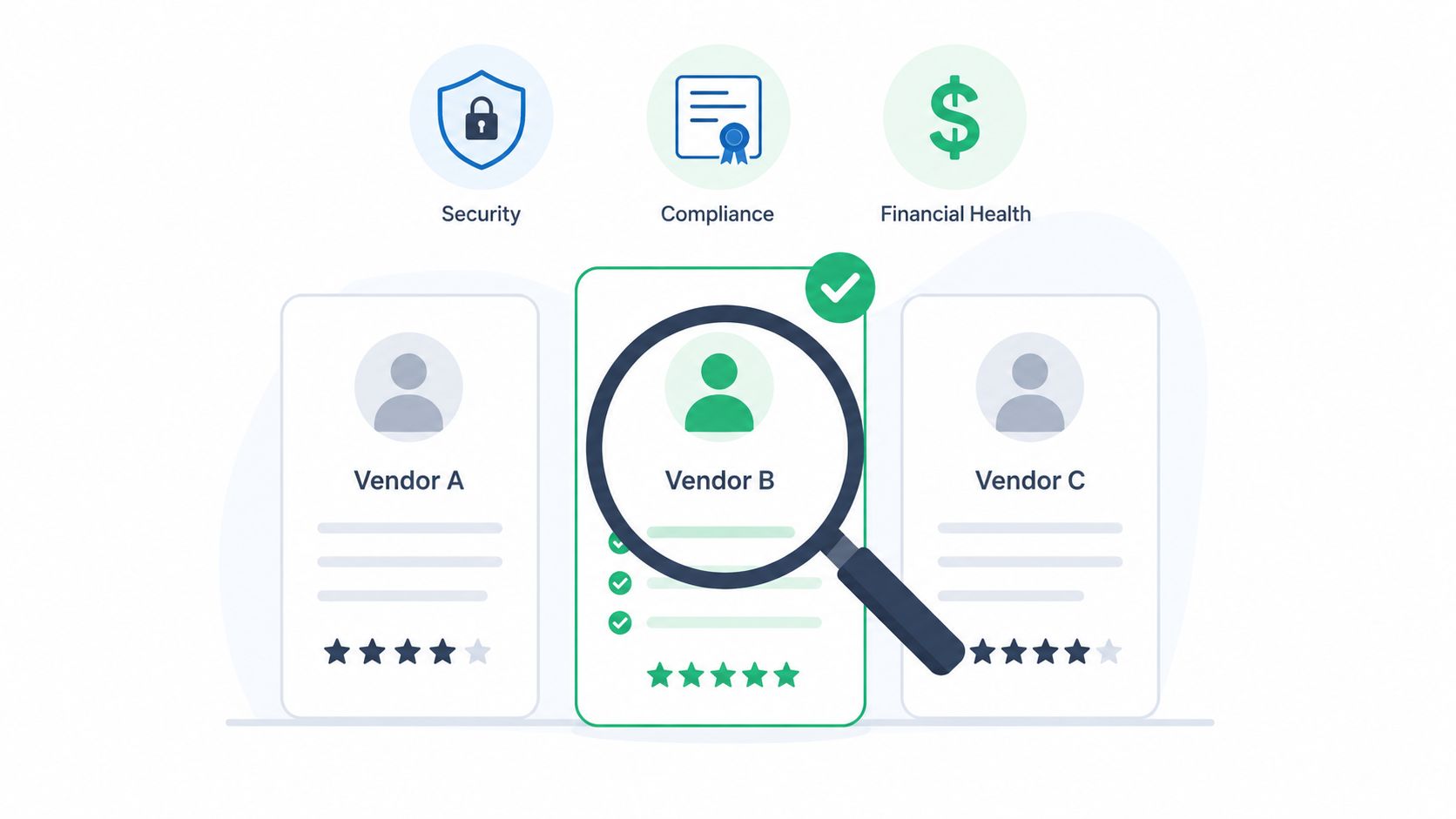
Most vendor problems start long before onboarding. They start when a firm picks a vendor because the demo looked polished, the price was acceptable, or someone had used them before. That's not due diligence. That's optimism.
For SMBs, the fix is simple: use one standard intake and review framework before any contract gets signed. A legal firm evaluating a document management platform should check security controls and data handling. A real estate agency should verify E&O insurance and compliance paperwork. An HR team should confirm that a background check partner can meet the regulatory obligations attached to that service.
Build one evaluation standard before you start buying
A workable review model usually includes operational fit, security, compliance, financial stability, references, and service capability. If the vendor handles sensitive data or a business-critical workflow, go deeper. If the vendor is low impact, keep it lighter, but still consistent.
Industry guidance recommends a tier-based structure with Strategic, Core or Tactical, and Transactional vendors, and a vendor risk register for the top 10 vendors each quarter using likelihood × impact scoring. Any score of 15 or higher should trigger mitigation planning or a contingency strategy, according to this breakdown of IT vendor management best practices.
Practical rule: If you can't explain why a vendor passed your review in writing, you didn't review them well enough.
A strong selection package should include these basics:
- Security review: Ask for certifications, data handling practices, and breach notification procedures.
- Compliance fit: Match the review to your industry obligations, whether that's privacy, employment screening, or financial controls.
- Reference validation: Speak with current clients who use the same service in a similar environment.
- Document collection: Use a structured process for gathering tax forms, insurance, registrations, and certifications. A supplier due diligence tool can help standardize that intake for smaller teams.
If you're working through disposal, recovery, or end-of-life technology partners, this guide to selecting an ITAD vendor is a useful example of how detailed selection criteria should look.
2. Implement Comprehensive Vendor Contracts with Clear Terms and Conditions
A vague contract creates fake comfort. Teams think they're protected because a document exists, but when service slips or a dispute starts, the agreement doesn't answer the questions that matter. What exactly was promised? How is it measured? What happens if the vendor misses?
The best contracts are operational documents, not just legal documents. They define deliverables, milestones, SLAs, security duties, payment terms, exit expectations, and the steps both sides must follow when performance falls short.
Write contracts for operating reality
Many SMBs under-specify their vendor requirements. A mortgage broker may need document turnaround expectations from a title or verification partner. An immigration firm may need data residency language and explicit handling rules for applicant records. An HR agency may need a performance guarantee tied to turnaround and error handling.
Research-backed guidance is blunt here: contracts should include specific deliverables, measurable performance metrics, and clear milestones, and organizations should track this independently from the vendor while reviewing supplier performance on a biannual or annual basis with executive participation for key suppliers, as outlined in Kodiak Hub's explanation of vendor management.
Contracts should answer three questions without interpretation: what the vendor must do, how you will measure it, and what happens if they fail.
For critical services, I also like to define data return, transition support, and system access removal in the contract itself. When a relationship ends under pressure, nobody wants to negotiate the exit while operations are already unstable.
A good agreement usually contains:
- Service levels: Response times, completion standards, uptime or accuracy requirements where relevant.
- Protection clauses: Data privacy, confidentiality, incident notification, and regulatory obligations.
- Consequences: Credits, penalties, corrective action requirements, or step-in rights where appropriate.
- Exit mechanics: Data export, handover support, timelines, and survival clauses for confidentiality and compliance.
3. Maintain a Centralized Vendor Management System and Database

If vendor information lives across inboxes, shared drives, accounting software, and individual desktops, oversight breaks down fast. One person has the contract. Another has the insurance certificate. Finance has the payment history. Nobody has the full picture.
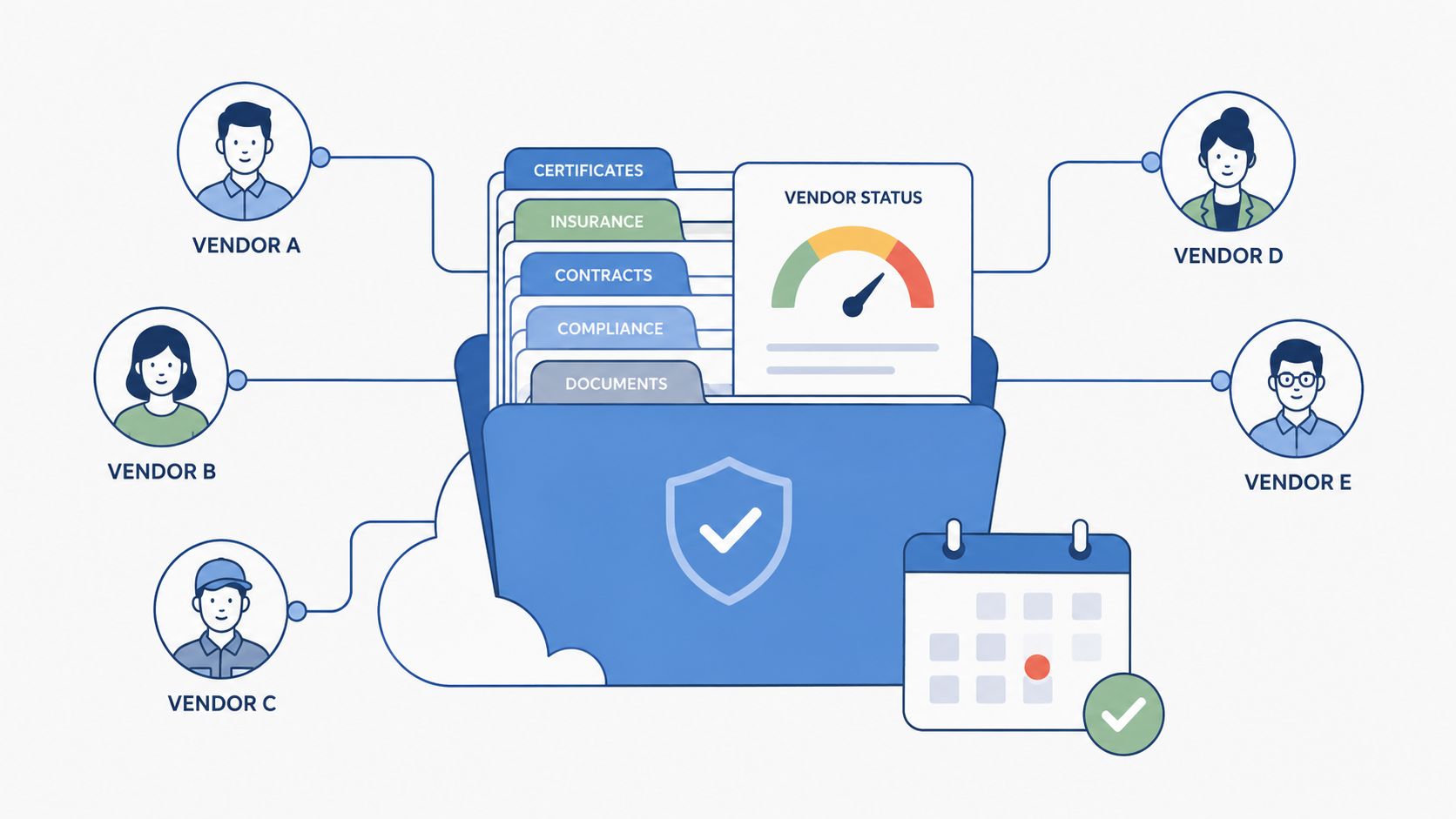
That's why one central system matters. Contracts, renewal dates, vendor contacts, insurance records, certifications, risk ratings, scorecards, and issue logs should all point back to a single vendor record.
One record per vendor
For SMBs, this doesn't need to become a giant procurement platform. It does need to become a single source of truth. The critical point is consistency. One vendor profile. One owner. One renewal path. One place to check status.
Strong practice in contract management is to centralize all SLAs, expiry dates, and compliance documents in one system of record, use automated reminders for expirations and renewals 60 days in advance, and require conscious human approval before anything renews, according to this vendor management best-practices article from Osher.
That matters even more in document-heavy businesses. Legal firms need certifications and DPAs easy to retrieve. Transportation teams need current driver and vehicle documents tied to service providers. HR and staffing teams need proof that screening vendors remain compliant. A business document management system can support this by keeping collection, review, and status tracking in one workflow.
Use clear field standards from the beginning:
- Ownership fields: Name the internal owner, approver, and backup contact.
- Renewal controls: Record notice periods, auto-renew terms, and review dates.
- Compliance records: Store insurance, tax, registration, and certification documents in the same profile.
- Access rules: Give Procurement, Finance, Legal, and operations the visibility they need without opening everything to everyone.
4. Establish Key Performance Indicators and Regular Performance Monitoring
Vendor reviews fail when teams either track too much or track nothing meaningful. A scorecard with twenty measures gets ignored. A relationship with no scorecard turns into opinion and anecdote.
Useful KPIs are specific to the work the vendor performs. For a document collection provider, that may mean responsiveness, document completeness, and issue resolution time. For a background screening partner, it may mean turnaround, accuracy, and exception handling. For a real estate processing vendor, it may mean timeliness and error rates.
Keep the scorecard tight
There's solid guidance on this point. Performance contracts should be limited to a maximum of five critical KPIs per vendor, scorecards should be updated quarterly, and a KPI failure should trigger a mandatory 14-day corrective action plan, according to JPMorgan's vendor management guide.
That limit matters because teams need focus. If every metric is critical, none is.
A practical scorecard often includes:
- Service reliability: Did the vendor deliver within the agreed timeframe?
- Quality: Were there defects, incomplete files, or preventable rework?
- Compliance: Did the vendor maintain required documentation and controls?
- Responsiveness: How quickly did they resolve issues or answer operational questions?
- Commercial health: Is spend aligned with expected service levels?
Industry guidance also recommends visual red, amber, and green reporting and a single dashboard that combines spend, delivery performance, and risk indicators. Organizations using automated scorecards and visual reporting have seen a 20 to 30% reduction in vendor underperformance incidents when scorecards are tied to renewals, development plans, and incentives, according to Smartsheet's vendor management best-practices research.
5. Create a Formal Vendor Communication and Escalation Process
A surprising number of vendor relationships depend on informal communication. One account manager texts someone on your team. A billing issue sits in email. A service problem gets mentioned in a call but never logged. Then everyone acts surprised when the same issue happens again.
Structured communication fixes that. Every significant vendor should have named contacts, expected response windows, issue categories, and an escalation path that's understood before anything goes wrong.
Define who talks to whom when something slips
This is especially important in professional services. If a mortgage file is missing required documents, a broker needs a fast route to the vendor contact who can unblock it. If an immigration case has a deadline risk, the firm needs an urgent escalation path. If a legal services provider misses a filing support step, the issue can't sit in a general inbox.
For high-criticality vendors, expert guidance recommends quarterly deep-dive business reviews, annual security assessments, continuous monitoring, and low-touch automated workflows for transactional suppliers, all within a three-tier model of strategic, operational, and transactional vendors, as described in Technology Match's vendor management guidance for IT leaders.
Put escalation rules in writing. When a service issue becomes urgent is the worst possible time to decide who owns it.
A communication model that works usually includes a few layers:
- Operational contacts: Day-to-day service coordination and ticket follow-up.
- Management escalation: The people who intervene when KPIs slip or risks rise.
- Executive path: Reserved for strategic issues, commercial disputes, or repeated delivery failure.
- Audit trail: Log decisions, issue dates, and agreed next steps so the history survives staff turnover.
6. Implement Risk Management and Contingency Planning for Critical Vendors
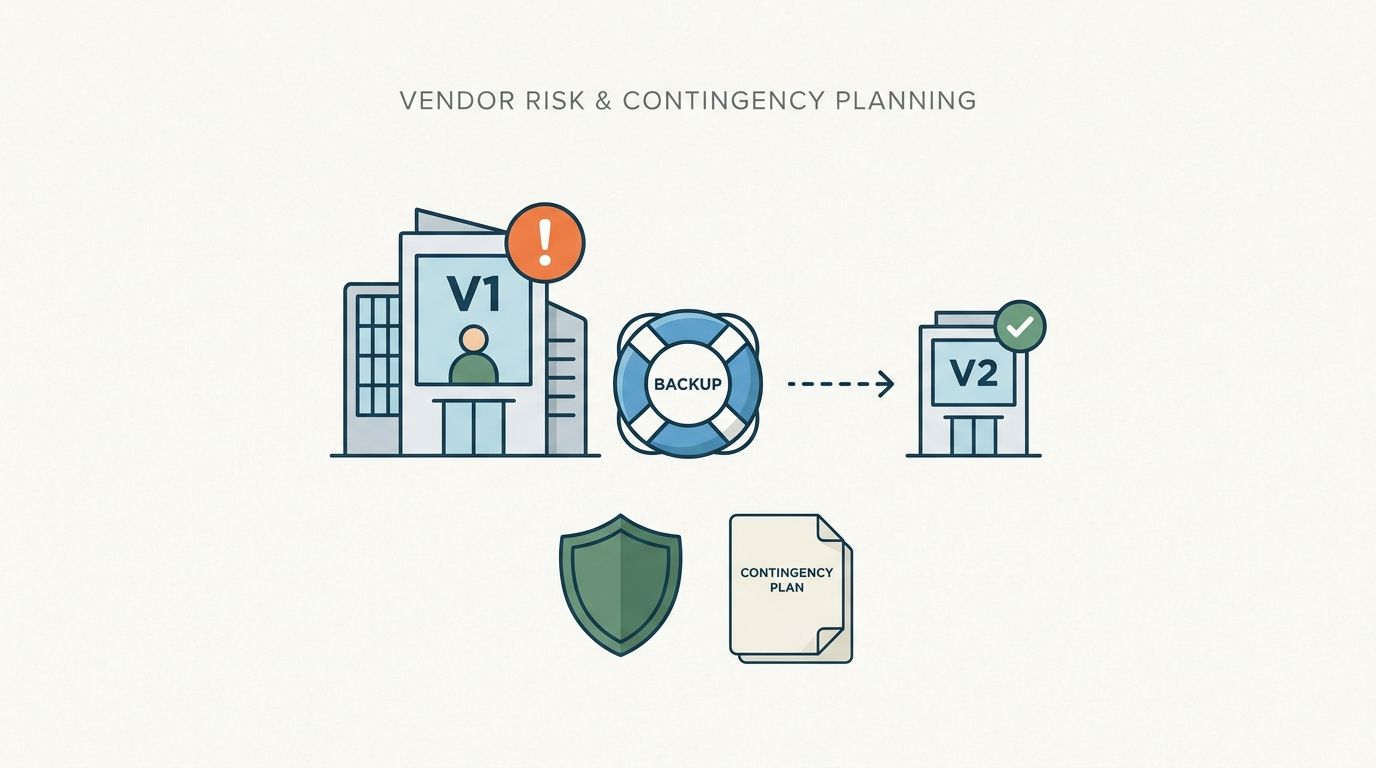
Every SMB says they know which vendors are critical. Fewer can show a written contingency plan for those vendors. That gap matters most when a provider goes offline, misses a regulatory obligation, or can't support a live client need.
A practical program starts by identifying which vendors would create real operational pain if they failed. Think payment processors, verification vendors, title partners, background screening providers, core software providers, or document services tied to deadlines.
Focus on concentration risk and recovery paths
Critical vendors need a real risk file. Not just a note that they're important. Build a short risk register, identify likely failure points, and assign actions. One proven approach is to maintain a risk register for the top vendors and score each risk using likelihood × impact, with immediate mitigation planning required once the score reaches the stated threshold from the earlier guidance.
You also need concentration discipline. Best practice is to diversify so that no single vendor controls more than 30% of a critical service category, and to run monthly checks on critical metrics with broader quarterly evaluations, according to Sirion's vendor management best-practices library.
That advice is easy to understand in the field:
- A real estate firm should not rely on one title partner for nearly all transactions.
- A legal practice should keep a backup provider identified for time-sensitive document services.
- An HR agency should know which alternate screening partner can absorb urgent volume.
- A transportation team should maintain fallback procedures for compliance and document verification.
Don't confuse a backup vendor with a contingency plan. A backup only helps if the data, contacts, and handoff steps are already documented.
For each critical vendor, define who makes the call to switch, how data moves, how clients are informed if needed, and how quickly the backup path can start.
7. Enforce Compliance and Security Standards Across the Vendor Ecosystem
Most firms are diligent with obviously sensitive vendors and much looser with everyone else. That's where risk creeps in. A low-cost document vendor, verification provider, or niche service company can still create a serious compliance problem if their paperwork expires or their controls slip.
Security and compliance standards should be mandatory, documented, and renewable. They shouldn't depend on whether someone remembers to ask for an updated certificate.
Make compliance evidence part of the operating model
The practical answer is to standardize evidence collection. For each vendor tier, define what you require and how often it must be refreshed. Strategic and high-risk vendors usually need deeper reviews. Lower-tier vendors still need baseline checks, active records, and periodic validation.
That matters because the blind spot is real. One analysis found that 85% of firms tier vendors by risk, but only 32% periodically audit low-tier suppliers, contributing to an average 18% increase in operational downtime from unexpected low-risk failures. The same review noted that 40% of supply chain disruptions originate from transactional vendors that were assumed to be safe, according to Allianz Trade's vendor management insights.
For SMBs, that often shows up in overlooked areas like notary partners, verification vendors, scanning vendors, or specialist contractors. Nobody thinks they are risky until one of them causes a compliance delay.
Use a repeatable evidence workflow:
- Baseline requirements: Insurance, business registration, tax forms, and role-specific compliance documents.
- Security checks: Questionnaires, incident reporting obligations, and certifications where appropriate.
- Refresh rules: Set collection and expiration reminders rather than relying on annual memory.
- Portal-based intake: A vendor compliance document portal can help collect, validate, and renew vendor documentation in a more controlled way.
If your vendors process personal or operational data, your contractual privacy expectations should be explicit. Even general reference points like Haulier.AI's privacy rules show how clearly data handling terms can be documented.
8. Build Strategic Partnerships and Relationship Management with Key Vendors
Not every vendor deserves the same amount of attention. Some are replaceable. Some are embedded in your operation and influence client experience, compliance, and growth. Treating both groups the same is one of the fastest ways to waste management time.
Strategic vendor management means being selective. You identify the vendors that matter most and run a more deliberate relationship model with them.
Treat strategic vendors differently on purpose
In practice, that means executive sponsorship, shared planning, deeper reviews, and more honest performance conversations. If a legal firm depends heavily on a document workflow provider, or a staffing agency relies on a screening platform integrated into onboarding, that vendor should not be managed like an office supplies account.
The clearest structure is the three-tier model already discussed. It's useful not only for risk, but also for relationship management. Strategic vendors get more direct access, more context about your plans, and more accountability. Transactional vendors get standardized scorecards and efficient automated management.
I've seen the biggest improvement when teams stop calling every recurring supplier a “partner” and reserve that term for vendors who influence outcomes. Once you do that, your attention gets sharper.
A good strategic relationship usually includes:
- Executive sponsor contact: Leadership on both sides can speak directly when needed.
- Business reviews: Use planned sessions to discuss roadmap, service changes, demand forecasts, and recurring issues.
- Mutual planning: Share expected volume or workflow changes so the vendor can prepare.
- Improvement work: Ask strategic vendors to help redesign a process, not just fulfill tasks inside it.
A strategic vendor should know where your business is going. If they only hear from you when something breaks, you're managing a transaction, not a partnership.
9. Establish a Vendor Lifecycle Management Process with Periodic Reviews
One of the most common weaknesses in SMB vendor management is that onboarding gets attention, but the rest of the lifecycle doesn't. Once a vendor is active, the relationship drifts until a renewal notice appears or a problem becomes impossible to ignore.
That's avoidable. Every vendor should move through a defined lifecycle: intake, due diligence, approval, onboarding, monitoring, review, renewal, remediation, and exit.
Reviews should lead to a decision
Periodic reviews matter because vendors change. Your needs change. Regulations change. Pricing changes. A vendor that fit two years ago may now be expensive, risky, underused, or poorly aligned with how your team works.
There's also a practical data reason to tighten renewal discipline. A Workday article on vendor management notes that without explicit tier definitions and renewal controls, 15 to 30% of vendor contracts can become “zombie subscriptions” that renew automatically without a conscious decision, and transactional vendor scorecards should be updated quarterly so gaps are found within 30 days. That earlier source is why I recommend a review calendar tied directly to renewal timing rather than a vague annual sweep.
For SMBs, I'd keep the review questions simple:
- Still needed: Does the service still support a current process?
- Still performing: Has the vendor met service, compliance, and responsiveness expectations?
- Still competitive: Is the commercial model still reasonable for the value delivered?
- Still low risk enough: Has the vendor's risk profile changed since approval?
- Still worth renewing: Is the right decision renewal, remediation, replacement, or exit?
Good lifecycle management is less about paperwork and more about forcing deliberate choices. Nothing should renew because nobody had time to look.
10. Optimize Vendor Spending and Negotiate Favorable Commercial Terms
Most SMBs don't have a pricing problem first. They have a visibility problem. Different teams buy overlapping services, low-use subscriptions stay active, and nobody looks at total spend by category before renewal talks begin.
You won't negotiate well if you don't know what you're already buying. Spend optimization starts with cleanup, not with a harder bargaining posture.
Clean spend data before you negotiate
Gather total spend by vendor category, identify fragmented buying, and compare actual use against contract scope. A real estate group may discover that title-related work is spread across too many providers to harness their purchasing power. An HR agency may find that screening and verification services could be bundled more intelligently. A law firm may see that premium support was purchased but rarely used.
Performance-linked commercial terms help here. Contracts work better when incentives and consequences are measurable. One practical benchmark is to cap KPIs at a small set of critical measures and tie renewal or remediation to those results, which keeps negotiation grounded in performance rather than opinion. Clear penalty clauses can also matter. Sirion's guidance includes an example of a 5% fee reduction for every day a deliverable is missed beyond the agreed milestone in contracts designed to enforce accountability.
There's also a data sharing challenge that affects smaller firms more than people admit. One 2025 development noted in a Workday blog is that only 22% of vendor management platforms integrate bidirectional API data feeds that let vendors self-report KPIs, while many businesses still rely on ad hoc email requests, delaying corrective action by 11 to 14 days on average, according to this Workday article on vendor management best practices.
That's a reminder to negotiate not only price, but also operating mechanics:
- Volume terms: Ask for pricing based on realistic usage bands.
- Renewal control: Remove passive auto-renewal where possible.
- Data access: Define what performance and compliance data the vendor must provide.
- Service credits and remedies: Tie commercial protection to missed commitments.
Top 10 Vendor Management Best Practices Comparison
| Practice | Implementation Complexity (🔄) | Resource Requirements (⚡) | Key Advantages (⭐) | Results & Impact (📊) | Ideal Use Cases & Tip (💡) |
|---|---|---|---|---|---|
| Establish Clear Vendor Selection Criteria and Due Diligence Processes | Moderate → High, define scoring and verification steps | Moderate, compliance staff, time, verification tools | Reduces vendor risk; aligns vendor capabilities with needs | Fewer onboarding surprises, lower security/operational incidents | Regulated or high-risk procurements; use scored checklists and documented criteria |
| Implement Comprehensive Vendor Contracts with Clear Terms and Conditions | High, legal drafting and SLA definition | High, legal review, negotiation time | Legal protection, clear performance and data obligations | Fewer disputes, enforceable remedies, clearer accountability | Critical/data-sensitive vendors; start with templates and schedule regular reviews |
| Maintain a Centralized Vendor Management System and Database | Medium, system setup and integrations | Medium–High, licensing, IT integration, data migration | Single source of truth; improved visibility and automation | Faster access to vendor info, fewer contract lapses, better analytics | Organizations with many vendors; assign data owners and enable automated alerts |
| Establish Key Performance Indicators (KPIs) and Regular Performance Monitoring | Medium, define metrics, dashboards, reviews | Medium, reporting tools, data collection effort | Creates measurable accountability and basis for decisions | Early issue detection, improved vendor performance over time | Operational vendors (e.g., processing); co‑define KPIs with vendors and automate data capture |
| Create a Formal Vendor Communication and Escalation Process | Low–Medium, document protocols and escalation paths | Low–Medium, coordination time, communication tools | Faster issue resolution; documented audit trail | Fewer miscommunications; quicker remediation of incidents | Time-sensitive services; use an escalation matrix and collaboration portals |
| Implement Risk Management and Contingency Planning for Critical Vendors | High, risk assessments, contingency design, testing | High, backup relationships, testing, planning resources | Ensures continuity; reduces single‑vendor dependency | Faster recovery and less operational disruption during failures | Critical service providers; maintain backups and test contingency plans regularly |
| Enforce Compliance and Security Standards Across the Vendor Ecosystem | High, audits, certifications, ongoing monitoring | High, audit costs, security assessments, continuous monitoring | Protects sensitive data; ensures regulatory compliance | Lower breach risk, improved audit readiness and liability reduction | Regulated industries; require SOC 2/ISO and regular reassessments |
| Build Strategic Partnerships and Relationship Management with Key Vendors | Medium, governance, executive sponsorship | Medium, senior time, joint planning sessions | Drives innovation, better service prioritization and pricing | Deeper collaboration, tailored solutions, faster issue resolution | High-value or strategic vendors; assign executive sponsors and hold strategic reviews |
| Establish a Vendor Lifecycle Management Process with Periodic Reviews | Medium, define lifecycle stages and review cadence | Medium, ongoing review effort and documentation | Ensures ongoing fit, structured onboarding/offboarding | Informed renewal/replacement decisions; fewer stale relationships | All vendor categories; schedule periodic reviews and use consistent criteria |
| Optimize Vendor Spending and Negotiate Favorable Commercial Terms | Medium, spend analysis and RFP execution | Medium, procurement expertise, market benchmarking | Reduces costs; aligns pricing with performance | Lower vendor costs and improved margins when balanced with quality | High-spend categories; run periodic RFPs and benchmark pricing annually |
Next Steps for Elevating Your Vendor Ecosystem
Strong vendor management usually looks ordinary from the outside. Contracts are easy to find. Reviews happen on schedule. Expiring documents get chased before they become a problem. Renewals are a decision, not an accident.
For SMBs and professional services firms, that level of control does not require a large procurement team. It requires a workable system that your staff can follow under real operating pressure. The practical challenge is choosing where to add structure and where to keep flexibility. Too much process slows the business down. Too little process pushes key decisions into email threads, spreadsheets, and individual memory.
A good starting point is a simple implementation sequence that combines classic vendor controls with light automation:
- Segment vendors by business impact: Separate strategic, operational, and low-risk transactional vendors so review effort matches exposure.
- Set one system of record: Keep contracts, contacts, insurance certificates, security documents, and renewal dates in one place.
- Standardize intake and review steps: Use the same document requests, approval checks, and risk questions each time.
- Assign one owner per vendor: Someone needs clear responsibility for follow-up, performance reviews, and renewal preparation.
- Automate the repetitive parts: Use reminders, expiration tracking, status updates, and document collection workflows to reduce manual chasing.
- Review live examples first: Test the process on a handful of active vendors before rolling it out across the full vendor base.
That order matters. Teams that automate too early often speed up a messy process instead of fixing it. Teams that stay fully manual usually keep flexibility for a while, then lose control as vendor count grows or staff changes. The middle ground works best for many smaller firms. Define the workflow first, then use automation to support the steps that repeat every month or every quarter.
A common scenario looks like this: a 25-person professional services firm has software providers, contractors, outsourced finance support, and a few client-facing delivery partners. Nobody intends to run vendor management poorly, but ownership is split, renewal dates sit in calendars, and compliance files are stored across inboxes and shared drives. One missed certificate or auto-renewal is manageable. Five at once creates cost, risk, and rework. A structured process, supported by a tool such as Superdocu for document requests, reminders, review queues, and expiry tracking, helps smaller teams keep control without building a heavy procurement function.
Consistency is the goal. Vendor oversight should run the same way when the office is busy, when a manager is on leave, and when the company adds ten new suppliers in a quarter. That is how firms improve service quality, reduce avoidable risk, and keep commercial decisions intentional.
If manual follow-up is still eating too much time, Superdocu is worth a look. It gives SMBs and professional services teams a structured way to request files, automate reminders, review submissions, and keep expiring records up to date without running the whole process through email and spreadsheets.