
You've got a business that works. Customers know the brand, the unit economics look promising, and people have started asking whether they can open their own location under your name. So you search for franchise contracts templates, download a free file, swap in your company name, and think you've saved yourself weeks of work.
That's the moment many new franchisors step into trouble.
A franchise agreement isn't just a legal document. It becomes the operating backbone of the relationship. It controls fees, territory, training obligations, transfers, defaults, renewals, and the small procedural details that turn into expensive disputes when nobody nailed them down early. A decent template can help you start faster. A weak one can lock your business into avoidable confusion from signing through renewal.
This guide looks at the full lifecycle. Not just how to pick and customize a template, but how to use it in practice after signature, when collection, execution, storage, notices, and renewal tracking start to matter.
Table of Contents
- The Hidden Risks in Free Franchise Contract Templates
- Anatomy of a Solid Franchise Agreement
- What Most Franchise Templates Dangerously Omit
- A Step-by-Step Process for Customizing Your Template
- Common Pitfalls and Legal Red Flags to Avoid
- From Contract to Workflow How to Manage Agreements Efficiently
The Hidden Risks in Free Franchise Contract Templates
A free template feels efficient because it gives you a document fast. The problem is that speed at the beginning often creates friction for years afterward.
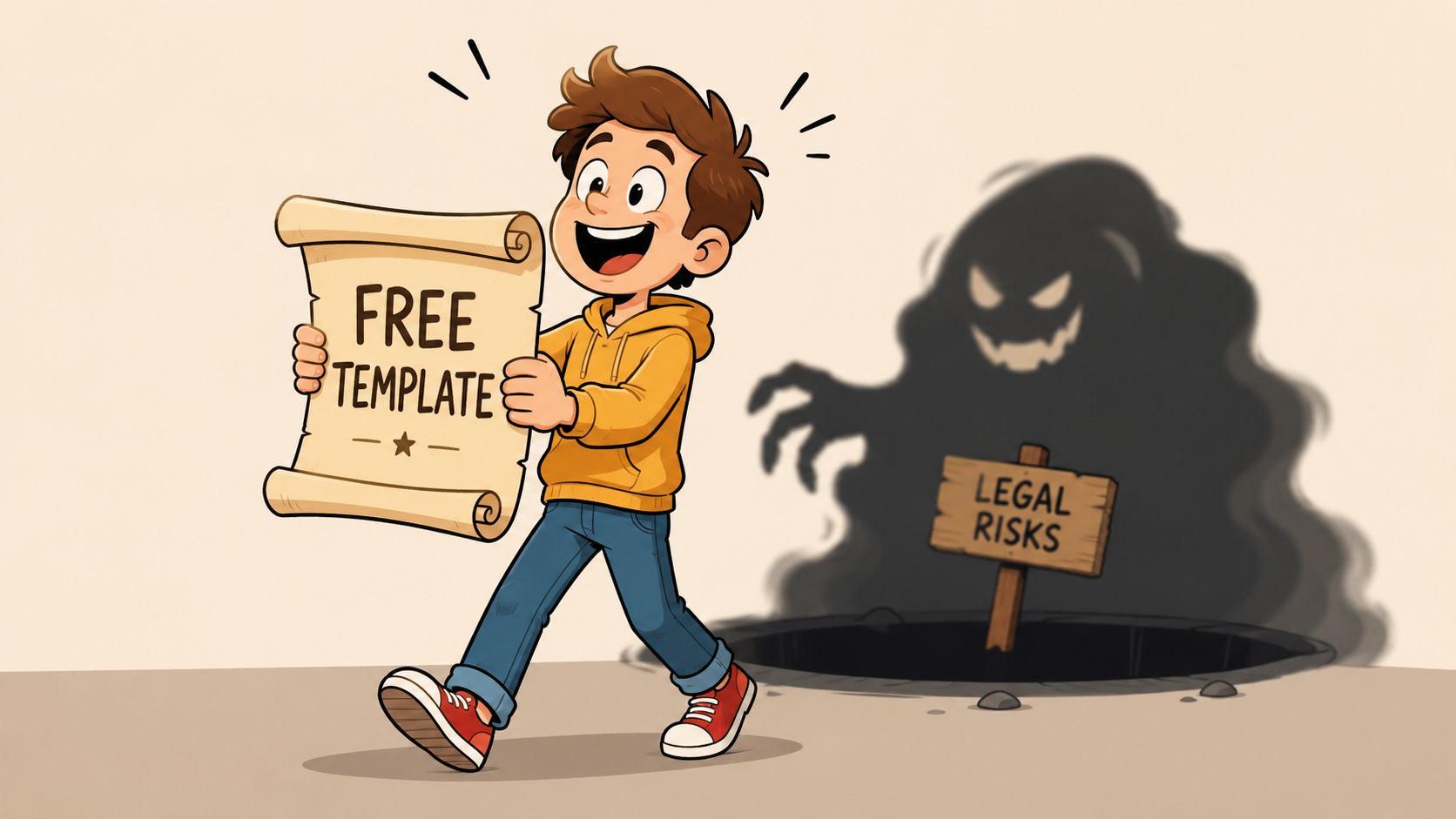
A typical example looks like this. A founder copies a template, adds brand standards from an operations manual, drops in a fee section, and sends it to a candidate. The candidate signs. Six months later, both sides realize the document never clearly defined where the franchisee can operate, what support is mandatory, or how post-signature notices must be handled. At that point, the template hasn't saved time. It has created a negotiation after the deal is already live.
Why free usually means unfinished
Most free franchise contracts templates are generic contract shells. They may look polished, but they often haven't been adapted to the specific way your system operates. Franchising depends on detail. If the document doesn't reflect your training model, approval process, payment logic, location controls, and renewal standards, it won't protect the relationship well.
That matters because franchise contracts have to do two jobs at once:
- Protect the brand: The contract must preserve consistency, control, and system integrity.
- Guide the operator: The franchisee needs plain language that explains what they're buying and what they must do.
- Support enforcement: If a problem arises, your agreement must give you terms that are clear enough to apply.
- Fit your workflow: A clause is only useful if your team can collect, track, and manage the paperwork around it.
Practical rule: If a clause can't be explained to a non-lawyer franchisee in plain English, it usually needs more work before it's ready.
The real cost shows up later
Founders usually focus on getting the first deal signed. The bigger risk appears after signing, when you start handling sensitive documents, approvals, notices, and compliance records across multiple units. That's where weak templates expose gaps in process, privacy, and consistency. If you're tightening your document handling standards, this overview of data security and compliance practices is useful background.
A franchise agreement should read like a business system with legal force. Free templates rarely get you there on their own. They give you words. They don't give you a reliable structure.
Anatomy of a Solid Franchise Agreement
A strong agreement doesn't try to sound impressive. It defines rights, money, responsibilities, and procedures in a way both sides can operate from.
The baseline matters. A thorough franchise agreement template must explicitly include a Grant of Franchise clause that defines the specific scope of the licensed brand and operational rights, alongside a Financial Provisions section detailing the initial franchise fee and ongoing royalty splits, according to this franchise agreement template reference.
Start with the rights being granted
The Grant of Franchise clause answers the first operational question: what exactly is the franchisee allowed to do?
That sounds obvious, but many weak templates blur the boundaries. They say the franchisee can operate under the brand without clearly defining the business format, approved offerings, use of marks, geographic scope, and any restrictions on channels or related activities. If those boundaries aren't precise, disputes start with different assumptions rather than bad intent.
A practical Grant of Franchise clause should make these points easy to identify:
| Area | What the clause should make clear |
|---|---|
| Brand rights | What trademarks, systems, and methods the franchisee may use |
| Business scope | What products or services fall inside the license |
| Operating limits | What the franchisee may not do under the brand |
| Location link | Whether the rights apply to a specific site, territory, or format |
Spell out the money mechanics
The Financial Provisions section is where generic templates often become too vague to be useful. “Royalty due monthly” isn't enough. Neither is a one-line statement of an initial fee.
The contract should state the fee framework in a way that can be administered without guesswork. If your finance team and your franchisee read the clause and reach different conclusions, the drafting failed.
Focus on practical clarity:
- Initial fee language: State when it's due, whether any portion is refundable, and what that payment covers.
- Ongoing royalties: Define how they're calculated, when they're due, and what sales base or reporting method applies.
- Additional charges: If advertising, technology, training, or support-related fees exist, the agreement should point to them clearly.
- Late-payment process: The clause should say what happens procedurally if payment isn't made on time.
If you're building your own review process, a structured due diligence checklist template can help you test whether the agreement matches your actual franchise offer before you circulate a draft.
Treat the agreement as an operating document
A solid franchise contract does more than assign risk. It gives your internal team a dependable reference point for onboarding and management.
The best agreements reduce the number of “we thought this meant something else” conversations after opening.
That means your template should support real business actions. Training obligations should be in the right place. Fee rules should be grouped logically. Site approval, opening conditions, compliance expectations, and renewal mechanics should be easy to locate. If the reader has to jump around the document to understand one operational issue, the structure needs work.
Good franchise contracts templates aren't the ones with the most clauses. They're the ones that turn legal concepts into workable instructions.
What Most Franchise Templates Dangerously Omit
The most serious problem with generic templates isn't bad wording. It's missing context.
Many founders assume the agreement is the whole deal. It isn't. In practice, the franchise contract has to line up with the broader disclosure package and the actual economics of the offer. When it doesn't, the draft may look complete while leaving major issues unresolved.
The contract and the FDD must match
A common challenge for new franchisors arises because most existing franchise contract templates fail to address the critical gap between the template agreement and the mandatory Franchise Disclosure Document, leaving users unaware that templates often omit FTC-required disclosures. Recent 2025 to 2026 data shows that 68% of new franchise disputes arise from unclear fee structures or territory definitions, as noted in this review of franchise agreement questions and FDD issues.
The operational lesson is simple. A contract can't be treated as a standalone artifact. If your agreement says one thing about fees, territory, renewal cost, or system obligations, and your disclosure materials suggest something broader or narrower, you've created room for conflict before the franchisee opens.
The missing details that cause fights
The omissions are usually predictable. The template may mention an initial fee but say little about how recurring payments are calculated. It may use broad territory language without explaining carve-outs, nontraditional channels, online sales, or adjacent development rights. It may mention renewal without making the conditions intelligible to a first-time franchisee.
Here's where generic drafts usually break down:
- Fee calculation mechanics: The document may list categories of fees but not explain how they work in low-sales periods, when they accrue, or what supporting reports are required.
- Territory exceptions: A broad territory grant can become misleading if the franchisor reserves channels or customer categories elsewhere.
- Disclosure alignment: Litigation history, operational limitations, and brand controls may live outside the agreement in ways the reader doesn't connect.
- Renewal cost visibility: A franchisee may understand that renewal exists but not the economic conditions attached to it.
If a prospective franchisee needs a separate call to understand basic fee logic or where they may operate, the paperwork isn't doing its job.
A useful drafting test is this: hand the package to someone on your team who wasn't involved in drafting it. Ask them to explain the business deal from the paperwork alone. If they can't do that cleanly, your template is still incomplete.
A Step-by-Step Process for Customizing Your Template
Customization works best when it follows a disciplined sequence. Editing a template line by line without a method usually creates patchwork drafting, internal contradictions, and overlooked compliance points.
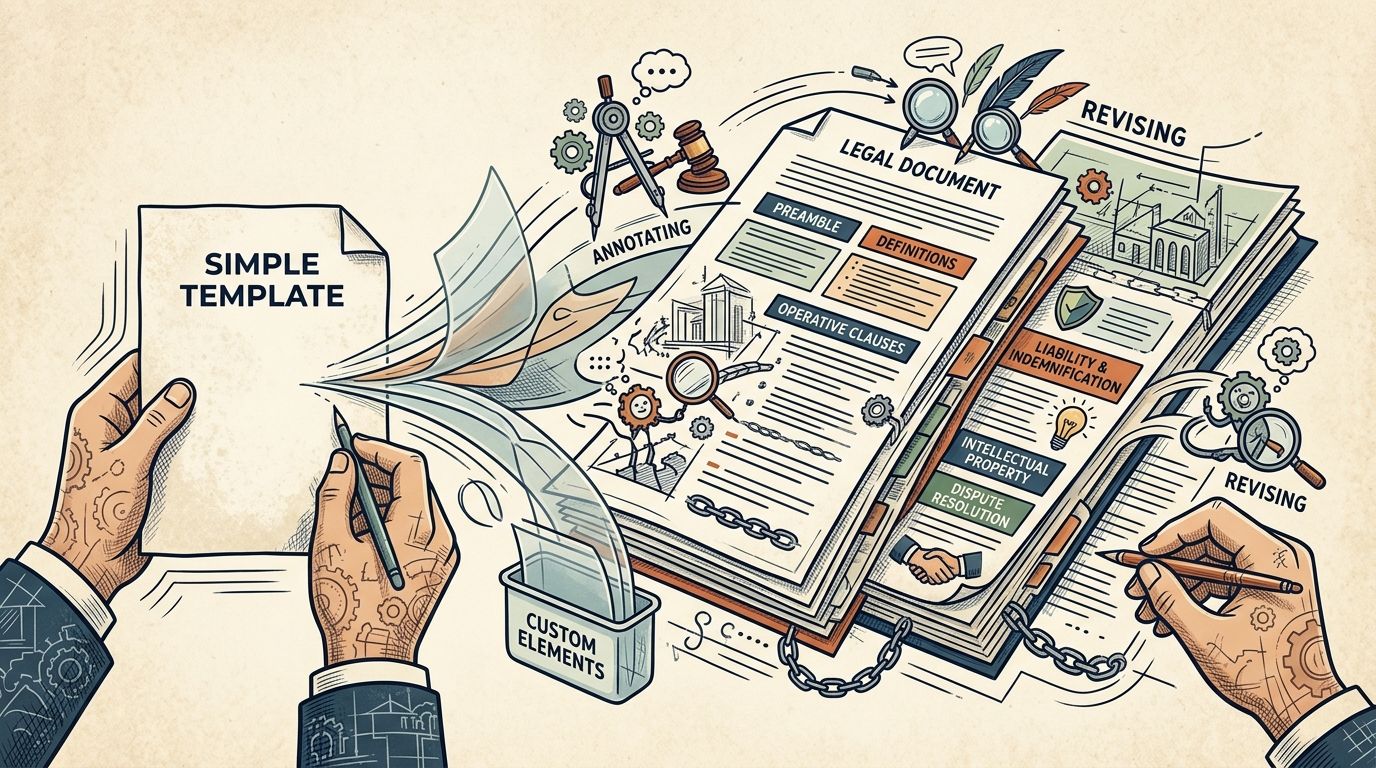
A rigorous drafting method for franchise agreement templates uses eight distinct phases: reviewing standard clauses, identifying key operational variables, drafting clauses using clear language, logically organizing sections, incorporating applicable state-specific laws, seeking review from a qualified franchise attorney, revising for clarity, and finalizing a single executable document, as outlined in this drafting methodology reference.
Use the eight-phase drafting path
The order matters because each stage prevents a different kind of mistake.
Review standard clauses
Start with a neutral reference point, not your competitor's paperwork and not random internet language. You need a baseline structure before you start tailoring terms.Identify operational variables
Map core business choices first. Territory shape, support model, fee logic, term length, transfer controls, and opening obligations should be listed before drafting begins.Draft in clear language
Plain language isn't cosmetic. It lowers the chance that a franchisee misunderstands obligations and lowers the chance that your team applies the agreement inconsistently.Organize sections logically
Sequence affects comprehension. A franchisee should be able to move from granted rights, to fees, to training, to compliance, to defaults and renewal without bouncing across the document.
What good customization looks like in practice
The second half of the process is often rushed. That's a mistake.
- Build in legal fit: State-specific business laws and regulatory requirements have to be incorporated before the draft is treated as final.
- Get qualified review: If any term feels uncertain, attorney review is cheaper than correcting a bad agreement after launch.
- Revise for readability: Tighten language, remove duplication, and make sure the same concept isn't defined three different ways.
- Finalize one executable version: Don't leave your team using draft A while the franchisee signs draft B.
If you want a faster drafting starting point for internal prep, tools that help you create legal documents for your business can be useful for first-pass organization, provided the final agreement is still customized, checked for compliance, and reviewed properly before use.
Field note: The best template customizations usually remove language, not add more. Founders often improve a draft by cutting borrowed clauses that don't match how their system actually runs.
A practical workflow is to keep one master template, one issue list for negotiable points, and one approval path for legal signoff. That gives you consistency without turning every new franchise sale into a document rewrite.
Common Pitfalls and Legal Red Flags to Avoid
Most contract disputes don't start with dramatic misconduct. They start with sloppy drafting around ordinary business events.
The red flags below matter because they affect the moments that happen in almost every franchise relationship: late payments, mapping a territory, attending system events, transferring ownership, and trying to renew after minor friction.
Clauses that create avoidable conflict
Critical pitfalls include time of the essence clauses for trivial delays, which the British Franchise Association advises against. 30% of franchise disputes arise from ambiguous territory definitions or overly punitive termination clauses, and standard agreements also include a strict No Assignment clause prohibiting transfers without franchisor consent, while requiring at least 30 days of prior written notice for mandatory seminars, according to this franchise drafting and dispute guidance.
That single cluster of issues creates a lot of practical risk, so it helps to separate them.
Time-sensitive default language
A template that treats every delay as a serious breach often looks protective at first. In reality, it can make enforcement look arbitrary. If a franchisee is one day late on a royalty payment and the clause grants the franchisor the right to immediate termination, you've created a harsh remedy for a routine operational issue.
A better approach is to distinguish material defaults from minor administrative delays and use cure mechanics that fit the seriousness of the problem.
Territory drafting
Ambiguous territory language causes constant friction. A map with imprecise boundaries, broad descriptive language, or unclear carve-outs invites argument about what was sold.
A clean territory clause should match the map, the disclosure materials, and your internal development plan. If one of those says something different, the issue won't stay theoretical for long.
Transfer controls and mandatory events
The No Assignment clause exists for a reason. Franchisors need control over who operates under the brand. But the clause still has to be administered sensibly. If a franchisee wants to restructure ownership, sell the business, or handle succession planning, a consent process that's opaque or inconsistent creates avoidable strain.
Separate from that, don't overlook procedural obligations like mandatory event notice. If your contract requires attendance at seminars, conventions, or programs, the franchisor must give the franchisee at least 30 days of prior written notice. That isn't a drafting decoration. It's an operational deadline your team has to be able to meet.
For a practical legal perspective on reviewing your franchise template, it helps to compare your draft against how these problem clauses would play out during ordinary administration, not just during litigation.
A quick red-flag review before you send any draft
Use this as a short screening list:
- Check default clauses: Do they punish minor delay as if it were serious misconduct?
- Check territory materials: Does the written clause match the map and any reserved rights?
- Check transfer language: Is consent required, and is the approval process workable in practice?
- Check event notice rules: Can your team deliver the required written notice on time?
- Check renewal triggers: Minor breaches shouldn't become a backdoor denial mechanism.
A clause isn't balanced just because it appears in many templates. Franchise agreements need enforceable control, but they also need terms people can live with over the life of the relationship.
From Contract to Workflow How to Manage Agreements Efficiently
The agreement isn't finished when everyone signs it. That's when the administrative burden begins.
You need the executed version stored correctly. You need signature status, missing fields, exhibits, and notices tracked. You need to know which agreements are approaching expiry and which franchisees are moving toward renewal discussions. If those tasks live in inboxes and spreadsheets, errors creep in fast.
A signed contract starts an admin process
Most franchisors underestimate the operational side of document management. One unit might be manageable by hand. Several units create repeatable obligations: collecting signed copies, validating attachments, gathering supporting documents, coordinating eSignature, and watching dates tied to notice, renewal, or replacement paperwork.
Electronic execution helps, but signature alone doesn't solve the workflow problem. The better question is whether your team can see, in one place, what has been received, what is incomplete, and what needs follow-up. This primer on electronic signature technology is useful if you're refining that part of the process.
Build a repeatable agreement workflow
For franchise contracts templates to work in practice, the collection process needs structure.
A practical workflow usually includes:
- A branded request portal: Franchisees receive one clear place to upload documents and complete required steps.
- Automated reminders: The system chases missing items without forcing your team to send manual follow-ups.
- Validation before filing: Someone checks whether signatures, schedules, maps, and supporting materials are complete before the agreement is marked finished.
- Expiry and renewal tracking: The business gets notice before a term ends, not after.
- Dashboard visibility: Management can see which agreements are pending, signed, incomplete, or nearing renewal.
Document operations either stay lean or become messy. If the legal draft is careful but the collection and renewal process is chaotic, you still end up with risk.
A strong franchise agreement deserves an equally strong process around it. If you want a simpler way to collect documents, manage signatures, validate submissions, and track expirations and renewals, Superdocu gives teams a practical system for handling the full agreement workflow without the usual admin sprawl.