
Think of a file request as a secure, digital drop-box you can send to anyone. Instead of getting tangled in endless email chains, you send a unique link. The person on the other end simply uploads their documents directly into a specific folder you've chosen, without seeing anything else you have stored.
It's a clean, organized, and trackable way to gather important files.
Moving Beyond Email Chaos
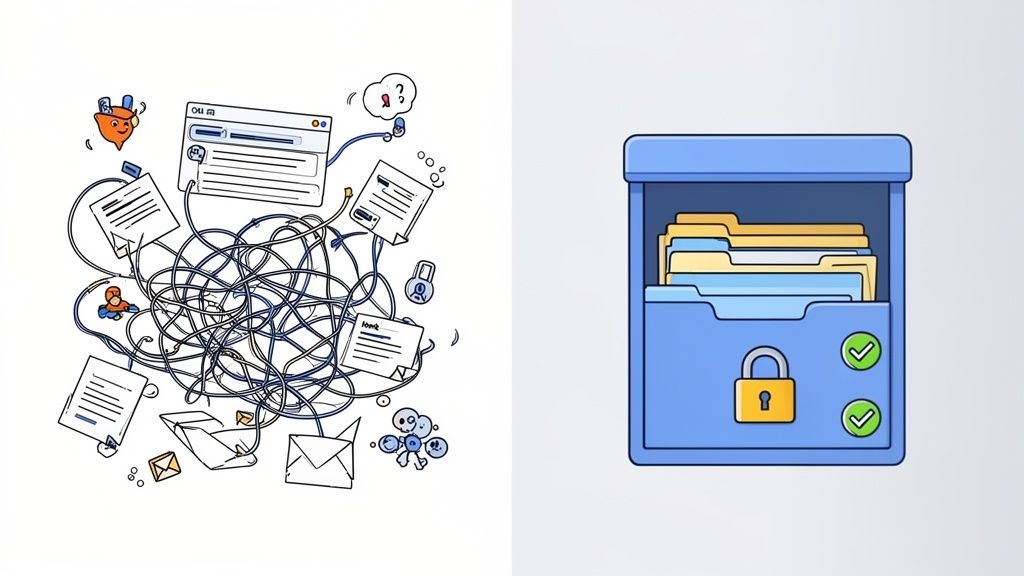
We've all been there. You need a critical document from a client, and what follows is a messy back-and-forth of emails, forgotten attachments, and frantic follow-ups. Files get snagged by spam filters, sent to the wrong person by mistake, or just plain lost in a long reply thread.
That old way of doing things isn't just a headache; it's a huge security risk.
A proper file request system completely changes the game. It’s the difference between asking someone to just "mail you a letter" and hoping it arrives, versus giving them a pre-addressed, trackable, and secure courier envelope. You’re no longer relying on a cluttered inbox—you're creating a smart, secure digital mailbox that confirms delivery and organizes everything for you.
The Core Problem Solved
The biggest problem file requests solve is the built-in chaos and danger of collecting documents manually. When sensitive information is sent through standard email, it’s often unencrypted and exposed. A single typo in an email address could send confidential data to a complete stranger, leading to a serious data breach and breaking client trust.
Moving from scattered email threads to a central, trackable portal cleans up this entire process. It turns a frustrating, time-sucking chore into a smooth and professional part of your workflow.
A dedicated file request system acts as a secure front door for your business documents. It ensures that only the right information gets in, is properly sorted, and is protected from the moment it arrives.
Why This Matters for Your Business
Switching to a structured file request process gives you real, immediate benefits that go way beyond just being organized. It improves how your business actually runs.
- Boosted Productivity: No more hours spent chasing down missing files or manually sorting email attachments. The system can handle the follow-ups automatically, letting your team focus on their real jobs.
- Strengthened Security: Client data comes through an encrypted portal, not a leaky inbox. This dramatically cuts the risk of data breaches and helps you stay compliant with regulations like GDPR.
- Improved Client Experience: Your clients get a simple, branded link to drag and drop their files. It’s easy, professional, and builds their confidence in your business from day one.
In the end, using a modern file request solution is about taking back control. It’s about ensuring every piece of information you need is collected efficiently, securely, and without the usual hassle.
The Real Benefits of an Automated File Request
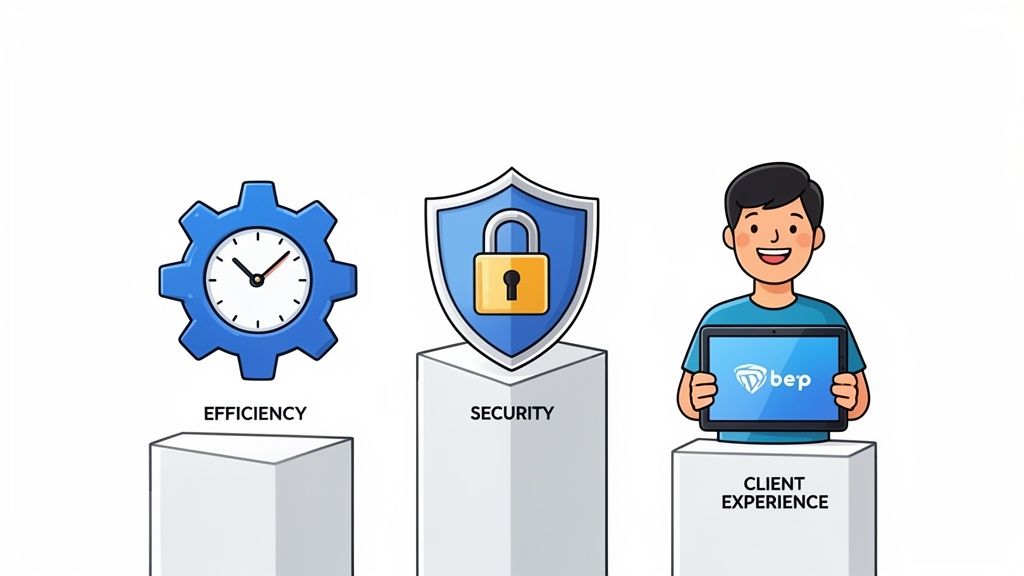
Switching from manual methods to a dedicated file request system is about so much more than just a cleaner inbox. It's about fundamentally changing how your business operates, delivering real value across three crucial areas: efficiency, security, and client experience.
Think of these as building blocks. Each one supports the next, and together they create a powerful advantage that sets you apart. Let's dig into what that actually looks like day-to-day.
Unlocking Team Efficiency and Focus
The first thing you'll notice is how much time you get back. Manually chasing documents is a time-suck, plain and simple. It's a never-ending cycle of writing emails, updating messy spreadsheets, and sending nudge after nudge. All those hours could be spent on work that actually grows the business.
An automated system flips the script. Instead of your team chasing clients, the platform does the heavy lifting. You can set up workflows to send out polite, automatic reminders for missing documents, which means no more manual follow-ups.
This frees up your team to focus on what they do best—whether that's advising clients, closing sales, or solving complex problems.
The goal isn't just to work faster; it's to work smarter. By automating the follow-up process, you reclaim valuable hours and redirect your team's energy toward strategic objectives instead of administrative chores.
The impact on productivity is immediate. When people aren't bogged down by tedious, repetitive tasks, morale improves, and they can finally concentrate on the parts of their job that require real expertise.
Strengthening Security and Compliance
Let's be honest: using email to collect sensitive documents is like leaving your front door wide open. Emails aren't secure. They can be intercepted, misdirected, or hacked, creating a compliance nightmare. A single mistake—like a typo in an email address—can cause a major data breach, damaging your reputation and leading to steep fines.
A dedicated file request portal is the fortress your data needs. It creates an encrypted, controlled space where files are protected from the moment they're uploaded. This is non-negotiable for meeting modern privacy laws like GDPR, which demand secure data handling.
Just look at the difference:
- Email: Files are unencrypted and vulnerable. Sensitive data gets scattered across multiple inboxes, making audits nearly impossible.
- Secure Portal: Everything is protected with end-to-end encryption. You control who sees what and have a clear audit trail of every action.
This centralized system isn't just about locking things down; it's about making compliance simple. When regulators ask how you protect client data, you can point to a secure, organized system, not a chaotic mess of email chains. Platforms like Superdocu take this a step further by ensuring all data is stored in secure, compliant data centers, giving everyone peace of mind.
Delivering a Superior Client Experience
The way you collect documents is often one of the very first impressions a new client has of your business. A clunky, confusing process filled with long email threads sends a message of disorganization. It creates friction for your client, forcing them to figure out how to send large files or track what they've already sent.
A modern file request solution turns this potential headache into a win. It provides a clean, professional, and branded portal where clients can simply drag and drop what you need. It’s a smooth, effortless experience that makes your business look good.
This isn't just about convenience. It builds trust right from the start. When clients see a polished, secure portal, they feel confident sharing their sensitive information. As you look for ways to improve your own process, our guide on how to collect documents from clients easily offers more practical tips. A seamless client journey is a huge competitive advantage.
How an Automated File Request Workflow Actually Works
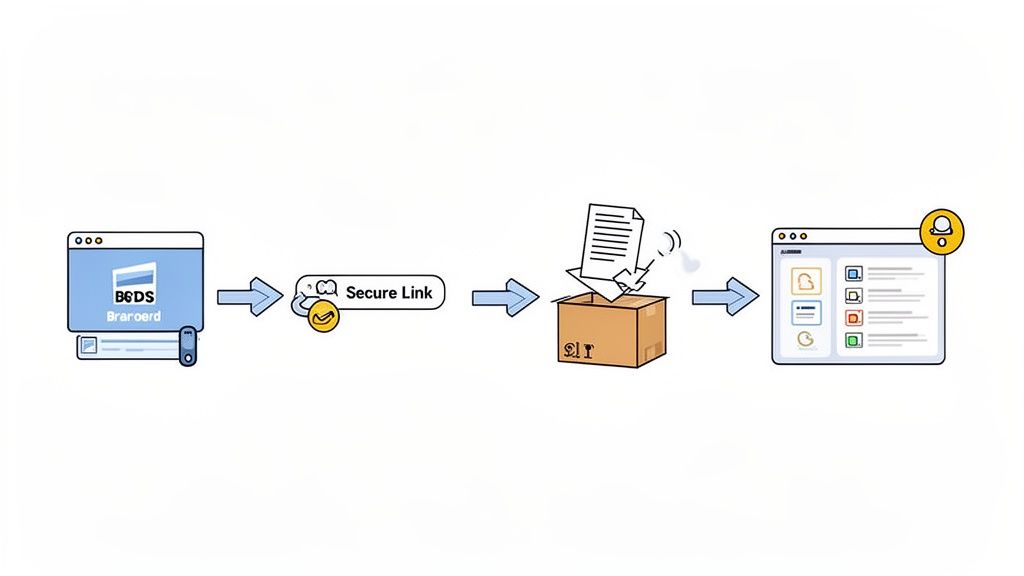
It’s one thing to hear about the power of an automated file request system, but seeing how it works really pulls back the curtain. This isn't some complex piece of tech you need to constantly manage. It's a smooth, logical process designed to be incredibly simple for both you and your clients.
Let's walk through the five key stages of a typical document collection workflow. Think of it as a well-choreographed dance where the technology handles all the tedious steps, leaving you free to focus on what matters most.
Stage 1: The Setup
It all begins with creating your secure, digital front door. This isn't just some generic upload page; it's a professional, branded portal that feels like a natural extension of your business. In this first step, you get to define exactly what you need.
You can customize the portal with your company's logo and colors, giving clients a consistent and trustworthy experience. Then, you create a simple checklist of the documents required, adding clear instructions for each one so there's absolutely no room for confusion.
For example, a mortgage broker building a "New Loan Application" portal might ask for:
- Pay stubs from the last three months
- Two years of tax returns
- A signed disclosure agreement
The best part? This setup is a one-time effort. You can save it as a template and reuse it for every new client, saving yourself hours of repetitive work down the line.
Stage 2: The Invitation
Once your portal is ready, it's time to invite your client. Instead of drafting a long email with a confusing list of attachments, you simply send a single, secure, and unique link.
This link is their private key to the portal. It takes them directly to the branded page you created, where they can see everything that’s needed at a glance. The beauty of this approach is its simplicity and security—the client never has to create an account or remember a password.
Sending a secure link completely transforms that first interaction. It sets a professional tone right away and shows your client you take their data security seriously, building trust from the very start.
Using a single, secure link also eliminates the enormous risk of sending sensitive instructions or documents over insecure email, closing a major security gap in your process.
Stage 3: The Client Experience
This is where a modern file request system really shines. From the client's point of view, the whole process is incredibly straightforward. They just click the link and land on a clean, intuitive page.
They can simply drag and drop files from their computer right into the corresponding checklist items. The system gives them a clear confirmation for each successful upload, providing a real sense of progress. They don't have to worry about the file size limits or bounced emails that make attachments such a headache. This removes all the usual friction, making it easy for them to give you everything you need in one go.
This stage is critical. A painless client experience reflects positively on your entire business, making you look organized, modern, and professional.
Stage 4: Automated Follow-Up
What happens when a client forgets to upload a document? Manually, this is where the frustrating chase begins with phone calls and follow-up emails. But with an automated system, the platform handles it for you.
You can set up the system to send gentle, automated reminders for any outstanding documents. These nudges can be scheduled to go out after a few days and will stop automatically the moment the files are uploaded. This smart follow-up ensures you get what you need faster, without your team having to lift a finger. You can explore how to automate your document workflow in more detail to see the full potential.
This kind of automation is a genuine game-changer for team efficiency, keeping the process moving forward without adding to anyone's administrative load.
Stage 5: Review and Integration
As soon as a client uploads their files, you get a notification. All the documents are neatly organized in a central dashboard, already filed and labeled based on your initial setup. No more digging through messy email threads or downloading attachments one by one.
From this dashboard, you can review each document, mark it as approved, or request a revision if something isn't quite right. Better yet, platforms like Superdocu allow this information to flow directly into your other business tools, connecting your document collection process with the rest of your operations. This final step turns a simple collection of files into actionable data.
File Request Applications in Your Industry
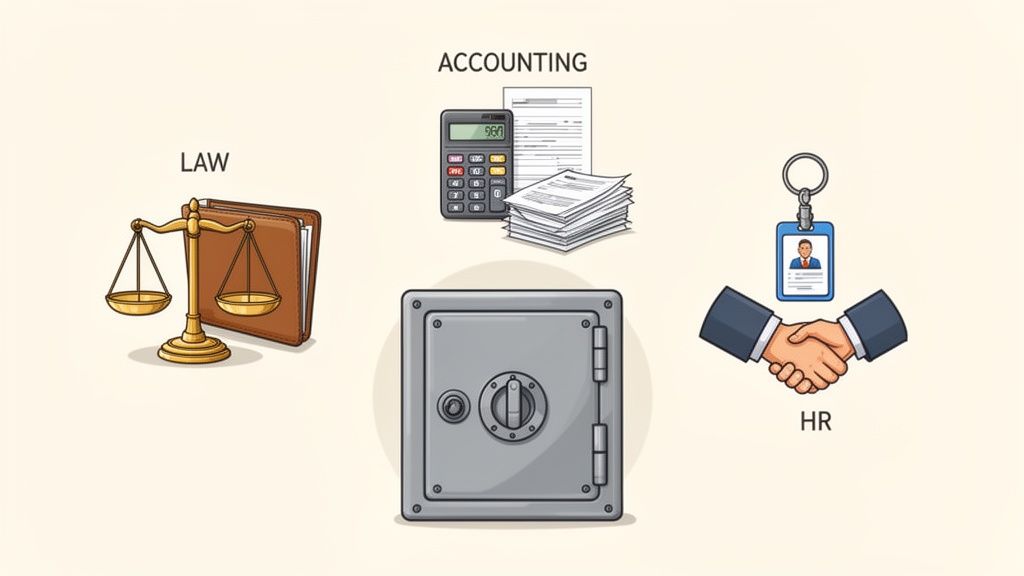
The real magic of a file request system happens when you see it solve actual business problems. It’s not some generic tool; it’s more like a Swiss Army knife that adapts to the specific headaches each industry faces.
Think about it. Law firms handling sensitive case files, accounting teams chasing down tax documents, and HR managers onboarding new talent all share a common struggle. Manually collecting files is slow, risky, and a major source of frustration for clients and staff alike. Let's look at how different industries are using file requests to fix these administrative bottlenecks for good.
Finance and Accounting
In finance, everything comes down to speed and security. Picture an accounting firm heading into tax season. They need to collect a mountain of W-2s, 1099s, and bank statements from hundreds of clients at the same time. Trying to manage that over email is a disaster waiting to happen, full of security holes and endless follow-up calls.
This is where a dedicated file request portal changes the game. The firm can create a simple "Tax Prep Checklist" and send a secure upload link to each client. The client gets a clean, branded portal to drop their files into, and the system automatically sorts everything into the right client folder. No more chaos.
- Loan Applications: Mortgage brokers can gather pay stubs, credit histories, and ID cards in one secure, organized package.
- Client Onboarding: Wealth management firms can collect Know Your Customer (KYC) documents quickly and prove they're meeting strict compliance rules.
- Audits: Companies can give external auditors a secure, read-only portal to find the financial records they need—without handing over the keys to the entire system.
Human Resources
Bringing a new employee on board means dealing with a ton of paperwork. We’re talking signed contracts, I-9 forms, direct deposit details, and more. For an HR department juggling multiple new hires, it’s easy to get buried. An automated file request system makes this a smooth, professional experience for everyone.
Imagine this: Instead of sending a new hire a confusing list of attachments to print, sign, scan, and somehow email back, you send them a single link to a polished "New Hire Portal." Right away, you're setting a professional and organized tone.
The portal acts as a checklist, guiding the new hire through every document they need to submit. They can upload everything from their phone or computer, and HR gets a neat little notification when it’s all done. The entire process becomes faster, safer, and way more welcoming.
Legal Services
Law firms live and breathe client confidentiality. Sending sensitive case files, discovery documents, or evidence through standard email is a huge ethical and security risk. A file request portal provides the encryption and access control that lawyers absolutely need.
A paralegal can request specific files from a client for an upcoming case, knowing the documents are being uploaded to a secure, controlled space. Even better, the firm gets a clear audit trail of who accessed what and when—a must-have for compliance and case management.
The move toward these systems is picking up steam across the board. In finance, a whopping 88% of institutions are making these tools a priority in their 2025 digital plans. Logistics firms are reporting over 70% adoption to handle customs paperwork, and healthcare is seeing patient records processed up to 50% faster. For a deeper dive, check out this report on document processing trends.
To get a clearer picture, here's a quick look at how different sectors are putting file requests to work.
File Request Use Cases by Industry
| Industry | Common Use Case | Primary Benefit |
|---|---|---|
| Real Estate | Collecting mortgage applications, deeds, and inspection reports. | Faster closing times and a better client experience. |
| Education | Gathering student applications, transcripts, and financial aid forms. | Centralized records and simplified admissions. |
| Insurance | Managing claims submissions with photos, police reports, and forms. | Quicker claims processing and reduced fraud. |
| Marketing Agencies | Receiving creative assets like logos, images, and brand guides. | Organized project folders and fewer missed files. |
As you can see, the core idea is simple: give people a secure and easy way to send you what you need. The result is less administrative work for your team and a much more professional experience for your clients, partners, and employees.
How to Choose the Right File Request Tool
Picking the right file request tool feels a lot like choosing a business partner. You need someone reliable, secure, and easy to work with. A basic tool might get the job done for simple tasks, but if you're serious about your operations, you need a solution that truly understands your workflow.
Making the wrong choice can lead to more than just frustration—it can create security holes, confuse your clients, and waste valuable time and money. Let's walk through what really matters so you can invest in a platform that actually makes your life easier.
Prioritize Security and Compliance
When you're handling sensitive client documents, security isn't just a feature on a pricing page; it's the absolute bedrock of trust. A single data breach can torpedo your reputation and land you in serious legal trouble. So, before you look at anything else, you have to get this part right.
Here are the non-negotiables:
- End-to-End Encryption: This is your digital armored truck. It ensures files are locked down the moment they leave your client's computer and stay that way, both in transit and at rest on the server.
- Compliance Certifications: Depending on where you operate, you'll need a tool that adheres to strict standards like GDPR in Europe or other local privacy laws. Make sure the platform is certified for the regions you serve.
- Secure Data Centers: Ask where your data is physically stored. Reputable services, like Superdocu, often use secure European data centers to ensure data sovereignty and top-tier protection.
A tool without robust, verifiable security is a liability waiting to happen. Treat security as the most important factor in your decision, because in the long run, it is.
Evaluate Customization and Branding
Think about it from your client's perspective. They get a request and click a link. If they land on a generic, third-party page, they might hesitate. Is this legitimate? Is it safe to upload my passport here?
A professional, branded experience removes that doubt and builds instant confidence. A good tool will let you put your own stamp on everything, making the portal feel like a natural part of your business. You should be able to:
- Add Your Logo and Colors: The portal should look and feel like an extension of your own website.
- Customize Email Notifications: Every message, from the initial request to the reminders, should use your company's tone and branding.
- White-Label the Experience: The best solutions let you remove their branding entirely. This keeps the focus squarely on your business and reassures clients they’re in the right place.
Look for Powerful Automation Features
Let's be honest, the main reason you’re looking for a tool like this is to stop doing tedious manual work. If your team is still stuck sending follow-up emails or manually sorting files, you haven't solved the real problem. Real efficiency comes from smart automation.
Your solution should take over the most time-consuming parts of the process. For example, some of the challenges with existing Driver Qualification File management software show just how critical it is to find a solution that automates these key tasks properly.
Look for automation features that deliver real value:
- Automated Reminders: The system should be your polite but persistent assistant, automatically nudging clients for missing documents and stopping the moment they’re uploaded.
- Pre-built Templates: Creating the same checklist of required documents over and over is a huge time-drain. The ability to save a request as a reusable template is a game-changer.
- Workflow Integration: Can the tool talk to your other systems? This is what separates a simple uploader from a genuine business solution.
Imagine a world where a submitted file automatically moves to your cloud storage, creates a task in your project management system, and updates the client's record in your CRM. This is possible with tools that connect to services like Zapier. To learn more about what to look for, our guide on choosing the right client document request software goes into even more detail. That’s the kind of connected workflow you should be aiming for.
Common Questions About File Request Systems
Thinking about switching to a file request system can bring up a lot of questions. Is it really more secure than just using email? Will my team have to spend weeks learning a new tool? It's easy to feel a little hesitant.
These are completely fair questions. The good news is that modern file request tools were built to solve these exact problems. Let's walk through some of the most common concerns to clear things up.
Is This Really More Secure Than Email?
This is the big one, and for good reason. The short answer is yes, it’s a world of difference. Email might feel easy, but it’s like sending a postcard—you never know who might see it along the way. Most emails aren't encrypted from end to end, which leaves sensitive attachments vulnerable.
A dedicated file request portal acts more like a secure, private pipeline between your client and your files.
- End-to-End Encryption: Files are scrambled the moment they're uploaded and aren't unscrambled until they land safely with you. This blocks anyone from snooping in transit.
- Audit Trails: The system logs every single action. You get a clear record of who sent what and when, which is a lifesaver for compliance.
- Access Control: Forget messy email chains where anyone can forward anything. Here, you decide exactly who can see the submitted documents, slashing the risk of internal leaks.
Think of it this way: email often leaves your digital front door unlocked, while a secure file request system is like installing a bank vault. It’s a fundamental upgrade in protecting your clients’ data.
Will It Be Complicated to Set Up?
The idea of rolling out new software can bring on a headache, but today's file request platforms are designed for regular people, not IT gurus. Most systems are built with intuitive, drag-and-drop interfaces.
Creating a new request form is usually as simple as clicking a few buttons. In fact, many platforms (including Superdocu) come with ready-made templates for common tasks like client onboarding or collecting tax documents. You can get your first request out the door in minutes, not days. The whole point of these tools is to remove complexity, not create more of it.
Can I Reuse a Request for Multiple People?
Absolutely. This is where you really start to feel the efficiency kick in. Once you create a request, you can use it over and over in a couple of different ways. This flexibility is central to a smart file request workflow.
- Single-Use Links: You can generate a unique, private link for an individual client. This is perfect for confidential situations where you need a dedicated, one-on-one portal.
- Multi-Use Links: You can also create a single public link that anyone can use. This works great for things like job applications, event registrations, or general contact forms where you’re gathering the same info from lots of people.
Having a "master template" you can deploy on the fly saves an incredible amount of admin time. No more rebuilding the same document checklist for every new project—just send the right link and you're done.
How Does It Handle Different File Types and Sizes?
We’ve all been there: trying to email a large presentation or high-res photo, only to have it bounce back. File size limits are one of the biggest headaches of using email for document collection.
A proper file request system does away with this problem completely. These platforms are built to handle big files without breaking a sweat, letting clients upload pretty much any type of file you can think of. A tiny Word doc? A massive video file? No problem. That reliability means you get what you need on the first attempt, and your clients don't have to mess around with clunky third-party sharing services.
Ready to stop chasing documents and start building a more efficient, secure workflow? Superdocu provides all the tools you need—from branded portals and automated reminders to robust security—to transform your document collection process. See how Superdocu can simplify your business today.