
First impressions are permanent, especially in business. A clunky, confusing, and slow customer onboarding process doesn't just frustrate new clients; it actively undermines their confidence and can lead to early churn. In 2026, outdated methods like disorganized email attachments and manual follow-ups are no longer competitive. Customers expect a seamless, digital, and secure experience from the very start.
This article outlines the top 10 best customer onboarding practices that modern businesses are using to accelerate time-to-value, reduce administrative friction, and build lasting customer relationships. We will explore actionable strategies, from automating document collection and personalizing communication to leveraging data for continuous improvement.
You will learn how to:
- Streamline digital document collection.
- Establish clear expectations from day one.
- Implement smart validation and real-time feedback.
- Ensure top-tier security and compliance.
Each practice is designed to be immediately applicable, providing a clear roadmap to transform your onboarding from a necessary chore into a powerful tool for customer retention. We'll also show you how platforms like Superdocu make implementing these strategies easier than ever, ensuring you create an exceptional first impression that sets the stage for long-term success.
1. Implement a Streamlined Digital Document Collection Process
Manual, paper-based document collection is a major source of friction in customer onboarding. It creates delays, increases the risk of errors, and leaves a poor first impression. One of the most impactful best customer onboarding practices you can adopt is to replace this outdated system with a streamlined digital workflow. This approach uses a secure, branded online portal to guide customers through each submission step, making the process intuitive and efficient.
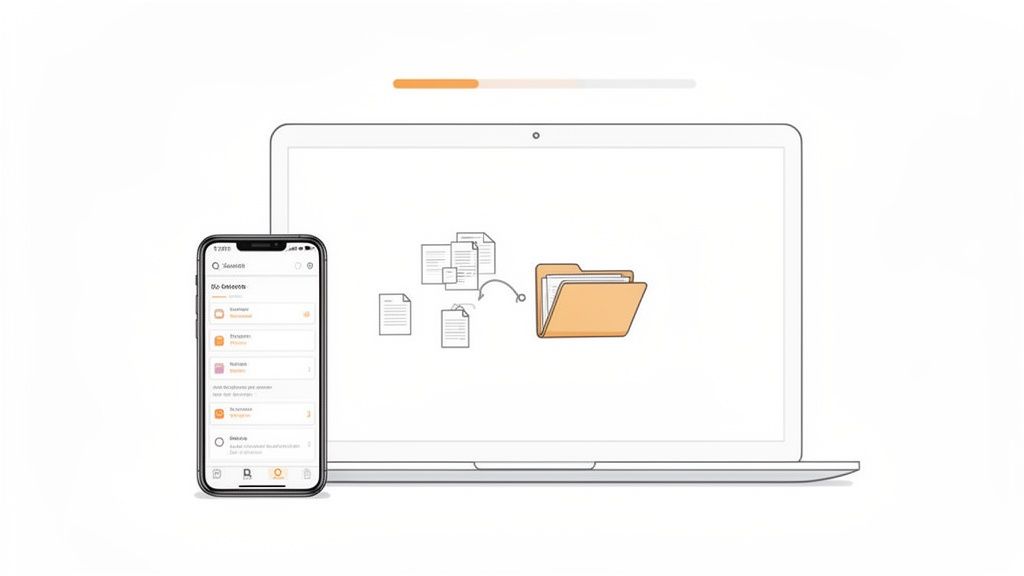
This foundational practice not only accelerates document gathering but also demonstrates professionalism from day one. For example, real estate agencies can collect all tenant application documents in under 24 hours, a task that once took weeks. Similarly, mortgage brokers have reduced loan application processing times by up to 50% by eliminating back-and-forth emails.
How to Implement This Practice
- Start Small: Begin by creating digital templates for your most frequently requested documents to see an immediate impact.
- Guide, Don't Overwhelm: Use a step-by-step process (progressive disclosure) to show customers only what they need to complete next, preventing them from feeling overwhelmed.
- Prioritize Mobile: Ensure your collection portal is fully optimized for mobile devices, as many customers will use their phones to upload documents.
- Provide Clear Instructions: Add inline help text, field examples, and clear labels to reduce confusion and submission errors. For a deeper dive, learn more about how to improve your document collection process on superdocu.com.
2. Personalize Communication with Branded Invitation Emails and Reminders
Generic, unbranded communications create a disconnected and untrustworthy experience during a critical first impression. One of the most effective best customer onboarding practices is to personalize all customer-facing communication with your brand identity, tone, and values. This involves using branded emails and automated, personalized reminders to guide customers through the process, reinforcing professionalism and maintaining momentum.

This approach makes customers feel valued and keeps them engaged. For instance, legal firms that use branded emails reflecting their official letterhead have seen customer submission rates increase by 25%. Similarly, real estate agencies using white-labeled portals and emails report a 35% higher document completion rate after the first reminder. This strategy builds trust and leverages behavioral psychology to significantly improve completion rates.
How to Implement This Practice
- Set a Reminder Sequence: Automate a non-intrusive follow-up schedule, such as an initial request, a reminder after 3 days, another at 7 days, and a final notice.
- Personalize Subject Lines: Include the customer's name in the subject line to improve open rates by over 20% and make the communication feel personal.
- Provide Clear Instructions: Ensure every email clearly states the required action, the deadline, and a direct link to the submission portal.
- Use Respectful Language: Craft your reminders with polite, non-intrusive language to maintain goodwill and encourage cooperation rather than creating pressure.
3. Establish Clear Expectations and Success Criteria Upfront
Ambiguity is the enemy of a smooth onboarding process. When customers are unsure what is needed, why it is needed, or how long things will take, frustration quickly builds, leading to delays and support tickets. One of the most critical best customer onboarding practices is to establish explicit expectations from the very beginning. This means clearly communicating required documents, submission guidelines, timelines, and what completion looks like.
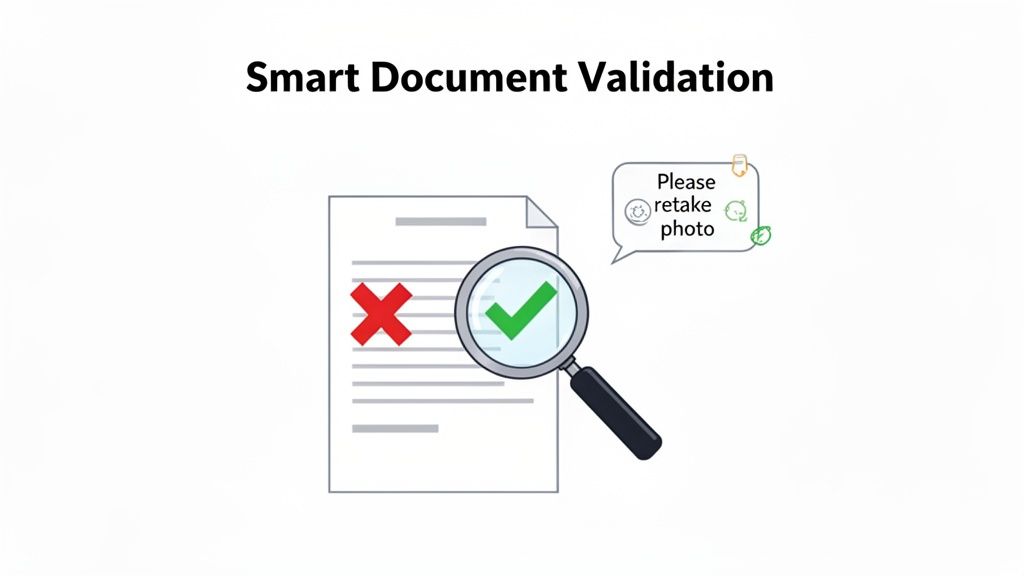
This transparency reduces confusion and demonstrates a commitment to an efficient, customer-centric experience. For instance, transportation companies that provide a precise checklist of driver documents (license, insurance, background check) can see up to a 60% reduction in incomplete submissions. Similarly, mortgage brokers who outline all required loan documents upfront have been able to reduce back-and-forth communication by 80%, accelerating the entire application process.
How to Implement This Practice
- Create Visual Checklists: Use interactive checklists that show all required documents with checkboxes, giving customers a clear sense of progress.
- Define Acceptance Criteria: Clearly state requirements like file size limits, accepted formats (PDF, JPG), and image quality standards to prevent resubmissions.
- Provide Examples: Show visual examples of acceptable versus unacceptable documents, such as a clear photo of an ID versus a blurry or cropped one.
- Set Time Expectations: Give a realistic estimate for how long the submission process will take (e.g., "This should take about 15-20 minutes to complete").
4. Implement Smart Document Validation and Real-Time Feedback
Waiting days to find out a submitted document was rejected is a major source of customer frustration. A key best customer onboarding practice is to use smart document validation to provide real-time feedback. This automated process checks submissions for quality, completeness, and compliance requirements the moment they are uploaded, alerting customers to issues like poor image quality, missing information, or expired dates so they can fix problems instantly.
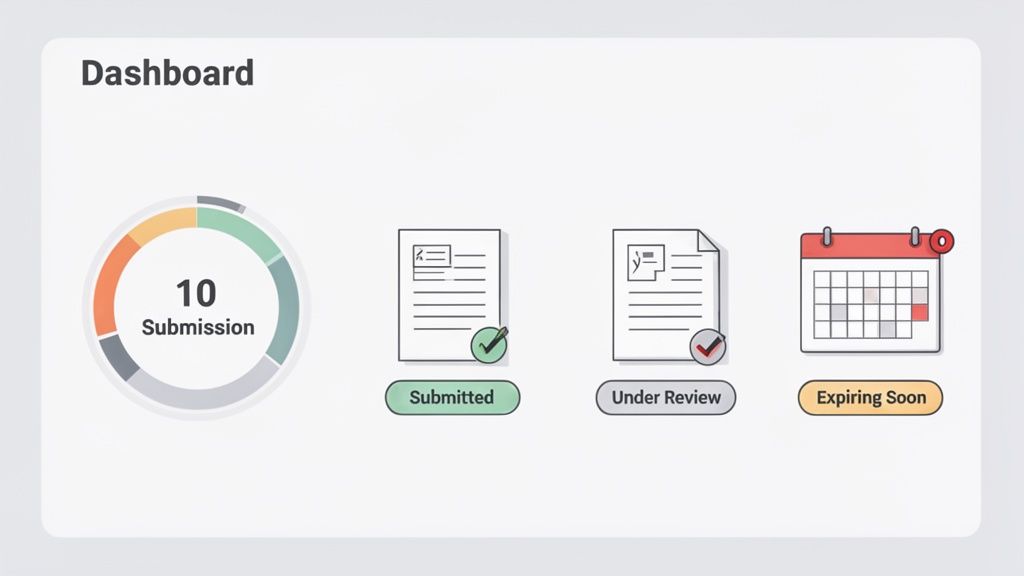
This proactive approach dramatically reduces back-and-forth communication and speeds up the entire onboarding journey. For example, legal firms that use automated validation catch missing signatures immediately, reducing client follow-ups by up to 90%. Likewise, mortgage brokers with automated document quality checks can cut processing delays from two weeks down to just three days by eliminating common submission errors from the start.
How to Implement This Practice
- Start Simple: Begin with basic validations for file type and size before implementing more complex compliance rules.
- Provide Actionable Feedback: Instead of a generic "error" message, offer specific guidance like, "This photo is too dark. Please retake it in a well-lit area."
- Allow Instant Corrections: Let customers fix issues and re-upload documents within the same session to avoid interrupting their workflow.
- Build in Human Review: Use automation for the initial checks but maintain a manual review step for edge cases or documents that require expert judgment. For more details on this approach, explore our guide on document verification software on superdocu.com.
5. Create Multi-Channel Accessibility and Device Optimization
Today’s customers expect a seamless experience, whether they are on a laptop at their desk or on their phone while on the go. An onboarding process that is not optimized for all devices creates significant friction and leads to high abandonment rates. One of the most critical best customer onboarding practices is ensuring your entire workflow is accessible and intuitive across mobile, tablet, and desktop channels. This involves more than just responsive design; it means building a process that adapts to how and where your customers interact.
A truly accessible system allows customers to start a process on one device and finish it on another without losing progress. For example, real estate portals optimized for mobile see 65% of their document submissions completed on smartphones. Similarly, HR platforms that use SMS reminders for onboarding tasks achieve up to 35% higher completion rates, especially among younger demographics. This flexibility meets customers where they are, making compliance easy and convenient.
How to Implement This Practice
- Test Extensively: Regularly test your entire onboarding workflow on both iPhone and Android devices, as well as on various screen sizes, to identify and fix usability issues.
- Design for Touch: Use large, touch-friendly buttons and form fields (a minimum of 48 pixels is recommended) to prevent frustrating input errors on smaller screens.
- Enable Mobile Document Capture: Allow customers to use their phone’s camera to directly upload photos of documents, eliminating the need for a scanner and streamlining submissions.
- Simplify and Save Progress: Minimize the number of required form fields for mobile users and ensure progress is automatically saved, allowing them to complete the process in multiple short sessions if needed.
6. Use Automated Reminders with Strategic Timing and Frequency
Manually chasing customers for missing documents is time-consuming and can strain the new relationship. One of the most effective best customer onboarding practices is deploying automated reminders with strategic timing and frequency. This system sends pre-scheduled prompts to guide customers toward completion without requiring constant manual intervention, ensuring tasks stay top-of-mind without feeling intrusive.
This practice is about finding the perfect balance between persistence and respect for your customer's time. For example, immigration firms using a three-touch reminder sequence (initial request, 3-day follow-up, 7-day final notice) often see document completion rates jump to over 75%. Similarly, staffing agencies that send timely SMS reminders to candidates experience a 40% increase in document submissions within the first 48 hours, significantly accelerating the onboarding timeline.
How to Implement This Practice
- Analyze and Optimize Timing: Use data to identify the best days and times to send reminders to your specific customer base. A simple A/B test can reveal optimal engagement windows.
- Vary Your Messaging: Avoid sending the same message repeatedly. Adjust the tone from a gentle nudge to a more direct call-to-action as the deadline approaches to increase urgency.
- Segment Your Reminders: Create different reminder sequences for high-priority versus standard customers, tailoring the frequency and messaging to the importance of the submission.
- Make it Easy to Act: Ensure every reminder includes a direct, one-click link back to the submission portal, removing any friction for the customer. For more strategies, learn how to create effective automated email reminders on superdocu.com.
7. Ensure Security, Privacy, and Compliance Throughout Onboarding
Building trust starts the moment a customer shares their sensitive information. From financial records to personal identification, your onboarding process must guarantee data protection. A critical entry in our list of best customer onboarding practices is to prioritize security and compliance, ensuring every document is handled with the utmost care according to regulations like GDPR, HIPAA, or SOC 2. This isn't just a technical requirement; it's a powerful way to show customers you value their privacy.
When customers feel confident their data is safe, onboarding friction disappears. For example, legal firms requiring GDPR compliance can eliminate client concerns by using platforms with strong encryption and EU hosting. Likewise, financial services firms that leverage systems with detailed audit trails can easily satisfy regulatory requirements, while HR agencies using SOC 2 certified tools can assure corporate clients that employee data is protected.
How to Implement This Practice
- Display Trust Signals: Prominently feature security badges and compliance certifications (e.g., SOC 2, ISO 27001) in your onboarding portal and communications.
- Be Transparent: Include a clear, easy-to-understand privacy policy and explanation of your data handling practices in your initial outreach.
- Encrypt Everything: Implement end-to-end encryption for all documents, both while they are being uploaded (in transit) and when they are stored (at rest).
- Maintain Audit Trails: Use a system that keeps a detailed, unchangeable log of who accessed documents and when, which is essential for compliance verification. You can learn more about secure document management at Superdocu’s security page.
8. Provide Proactive Support and Self-Service Resources During Onboarding
Leaving customers to figure out the onboarding process alone can lead to frustration and abandonment. One of the most critical best customer onboarding practices is to anticipate their questions and provide easily accessible help. By offering a mix of self-service resources and human support, you empower customers to find answers quickly, reducing friction and minimizing the burden on your support team. This proactive approach ensures customers feel supported from the very beginning.
This strategy builds confidence and improves completion rates. For example, real estate platforms that provide short video tutorials on how to upload documents have seen support calls drop by over 55%. Similarly, mortgage platforms using inline help text to explain complex financial fields have improved submission accuracy by 40%, preventing rework and delays. It's about giving customers the right help, right when they need it.
How to Implement This Practice
- Create Video Walkthroughs: Record short (under 3 minutes) screen-capture videos that guide users through the entire submission process from start to finish.
- Use Contextual Help: Add small tooltips or inline instructions directly within your forms to explain what information is needed and why, clarifying complex fields.
- Build a Relevant FAQ: Analyze your past support tickets to identify common questions and build a dedicated, easily searchable FAQ section to address them.
- Offer Live Support: Provide a live chat option during peak business hours to assist customers with more complex or urgent issues that self-service can't solve.
- Gather Feedback: Continuously ask customers if your help resources were useful and use their feedback to iterate and improve your support materials.
9. Track Submission Progress and Document Expiration Proactively
A lack of visibility into submission status is a common source of onboarding friction. When customers don't know where they stand and you don’t know what’s missing, delays and frustration are inevitable. One of the most critical best customer onboarding practices is to proactively track submission progress and document expiration dates using a transparent, automated system. This ensures both your team and your customers have real-time visibility, preventing last-minute surprises and compliance issues.
This practice turns a reactive, manual follow-up process into a proactive, automated one. For instance, a transportation company tracking driver’s license expirations can alert drivers 60 days in advance, ensuring timely renewals and maintaining compliance. Likewise, mortgage companies can prevent significant loan processing delays by automatically flagging insurance policies that are nearing expiration.
How to Implement This Practice
- Make Status Visible: Provide customers with a dashboard in their portal showing the real-time status of each document (e.g., submitted, pending review, approved, expiring soon).
- Set Automated Expiration Alerts: Configure automatic notifications to trigger 30-60 days before a document's expiration date, giving customers ample time to submit a renewed version.
- Use an Administrator Dashboard: Implement a central dashboard for your team that highlights submissions at risk, overdue documents, and overall progress across all customers.
- Automate Renewal Requests: When a document is about to expire, automatically send a renewal request with clear instructions, simplifying the process for the customer. For more on this, discover how to simplify your onboarding with Superdocu.com.
10. Optimize Onboarding Based on Data Analytics and Continuous Improvement
A static onboarding process quickly becomes outdated and inefficient. One of the most powerful best customer onboarding practices is to treat it as a dynamic system, using data analytics to drive continuous improvement. This approach involves systematically tracking key performance indicators to identify friction points and then testing solutions to create a more effective, user-friendly experience.
This data-driven cycle transforms onboarding from a one-time setup into an evolving asset that adapts to customer behavior and business needs. For instance, a real estate platform analyzing abandonment data might discover a 60% drop-off at the photo upload step. By optimizing for mobile uploads, they could reduce that rate to just 15%. Similarly, a legal firm could A/B test reminder subject lines and find that a personalized approach improves open rates by 35%.
How to Implement This Practice
- Track Core Metrics: Focus on key indicators like completion rate, average time-to-completion, abandonment rate, and the volume of related support tickets to get a clear picture of performance.
- Conduct Regular Reviews: Schedule weekly or bi-weekly analytics reviews with your team to identify emerging trends, pinpoint bottlenecks, and brainstorm solutions.
- Test One Variable at a Time: When making changes, isolate a single variable, such as a subject line, reminder timing, or field order. This allows you to accurately measure its impact.
- Segment Your Analysis: Analyze data for different customer segments (e.g., new vs. returning clients, mobile vs. desktop users) to uncover unique insights and tailor improvements accordingly.
10-Point Comparison of Customer Onboarding Best Practices
| Practice | 🔄 Implementation complexity | 🧰 Resource requirements | 📊 Expected outcomes (⭐ / ⚡) | Ideal use cases | 💡 Key advantages / Tips |
|---|---|---|---|---|---|
| Implement a Streamlined Digital Document Collection Process | Medium — template/configuration work; some integrations for legacy systems | Low–Medium — template setup, branding, minor integrations | ⭐ Reduces friction and abandonment; ⚡ Faster onboarding; 📊 -60–80% admin overhead | SMBs, real estate, HR, mortgage brokers | 💡 Start with common documents; optimize for mobile; test workflows with users |
| Personalize Communication with Branded Invitation Emails and Reminders | Low–Medium — template & automation setup, compliance checks | Low — design assets, email automation, copywriting | ⭐ Builds trust/brand consistency; ⚡ +30–40% completion; 📊 fewer support queries | Legal firms, real estate, immigration, multilingual audiences | 💡 Personalize subject lines; balance reminders; A/B test messaging |
| Establish Clear Expectations and Success Criteria Upfront | Low — content creation and portal updates | Low — documentation, examples, portal content | ⭐ Fewer support inquiries; ⚡ Improved first-time accuracy; 📊 -40–80% resubmissions | Mortgage, transportation, staffing, regulated onboarding | 💡 Use visual checklists; show acceptable vs unacceptable examples; use progressive disclosure |
| Implement Smart Document Validation and Real-Time Feedback | High — OCR/AI, rules engine, human review fallback | High — tech investment, validation rules, monitoring, privacy controls | ⭐ Higher data quality; ⚡ Cuts processing time (days→hours); 📊 -50–70% rejection rates | Legal, mortgage, high-compliance workflows | 💡 Start simple (type/size), give actionable feedback, allow in-session fixes |
| Create Multi-Channel Accessibility and Device Optimization | Medium–High — responsive UI, SMS/PWA, API integrations | Medium — dev resources for responsive design, channels, integrations | ⭐ Better reach across devices; ⚡ +40–60% mobile completion; 📊 reduced abandonment | Mobile-first users, HR, real estate, younger demographics | 💡 Test on real devices, use touch-friendly controls, enable camera upload |
| Use Automated Reminders with Strategic Timing and Frequency | Low — scheduling and segmentation setup | Low — automation platform, copy, basic segmentation | ⭐ Increases completions; ⚡ +25–35% uplift; 📊 improved engagement metrics | Immigration, staffing, legal follow-ups | 💡 Use data to set timing, vary messaging, include direct submission links |
| Ensure Security, Privacy, and Compliance Throughout Onboarding | High — encryption, certifications, audit trails | High — security infra, legal/compliance expertise, ongoing audits | ⭐ Builds trust & reduces legal risk; ⚡ Enables enterprise deals; 📊 lowers compliance exposure | Financial, healthcare, legal, government | 💡 Display certifications, encrypt in transit/at-rest, maintain audit logs, run third-party audits |
| Provide Proactive Support and Self-Service Resources During Onboarding | Medium — content production and support tooling | Medium — knowledge base, videos, live chat staffing | ⭐ Reduces tickets; ⚡ Faster problem resolution; 📊 -30–50% support volume | Complex forms, new customers, industries with nuanced docs | 💡 Produce short walkthroughs, add contextual tooltips, update based on tickets |
| Track Submission Progress and Document Expiration Proactively | Medium — dashboards, OCR/integration for expirations | Medium — tracking system, notification engine, integrations | ⭐ Prevents last-minute delays; ⚡ Enables timely renewals; 📊 higher compliance rates | Transportation, mortgage, staffing, certified professionals | 💡 Show real-time status in portal; alert 30–60 days before expiry; automate renewals |
| Optimize Onboarding Based on Data Analytics and Continuous Improvement | Medium–High — analytics stack, A/B testing framework | Medium–High — analytics tools, analyst time, experimentation resources | ⭐ Continuous uplift in KPIs; ⚡ Iterative efficiency gains; 📊 +20–40% improvements over time | Any scaling organization seeking KPI improvements | 💡 Track core metrics, A/B test one variable at a time, hold regular analytics reviews |
Transform Your Onboarding from a Process into a Competitive Advantage
The journey through the best customer onboarding practices reveals a powerful truth: onboarding is not just a procedural checklist to be completed. It is your first, and arguably most important, opportunity to deliver on the promises your brand makes. It’s where you transform a new customer’s initial excitement into lasting loyalty and confidence.
We’ve covered everything from streamlining digital document collection to leveraging data for continuous improvement. The common thread weaving through all these strategies is a shift from a passive, company-centric process to an active, customer-centric experience. A successful onboarding journey is one that feels effortless, secure, and personalized to the client.
Key Takeaways for Immediate Impact
To truly elevate your client experience, focus on these core principles:
- Automation is Your Ally: Manual follow-ups and document chasing are relics of the past. Implementing automated reminders and smart validation frees up your team to focus on high-value interactions, not administrative burdens. This is a foundational step in scaling your operations efficiently.
- Clarity Builds Trust: From the very first branded email to real-time feedback on document submissions, clarity is paramount. When customers know exactly what is needed, why it’s needed, and what the next step is, their anxiety disappears and trust in your process grows.
- Security is Non-Negotiable: In an age of digital transactions, demonstrating a commitment to security and compliance isn't just a feature; it's a prerequisite. Secure portals and transparent data handling practices assure clients that their sensitive information is in safe hands.
Your Actionable Next Steps
Instead of attempting to overhaul your entire system at once, start with a targeted approach. Identify the single biggest point of friction in your current onboarding workflow. Is it the time spent manually verifying documents? The number of emails you send chasing missing paperwork? Or the client confusion over what’s required?
Once you’ve identified that primary pain point, apply the relevant practice from our list. For instance, if manual verification is your bottleneck, focus on implementing smart document validation. If clients are frequently confused, refine your initial communication to set clearer expectations and provide proactive support resources.
Ultimately, mastering these best customer onboarding practices does more than just improve an administrative task. It creates a powerful competitive advantage that sets a new standard for professionalism and efficiency in your industry. You stop simply processing clients and start building strong, trust-based relationships from day one. This investment doesn’t just pay dividends in operational savings; it builds a foundation for long-term customer retention and growth.
Ready to turn these best practices into your daily reality? Superdocu provides the all-in-one platform to automate document collection, personalize communication, and ensure top-tier security. Stop chasing paperwork and start delivering a world-class onboarding experience by exploring what Superdocu can do for your business today.