
The fastest way to lose a real estate lead is not bad marketing. It's a slow response. Research cited in 2026 lead-generation reporting says a web lead contacted within 5 minutes is 21× more likely to be qualified than one contacted after 30 minutes, while the average real-estate lead-to-client conversion rate sits at only 2.1% and top agents reach 5% to 7% (DealMachine OS lead generation statistics for 2026). That changes the question completely. The job is not just to attract inquiries, it's to keep them from slipping away in the minutes and days after they arrive.
In practice, the best client-finding systems in real estate are built around three things, speed-to-lead, a niche that makes sense in your market, and onboarding that doesn't break the deal when documents start flying back and forth. Most agents obsess over channels. The stronger operators obsess over follow-up, trust, and friction.
Table of Contents
- Why Most Real Estate Lead Generation Leaks Before It Converts
- Picking a Micro-Niche That Actually Pays
- Building a 24/7 Online Funnel That Captures Demand
- Turning Your Sphere and Local Network into a Repeat Pipeline
- Outreach Scripts and Cadences That Actually Book Appointments
- Converting the Lead into a Client With Faster Document Collection
- Your 90-Day Plan and the KPIs That Tell You It Is Working
Why Most Real Estate Lead Generation Leaks Before It Converts
A lead that sits untouched is already slipping. The clearest sign in the data is simple, web leads contacted within 5 minutes are 21× more likely to be qualified than leads contacted after 30 minutes, and 80% of leads drop off after 5 days without structured follow-up. That is why so many real estate pipelines look busy and still fail to produce clients. The form fills are there, the calls happen, and the conversion still stinks. According to DealMachine OS lead generation statistics for 2026, the response window closes fast.
The actual bottleneck sits after the inquiry
Most agents assume the funnel breaks at discovery. It usually breaks at response. A buyer or seller in motion is comparing options, checking trust, and waiting to see who acts like a professional. The same reporting says 60% of leads respond within the first 24 hours, which means the first day matters more than a week of casual follow-up.
Practical rule: If you cannot answer fast, automate the first acknowledgment and route the lead to someone who can.
The average conversion rate of 2.1% shows how unforgiving this business is. Top agents at 5% to 7% are not just better at persuasion, they are better at contact speed, persistence, and keeping the next step obvious. Referral leads do better than the average, with a 32% conversion rate, and NAR-linked reporting says 78% of homebuyers end up working with the first agent who responds to their inquiry. That is not a branding story. It is a response-time story.
For a practical benchmark on what working client-finding systems look like, browse Saleswise's client-finding tips and compare them against your own lead handling. If your current process depends on memory, manual reminders, or “I'll call them later,” the leak is already built in.
Measure the gap before you buy more leads
Before you add another channel, track three things for two weeks, how fast someone replies, how many touches happen, and how many leads become appointments. If the first two are weak, more traffic just creates more waste. The fix is usually operational, not promotional.
If your team cannot explain what happens from inquiry to first contact to booked appointment, you do not have a lead problem. You have a routing problem.
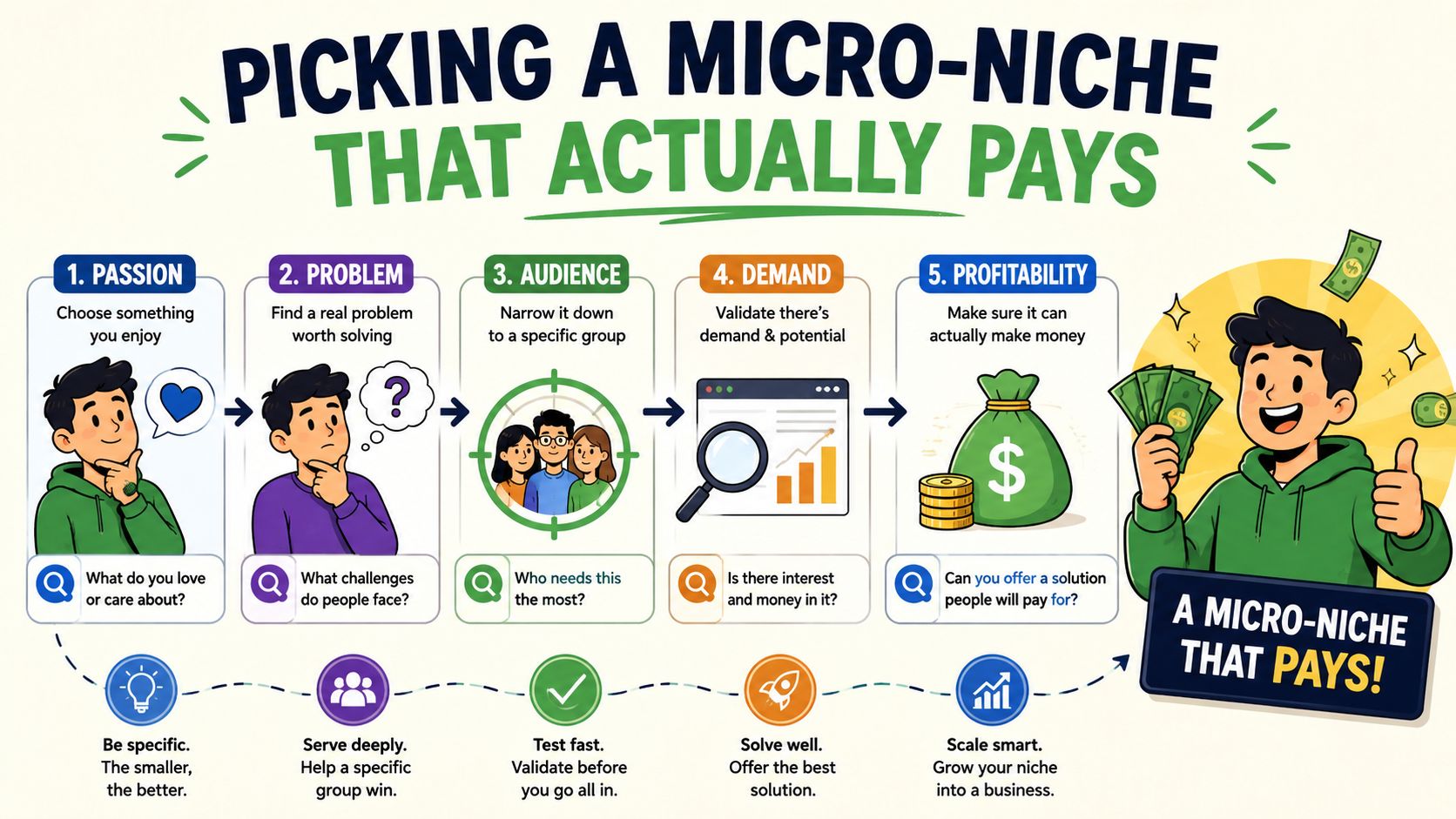
Picking a Micro-Niche That Actually Pays
Generic “real estate clients” advice keeps agents broad and forgettable. A sharper niche gives you a clearer message, cleaner follow-up, and better conversations because the prospect feels understood before the first call even ends. The best niche isn't the one that sounds exciting. It's the one your market hasn't fully crowded and your team can serve well.
Validate demand before you commit
Start with local evidence, not a hunch. Review MLS agent activity in the area you're considering, look at days on market, and ask whether listings are moving quickly enough to justify active prospecting or sitting long enough to signal an opening. Then check public demographics, planning and zoning signals, and Google Trends to see whether a pocket of demand is growing or just noisy (LeedNest micro-market guidance).
A useful test is whether the niche has a consistent reason to need more explanation, more trust, or more paperwork. 55+ communities, probate and estate sales, investor-led transactions, and first-time buyer corridors all tend to create more document-heavy workflows and more decision anxiety than a standard retail listing. That makes them attractive if your process is organized, and painful if it isn't.
Use this filter: if a niche needs the same pitch as every other niche, it probably isn't a niche yet.
Choose the market where your message can be specific
Broad farming still works, but only when you have the patience to become known locally. A micro-niche lets you shorten the path to trust. Instead of saying you help everyone buy or sell, you can say you understand a very specific transaction pattern, a specific type of documentation, and a specific reason people enter the market.
That's the trade-off. Narrowing your focus reduces the size of the audience, but it usually raises the relevance of every conversation. The wrong move is choosing a niche because another agent is using it. The right move is choosing one where the local data says demand exists and the workflow complexity gives you a real service edge.
Building a 24/7 Online Funnel That Captures Demand
Most buyers start online, but the funnel only works if it keeps moving after the click. Analysts at AgentZap real estate lead statistics report that buyers use online tools throughout the search and often begin their home search online. They also note that buyers usually visit several websites before contacting an agent, and many inquiries arrive after business hours. That means your online stack has to do more than attract traffic. It has to capture, acknowledge, and route demand while you're sleeping.
Put each channel to a different job
A fast website handles the first job, credibility. Neighborhood pages and local search content handle visibility. Paid search captures high-intent people who are already asking for help. Social video builds familiarity before the first conversation. Listing-portal hygiene keeps your inventory and messaging consistent so prospects do not run into mixed signals.
The important part is role clarity. A channel that is strong for trust is not automatically strong for urgent leads. A channel that captures intent is not always good at educating first-time buyers. If you expect every channel to do everything, the funnel gets muddy.
| Channel | Primary Job | Best Signal Captured |
|---|---|---|
| Website and local SEO | Build credibility and rank for local intent | Searchers comparing neighborhoods or agents |
| Paid search | Capture urgent demand | People ready to contact now |
| Social video | Build familiarity and trust | Prospects who need repeated exposure |
| Listing portals | Catch active property shoppers | Buyers looking at specific homes |
| Google Business profile | Win local discovery | Nearby searchers evaluating options |
Make the funnel responsive after hours
Because so many inquiries come in after business hours, the first response cannot depend on your calendar. A contact form should trigger an instant acknowledgment, and any serious lead should enter a same-day follow-up path even if the full conversation happens later. Teams that want a stronger response flow should also review how to follow up with clients so the first touch does not stall after the inquiry.
A clean online system does not just look polished. It gives the prospect a reason to keep going. For teams that want to pre-qualify buyers efficiently, an internal buyer intake flow like this buyer questionnaire framework helps turn anonymous interest into a usable lead record. A strong profile also helps when prospects check your background before replying, which is where a professional LinkedIn growth strategy can support trust without becoming the center of the funnel.
Turning Your Sphere and Local Network into a Repeat Pipeline
The most reliable real estate pipeline is still the one people already trust. Referrals from past clients and friends convert at roughly 32%, and one survey found 36% of sellers found their agent through referrals while another found 50% relied on word of mouth or previous experience (DealMachine OS lead generation statistics for 2026, AgentZap real estate lead statistics). That's why sphere work doesn't belong in the “nice to have” bucket. It's the core of how many agents keep their pipeline full.
Farming is consistency, not random visibility
The National Association of Realtors defines farming as consistently marketing a specific geographic area so you become the go-to expert there (NAR farming and prospecting). That matters because the definition itself points to the hard work. You're not blasting a neighborhood once. You're staying present long enough that people stop wondering who to call.
Prospecting, by contrast, includes cold calling, networking, online marketing, and social media outreach, which means it's a broader motion with a different purpose. Use both. Farming builds memory. Prospecting creates conversations.
People don't refer the agent they barely remember. They refer the agent who stayed visible without becoming annoying.
Keep your name attached to useful moments
Monthly market updates work because they're practical, not flashy. Anniversary touches, home-anniversary notes, neighborhood events, and local sponsorships all work for the same reason. They keep your name linked to a local identity over time, which is what turns a past client into a repeat source.
The best version of sphere work doesn't feel like begging for business. It feels like maintaining a relationship you already earned. If the only time someone hears from you is when you need a referral, you're starting from zero every time.
Outreach Scripts and Cadences That Actually Book Appointments
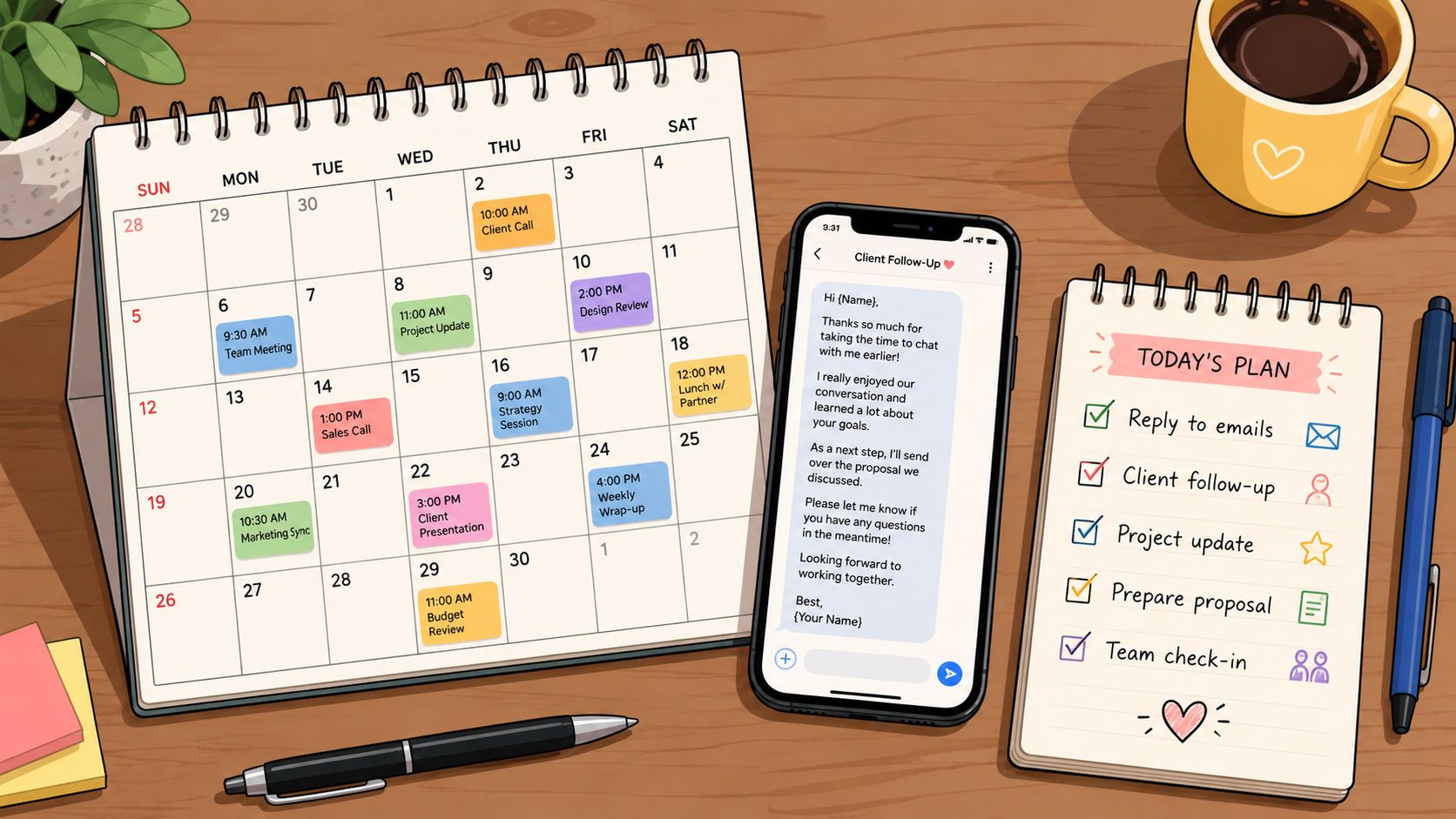
Most agents don't lose because they have the wrong script. They lose because they stop too early. A structured follow-up sequence with 4 to 6 steps, 3 to 4 days between touches, a first email under 100 words, no attachments or links in the opening message, and a low-friction call to action gives you a better starting point than a single enthusiastic message and a hope (Alex Berman real estate follow-up framework). Practitioners also report needing 7 to 14 follow-up touches before a prospect becomes reachable and engaged (YouTube follow-up workflow). The job is staying in motion without sounding automated.
A simple arc that keeps momentum
The first touch should be short and specific. If the lead came from a property inquiry, reference the property. If it came from an open house, mention the context. The goal is not to sell everything in one text. The goal is to earn a reply and move the conversation toward a real next step.
A clean sequence looks like this.
- First touch: short text or call, focused on the inquiry and a single question.
- Value email: one useful point, one clear next step, no attachments.
- Follow-up touch: a different angle, such as timing, financing, or a local market observation.
- Appointment ask: offer a short call, showing, or consultation with an easy yes.
- Final check-in: polite close-the-loop note that leaves the door open.
Use plain language. “Are you still looking in this area, or did your plans change?” works better than a paragraph that sounds like a brochure. If someone doesn't answer, don't get dramatic. Move to the next touch and keep the cadence steady.
Scripts that sound human
For a cold lead, say, “I saw your inquiry and wanted to check one thing before I send you the wrong options. Are you looking to move soon, or are you still early in the process?”
For a past-client revival, say, “I'm reviewing my client list and wanted to reconnect. If you've had any changes in your plans this year, I'm happy to give you a quick market read.”
For a sphere check-in, say, “You came to mind because I'm seeing a lot of local movement in your area. If you hear of anyone buying or selling, I'd be glad to help.”
If you need help handling the response load, a service like Hire Appointment Setter can make sense for teams that already know their offer and need a tighter booking process. The point is not to hand off judgment. It is to keep the conversation alive long enough for a real appointment to happen.
Structured follow-up also works better when the next step is easy to complete. A clear process, like the one outlined in this guide to how to follow up with clients, gives prospects fewer reasons to drift away between touches.
Converting the Lead into a Client With Faster Document Collection
A surprising number of leads don't die at the first inquiry. They die after the handshake, when someone asks for proof of funds, ID, landlord references, or onboarding paperwork and the process turns messy. That's why client acquisition and document collection belong in the same conversation. If the handoff feels slow or confusing, the prospect experiences friction exactly when trust should be deepening.
Remove the back-and-forth that kills momentum
A branded request portal changes the experience because it gives the client one clear place to act. A single request link is easier to complete than a scattered email thread with attachments, missing files, and unclear next steps. Automated reminders matter too, because they save the agent from chasing people manually and save the prospect from wondering whether anything is still pending.
Secure upload links reduce hesitation around sharing sensitive files. Validation dashboards help the team spot missing or expired documents before a transaction stalls. That matters in real estate because the document list is rarely static. It changes as the deal moves.
The logic is simple. Every extra step lowers completion. Every unclear instruction creates delay. Every delay gives the prospect time to cool off.
Treat onboarding like part of the sale
If you want the client to keep moving, make the first request feel organized and safe. Branded emails and portals reinforce trust. Expiration tracking keeps you from discovering a problem too late. Integrations with Zapier and DocuSign extend the workflow so document collection can connect cleanly into downstream steps like eSignature and internal tracking. For seller-facing onboarding, this seller questionnaire framework shows the kind of intake structure that keeps the process from turning into email chaos.
Practical rule: the faster a prospect can understand what you need and why you need it, the less likely they are to disappear.
Many agents leave money on the table. They spend heavily to generate the lead, then rely on a patchwork of texts and forwarded emails to finish the job. A tighter document flow doesn't just save time. It protects conversion after the prospect has already said yes.
Your 90-Day Plan and the KPIs That Tell You It Is Working
A good 90-day rollout starts with plumbing, not ambition. Weeks one through four should focus on speed-to-lead, CRM hygiene, and the first response workflow. If a lead comes in and nobody knows who owns it, no amount of creative marketing will fix that.
A simple rollout that matches real capacity
Weeks five through eight, pick one online channel and one offline ritual. That could be local search content plus weekly neighborhood calls, or paid search plus open house follow-up. The point is to get one repeatable source working before you add a second.
Weeks nine through twelve, activate referrals more intentionally and connect your intake process to document automation. The business starts to feel less chaotic. Leads become records, and records become workflows instead of loose threads.
Track the numbers that tell you where the funnel is leaking.
- Speed to first contact: how fast the first real reply happens.
- Lead-to-appointment rate: whether inquiries become conversations.
- Appointment-to-agreement rate: whether conversations become clients.
- Document-completion time: how long onboarding takes after agreement.
- Closed transactions per source: which channels produce deals.
Cut what looks busy but doesn't close
A channel can feel productive and still be weak. If it creates lots of attention but few appointments, tighten the message. If it creates appointments but no agreements, improve the script. If agreements happen but documents stall, fix onboarding.
That's the key advantage of measuring the funnel this way. It stops you from rewarding activity and starts rewarding conversion. The best agents don't just know where the lead came from. They know exactly where the lead was lost.
If you want to turn more inquiries into signed clients without drowning in follow-up and email threads, visit Superdocu and see how a cleaner document request flow can support your real estate pipeline. It's built for the part of the process where most leads stall, and it can help your team move prospects from interest to completed onboarding with a lot less manual chasing.