
At its most basic, document collection is just what it sounds like: the process of gathering, organizing, and securing all the paperwork needed for a specific business task. Think of it as the foundational step for everything from bringing on a new hire to finalizing a major real estate deal.
What Is Document Collection and Why Does It Matter

Have you ever tried to assemble a big piece of furniture with a random bag of screws and a single, manual screwdriver? It's a nightmare—slow, frustrating, and you’re almost guaranteed to make a mistake. That’s exactly what manual document collection feels like: endless email threads, constant follow-ups for missing files, and a mess of incorrectly formatted documents.
Now, imagine building that same piece of furniture with a full power tool kit, where every part is labeled and neatly organized. That's the difference a modern, automated document collection system makes. It’s not just about getting files from point A to point B; it’s about building a solid foundation for the speed, security, and success of your entire operation.
The True Cost of a Broken Process
When your document collection process is a mess, the pain is felt across the entire business. A single missing document can bring a project to a screeching halt, delay a critical hire, or even result in serious compliance penalties.
And what about your customers? A clunky, repetitive submission process is a huge point of friction. It signals a lack of professionalism and can easily convince them to walk away. The consequences aren't just annoying—they're expensive.
On the other hand, a smooth, well-oiled system pays for itself over and over again. You’ll see immediate benefits like:
- Faster Turnarounds: Loan applications, new client setups, and legal cases all move ahead without the usual frustrating delays.
- Stronger Client Trust: A secure, professional portal shows clients you take their sensitive information seriously.
- Less Admin Work: Your team can finally stop chasing down paperwork and start focusing on tasks that actually matter.
- Easier Compliance: A structured workflow with a clear audit trail makes risk management and regulatory checks far less painful.
Simply put, a smart document collection strategy is no longer a back-office chore. It’s a powerful driver of efficiency, customer happiness, and a real competitive edge.
The Shift Toward Automation
This isn't just a theory; the market trends tell the same story. The document management systems market, which includes collection tools, is projected to jump from $10.51 billion in 2025 to $19.81 billion by 2030. This rapid growth signals a clear shift—businesses are realizing they have to digitize and automate these essential workflows to stay competitive.
Take a look at the State of New Mexico's success in transforming text to video, where a modern approach to handling information cut costs by a whopping 70%. In today's business environment, updating how you handle documents isn't just a good idea; it's a strategic necessity.
Manual vs Automated Document Collection Comparison
To put it in perspective, here’s a quick comparison highlighting the key differences between sticking with the old ways and embracing a modern, automated system.
| Aspect | Manual Collection (The Old Way) | Automated Collection (The New Way) |
|---|---|---|
| Submission Method | Email attachments, mail, fax, in-person drop-offs | Secure client portal with simple drag-and-drop uploads |
| Tracking | Manual checklists, spreadsheets, sticky notes | Centralized dashboard with real-time status updates |
| Reminders | Manual follow-up emails and phone calls | Automated, scheduled email and SMS reminders |
| Security | High risk of data breaches, lost files, human error | End-to-end encryption, access controls, audit trails |
| Team Effort | Time-consuming, repetitive, high administrative burden | Frees up team for high-value work, reduces manual tasks |
| Client Experience | Confusing, frustrating, requires multiple touchpoints | Simple, professional, and convenient for the client |
As you can see, the contrast is stark. While manual methods might seem "free," the hidden costs in lost time, security risks, and poor client experience are enormous. Automated systems, on the other hand, provide a clear path to efficiency and security.
The Hidden Risks of Inefficient Document Collection

Relying on old-school document collection methods is like trying to navigate a minefield blindfolded. The dangers aren't just about minor inconveniences; they’re serious liabilities that can stall your operations, expose sensitive data, and completely erode the trust you've built with your clients.
Often, these risks stay buried just beneath the surface, only exploding into view when a critical failure occurs. A sloppy process isn't just a headache—it’s a direct threat to your bottom line. Let's dig into the four biggest risks businesses run into when their document collection is messy and insecure.
The Domino Effect of Operational Bottlenecks
Picture this: a multi-million dollar real estate deal is about to close. The lawyers are ready, the buyers are on edge, but everything suddenly screeches to a halt. The reason? A single, crucial proof-of-funds document is lost in someone's spam folder or was sent in a format no one can open.
This isn't some far-fetched scenario. These kinds of operational bottlenecks are a constant drag on productivity. Every missing file or incorrectly filled-out form triggers a delay, and those "small" delays quickly cascade into major setbacks. Projects get stalled, deadlines are blown, and your team wastes precious hours chasing down paperwork instead of focusing on what really matters. The entire momentum of a deal can be lost over a completely preventable admin error.
Severe Security and Data Vulnerabilities
Think about what happens every time a client sends sensitive information—a tax return, a passport copy, a medical record—over a standard, unencrypted email. Your business is left wide open to a security breach. Email is notoriously insecure and a favorite playground for cybercriminals. A single intercepted message can lead to identity theft, financial fraud, and the kind of reputational damage that’s hard to come back from.
Worse yet, storing these documents all over the place—on personal desktops, in random shared drives, or scattered across email inboxes—creates a compliance nightmare. Without a central, secure system, you have no real control over who sees, copies, or shares confidential client data. This isn't just disorganized; it's practically an open invitation for a data breach.
An inefficient document collection process is the weakest link in your security chain. In fact, studies show that human error is a major contributing factor in 95% of cybersecurity breaches, and mishandling documents is a classic example.
The High Cost of Compliance Failures
Regulations like GDPR in Europe and HIPAA in the U.S. have incredibly strict rules about how businesses must handle personal data. Messing this up isn't a slap on the wrist; it can lead to eye-watering financial penalties. Under GDPR, for instance, fines can soar as high as €20 million or 4% of a company’s global annual revenue—whichever is higher.
When your document collection is a free-for-all, proving you're in compliance becomes almost impossible. You can't produce a clear audit trail showing who accessed a document, when you received it, or how it was kept safe. This leaves your business completely exposed during an audit and can lead to crippling legal and financial trouble.
Damaging the Customer Experience
For many clients, your document collection process is one of their very first real interactions with your business. If that experience is frustrating, confusing, or makes them repeat themselves, it can poison the relationship before it even has a chance to start.
Imagine a hopeful homebuyer applying for a mortgage. They're asked to email the same W-2s and bank statements multiple times, they get confusing requests from different people, and they have zero visibility into where things stand. Annoyed and unimpressed, they ditch the application and find a competitor with a cleaner, more professional process. This exact situation plays out every single day, costing businesses revenue and ruining reputations, all because of a fundamentally broken workflow.
Core Components of a Modern Document Collection Workflow
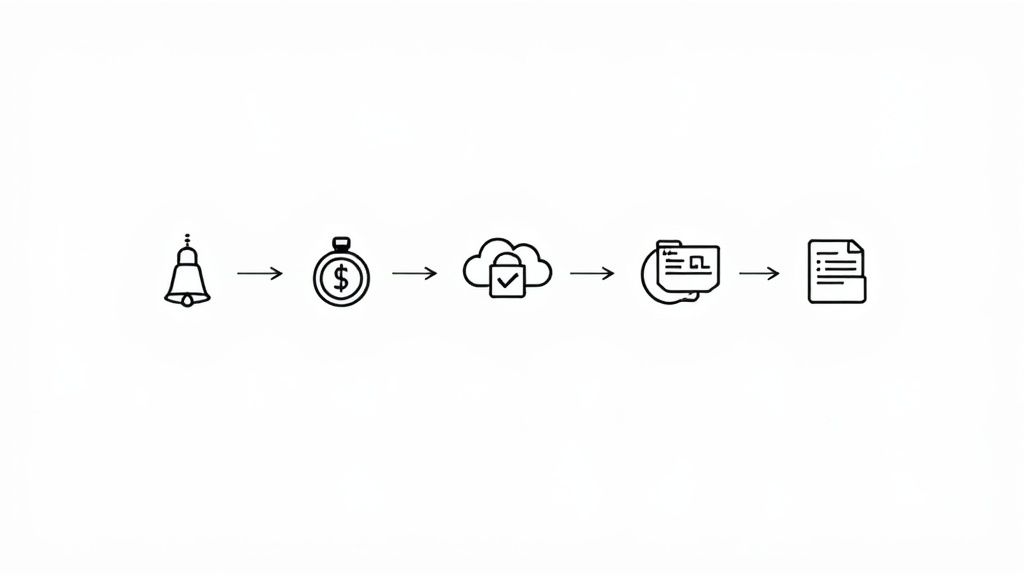
Moving from a chaotic, manual process to a smooth, automated one isn’t magic—it just requires a solid game plan. A modern document collection workflow isn't one single action. It's a sequence of well-defined stages, each one designed to cut out the friction, tighten up security, and save everyone a ton of time.
Think of it like an assembly line for information. Each station has a specific job, making sure the final product—a complete and verified set of documents—gets put together quickly and without any mistakes. Let’s break down the five core parts that make this assembly line hum.
Request and Notification
It all starts with a clear request. In the old way of doing things, this was probably a long, confusing email that was easy to get wrong. A modern workflow kicks that to the curb and replaces it with a structured, automated request that leaves zero room for guesswork.
This first step should nail a few key things:
- A Clear Checklist: Give clients a simple, itemized list of every single document you need. This helps them see the full picture right from the get-go.
- Specific Instructions: Add short, helpful notes for each item. Think things like "PDF format only" or "make sure all four pages of the bank statement are included."
- Automated Reminders: This is a lifesaver. Set up automatic follow-ups for documents that are still outstanding. Tools like Superdocu can send polite, scheduled nudges so your team doesn't have to play detective.
Getting this stage right sets the tone for the whole experience. A professional, clear request shows clients you respect their time and makes the process feel way less like a chore.
Secure Submission Portal
Okay, so the client knows what you need. Now, how do they get it to you? Emailing attachments is a security nightmare, not to mention they often get flagged as spam or bounce back because they're too big. The answer is a dedicated, secure submission portal.
A centralized portal acts like a digital safe deposit box. It gives clients one secure, encrypted place to upload their sensitive files, so both you and they can rest easy knowing their information is protected.
This portal should look and feel like your company, with your logo and colors, to create a trustworthy experience. It also needs to be mobile-friendly. Letting clients snap a photo of a document and upload it from their phone is a massive convenience that speeds things up like you wouldn't believe.
Automated Validation
This is where the real "wow" factor comes in. Instead of your team manually opening every single file to check if it's complete, legible, or in the right format, automation can handle the first-pass review in an instant.
This is powered by something called Intelligent Document Processing (IDP), which uses AI to understand and validate documents. The global IDP market hit $2.3 billion in 2024 and is on track to explode to over $15 billion by 2034. Why? Because it completely wipes out tedious manual checks in industries like finance and logistics.
A system with automated validation can:
- Check for Completeness: Instantly flag if a multi-page document is missing pages.
- Verify File Type: Make sure uploads are in the right format (like rejecting a .jpeg when you asked for a .pdf).
- Confirm Signatures: Detect whether a signature is present on contracts and forms.
This immediate feedback lets clients fix errors on the spot, cutting out the endless back-and-forth that kills productivity in manual workflows.
Organized Storage System
Once a document is submitted and validated, where does it live? In a manual system, it might get dumped into a random desktop folder or buried in an email thread, never to be seen again. An effective workflow ensures every approved document is automatically filed into a structured, centralized hub.
This means no more frantic searching for that one file you need. With a proper system, documents are automatically named, tagged, and sorted based on the client or project they belong to. A solid storage system is the backbone of your entire document collection strategy. To learn more, check out our guide on the benefits of a cloud-based document management system.
Audit and Tracking
Last but not least, you need a clear record of every single action taken for compliance and accountability. A modern system provides a complete, time-stamped audit trail for the entire document journey.
This log shows who requested what, when the client saw the request, when each file was uploaded, and who gave it the final thumbs-up. This kind of transparency is non-negotiable for regulated industries and gives you a clear history if any questions or disputes pop up down the line. It's a key part of the best practices for knowledge management that helps turn raw information into a real business asset.
Document Collection In Action Across Different Industries
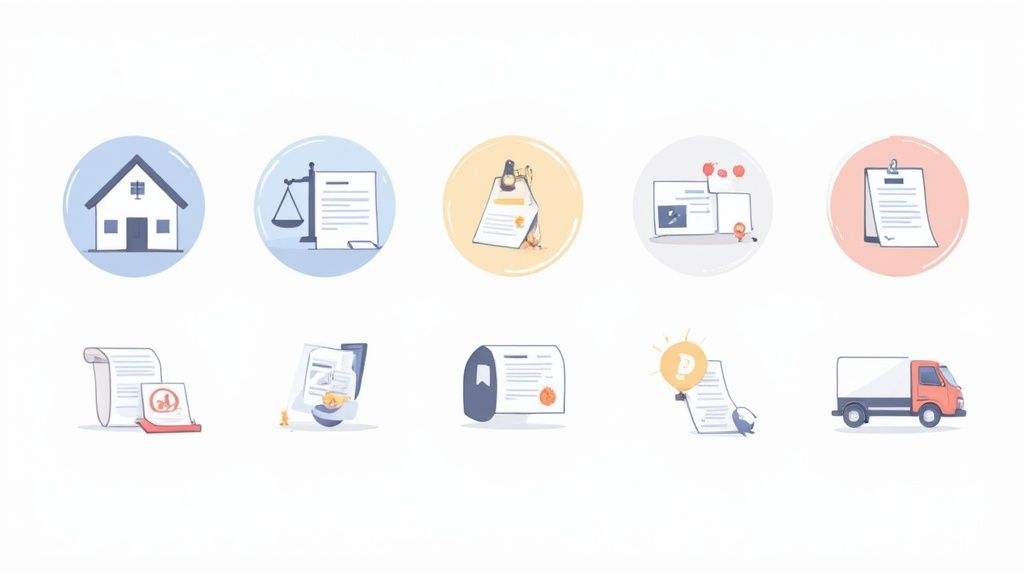
The theory behind a good document collection process is one thing, but seeing it work in the real world is where it really clicks. The principles are the same everywhere, but the stakes change dramatically from one field to the next.
A clunky, manual process in one industry might just delay a project. In another, it could mean a family loses their dream home, an entire supply chain grinds to a halt, or a critical legal case falls apart.
Let’s look at how different industries are tackling these unique challenges and turning a universal headache into a real competitive advantage.
Mortgage and Real Estate
If there's one place where the pain of slow document collection is felt most, it's real estate. A single mortgage application can demand dozens of highly sensitive files. Every delay, every missed email, puts the entire deal at risk.
An automated system completely changes the dynamic. Instead of loan officers chasing down homebuyers with endless follow-up emails, they can send a single, secure link with a clear checklist of what's needed. It's a game-changer for getting approvals done faster and making clients feel confident, not stressed.
Key documents usually include:
- Proof of Income: Pay stubs, W-2 forms, and tax returns.
- Identification: Driver's licenses, passports, or other government-issued IDs.
- Asset Verification: Bank statements and investment account records.
- Property Deeds: The official legal documents proving ownership.
The result is simple: mortgage brokers process more applications with fewer errors, and clients get the modern, streamlined experience they expect.
Legal Services
For any law firm, security and accuracy are everything. Collecting client evidence, case files, or signed agreements through standard email is a huge gamble. It's a massive security risk and a compliance nightmare waiting to happen.
A secure document collection portal is the answer. It creates a protected, encrypted space for clients to upload their most sensitive information. More importantly, it provides a clean, defensible chain of custody for every single file.
In the legal world, a documented, auditable trail is everything. Automated collection systems provide an unshakeable record of who submitted what and when, which is invaluable for compliance and case management.
This structured approach ensures every piece of evidence is properly logged and secured from the moment it’s received, protecting both the client and the firm from risk.
Human Resources
Onboarding a new employee means tackling a mountain of paperwork, from contracts and tax forms to I-9s. Doing this manually is slow, full of potential errors, and frankly, makes a terrible first impression. The last thing you want is for a new hire's exciting first day to become an administrative slog.
Smart HR departments use automated document collection to create a smooth, welcoming onboarding experience. New hires get a single request with a checklist of everything they need to complete before their start date. This also ensures your organization has a robust supplier document collection system for managing contractors and vendors just as efficiently.
Commonly collected HR documents:
- Signed employment contracts and offer letters.
- Government tax forms (like W-4s).
- Proof of identity and work eligibility (I-9 forms).
- Copies of professional certifications or licenses.
By getting this workflow right, HR teams slash their administrative burden, guarantee compliance from day one, and kick off the new working relationship on a high note.
Immigration
Immigration cases are incredibly document-heavy, and the stakes could not be higher. One missing birth certificate or a single incorrectly filled-out form can cause devastating delays or even lead to a visa being denied.
Immigration lawyers and consultants depend on specialized document collection tools to navigate the maze of visa application requirements. These systems let them create detailed, client-specific checklists, track what's been submitted in real-time, and ensure every required piece of paper is accounted for before filing.
The demand for these tools is exploding for a reason. The global market for document collection software is on track to hit $1.1947 billion by 2025, a clear sign of how critical this function has become.
Transportation and Logistics
The entire transportation industry runs on a constant river of paperwork. From customs forms and bills of lading to driver logs, every single shipment has a thick file of documents that must be accurate and available at a moment's notice.
Logistics companies are using automated systems to finally tame this paper trail. A driver can snap a picture of a bill of lading and upload it from their phone on the road. A customs broker can get the forms they need instantly through a secure portal. This digital-first approach is essential for minimizing delays at borders and keeping the global supply chain moving.
The right document collection strategy is clearly not a one-size-fits-all solution. Here’s a quick summary of how the needs and benefits differ across these key sectors.
Industry-Specific Document Collection Requirements
| Industry | Common Documents Collected | Primary Benefit of Automation |
|---|---|---|
| Mortgage & Real Estate | Income verification, bank statements, IDs, property deeds | Faster loan approvals and a much better client experience. |
| Legal Services | Case files, evidence, client intake forms, signed retainers | Unbreakable security, auditable chain of custody, and compliance. |
| Human Resources | Employment contracts, I-9/W-4 forms, certifications | A smooth, professional onboarding process and guaranteed compliance. |
| Immigration | Birth certificates, passports, visa applications, financial records | Eliminating errors and ensuring complete, accurate case files. |
| Transportation & Logistics | Bills of lading, customs declarations, proof of delivery, driver logs | Reduced shipment delays and streamlined supply chain operations. |
As you can see, while the documents change, the core benefit remains the same: replacing slow, risky manual work with a fast, secure, and reliable system.
Keeping Your Document Collection Process Secure and Compliant
When you’re dealing with sensitive client documents, security isn’t just a nice-to-have; it's the bedrock of your entire relationship. A leaky document collection process is a huge liability, opening you up to data breaches, painful fines, and a damaged reputation that’s hard to rebuild. Moving to a modern, digital system isn't just about convenience—it's about making the whole process fundamentally safer.
Think about it this way: asking a client to email you sensitive files is like sending cash through the mail in a see-through envelope. You're basically crossing your fingers and hoping for the best. A secure platform, on the other hand, is like an armored truck. Every document is protected, tracked, and accounted for from start to finish.
Locking Down Data with End-to-End Encryption
The first line of defense is solid encryption. This essentially scrambles the data into an unreadable code that’s worthless to anyone who doesn't have the specific key to unlock it. It's critical that your system protects this data at every single point in its journey.
- In Transit: This covers the moment a file is being uploaded from your client's device to your system. Encryption ensures that even if someone managed to intercept it, they’d just get a jumble of useless code.
- At Rest: This refers to the data sitting on a server. Strong encryption here protects your files from being stolen or viewed if the data center itself were ever compromised.
This one-two punch of protection means your client's information is secure from the second they hit "upload" until it's safely archived on your end.
Modern document collection platforms are built from the ground up with a security-first mindset. They aren’t just digital mailboxes; they’re more like digital vaults, designed to protect your most critical business and client information from constant threats.
Controlling Who Sees What
Let's be honest, not everyone on your team needs access to every single document. This is where the "principle of least privilege" comes in, and role-based access control (RBAC) is how you make it happen. With RBAC, you ensure people can only see and touch the specific information they need to do their jobs.
An account manager, for instance, might need to view a signed contract. But should they also have access to the detailed financial statements your finance team collected? Absolutely not. A good document collection tool allows you to set these permissions granularly, creating a clear separation of duties and shrinking the risk of internal misuse or an accidental data leak.
Staying on the Right Side of Regulations
Navigating the web of legal and industry regulations is non-negotiable. Major compliance standards like RGPD in Europe, HIPAA in healthcare, and SOC 2 for general data security are incredibly complex, and the penalties for getting it wrong are severe.
Trying to manage compliance with a manual system built on email and spreadsheets is just asking for trouble. Modern platforms are built specifically to help you meet these requirements. If you want to dig deeper, our guide on choosing a secure document intake platform breaks down the key features that truly matter for staying compliant.
These systems help you tick the right boxes by providing:
- Secure Data Centers: Using facilities that are certified to meet the highest global security standards.
- Regular Security Audits: Proving their security works by undergoing frequent, independent audits.
- Detailed Activity Logs: Keeping an unchangeable audit trail of every single action. You can see who viewed, uploaded, or downloaded a file, and exactly when they did it.
By using a tool designed for security, you're not just adding another piece of software. You're offloading a massive operational burden and making your business far more resilient. It’s the smartest way to handle one of the most high-stakes parts of your job.
Document Collection FAQs: Your Questions, Answered
Switching up how you collect documents always sparks a few questions. It’s a big change, after all. From getting clients on board to figuring out the tech, it's smart to tackle these concerns from the get-go. Here are some of the most common questions we hear from businesses moving away from manual methods to a more modern setup.
How Do I Get My Clients to Use a Portal Instead of Email?
This is probably the biggest hurdle for most people. We’re all creatures of habit. The trick is to show your clients what's in it for them—don’t just make it a new rule, make it an obvious upgrade.
Frame the switch around these three benefits:
- It’s Far More Secure: Gently remind them that regular email just isn't built for sending sensitive personal or financial information. A dedicated portal encrypts their data, protecting them from prying eyes and giving them much-needed peace of mind.
- It’s Way More Convenient: The portal is essentially a simple, shared checklist. They can see exactly what they’ve sent and what’s still outstanding at a glance. No more digging through old email chains trying to remember if they sent that one specific file.
- They Can Track Everything in Real-Time: Let them know they can log in anytime to see the status of their documents. That transparency is huge—it cuts down on their anxiety and practically eliminates all those "just checking in" emails.
When you position the portal as a safer, clearer, and more professional way of working together, most clients will see the value and happily make the switch.
Is Automated Document Collection Really Secure?
A very fair and critical question. Especially when you're dealing with sensitive information like legal contracts, financial statements, or medical records. The short answer is a resounding yes. A well-built automated system is light-years more secure than manual methods.
Think about it: email was never designed for this. It's notoriously leaky. An automated platform, on the other hand, is built from the ground up with security as its main job.
Security in a modern document collection system isn't just a feature; it's the entire foundation. These platforms are designed to act like digital vaults, with layers of protection that a standard email inbox simply can't offer.
Here’s what’s going on behind the scenes to protect your data:
- End-to-End Encryption: Your data is scrambled and unreadable from the moment it leaves your client's computer to the moment it's stored on the server. It’s protected both in transit and at rest.
- Compliance Certifications: Reputable platforms are held to high international standards like RGPD and SOC 2. This means they undergo regular, tough security audits to prove they can be trusted with sensitive information.
- Access Controls: You get to decide exactly who sees what. You can set permissions to ensure that only the right people can view specific documents, preventing unauthorized access internally.
These layers work together to create a secure bubble for your client's information, one that’s far stronger than the risks of email attachments and files floating around on different computers.
What’s the First Step to Go from Manual to Automated?
The thought of changing your entire process can be paralyzing. The secret is not to try and do it all at once. Start small, get a win, and build from there.
Treat it like a pilot program. Pick one repetitive process that causes you a lot of headaches.
Here's a simple game plan to get started:
- Map Out One Workflow: Choose a single, straightforward process. Onboarding a new client or collecting documents for a new project are great candidates. Write down every single step and every document you currently need.
- Run a Small Test: Use an automated tool for just that one workflow. Try it with a handful of trusted clients or just one team member. This lets you learn the ropes and get feedback in a low-stakes environment.
- Measure the Results: Keep track of the time saved, the reduction in follow-up emails, and what your team and clients think. When you see the concrete improvements, you'll have all the confidence you need to roll it out to other parts of your business.
This step-by-step approach makes the switch feel manageable and proves the system’s worth with real results before you go all-in.
How Much Technical Skill Do I Need for a Tool Like Superdocu?
This is a big one, especially for smaller businesses that don't have an IT department on standby. The good news? Modern document collection tools are built for business owners and their teams, not for developers.
You absolutely do not need to be a tech wizard. These platforms are designed to be intuitive so you can get up and running in no time.
Look for tools that have:
- A No-Code Setup: You should be able to build checklists, set up portals, and create automated reminders with simple drag-and-drop menus. No coding necessary.
- An Intuitive Dashboard: The system should give you a clear, easy-to-read overview of all your requests without needing a user manual to decipher it.
- Helpful Customer Support: On the off chance you do get stuck, you want to know that a real human is there to help you figure it out quickly.
Platforms like Superdocu are built with the idea that your time is better spent helping clients, not battling complicated software. The goal is to make a powerful process feel incredibly simple.
Ready to stop chasing documents and start focusing on your business? With Superdocu, you can create secure, professional, and automated document collection workflows in minutes. Start your free trial today and see the difference for yourself!