
Running a background check on a potential hire is about so much more than just ticking a box. It's a structured way for employers to confirm that a candidate is who they say they are, has the experience they claim, and doesn't have a history that could pose a risk to the company. This usually means getting the candidate's written consent first, then looking into things like criminal records and past employment, and finally, making a hiring decision based on those findings—all while staying on the right side of the law.
Why a Solid Background Check Process Is Not Optional
Let's be clear—a structured background check process isn't just HR paperwork; it's a fundamental safeguard for your business. Cutting corners here can open you up to some serious headaches, from negligent hiring lawsuits and workplace safety incidents to long-term damage to your brand. Just picture a small company getting tangled in legal trouble because an employee with a sketchy, unvetted history caused a major problem for a client.
Believe me, it happens more often than you'd think. A good screening process isn't a roadblock; it’s a smart way to manage risk and build a team you can truly trust.
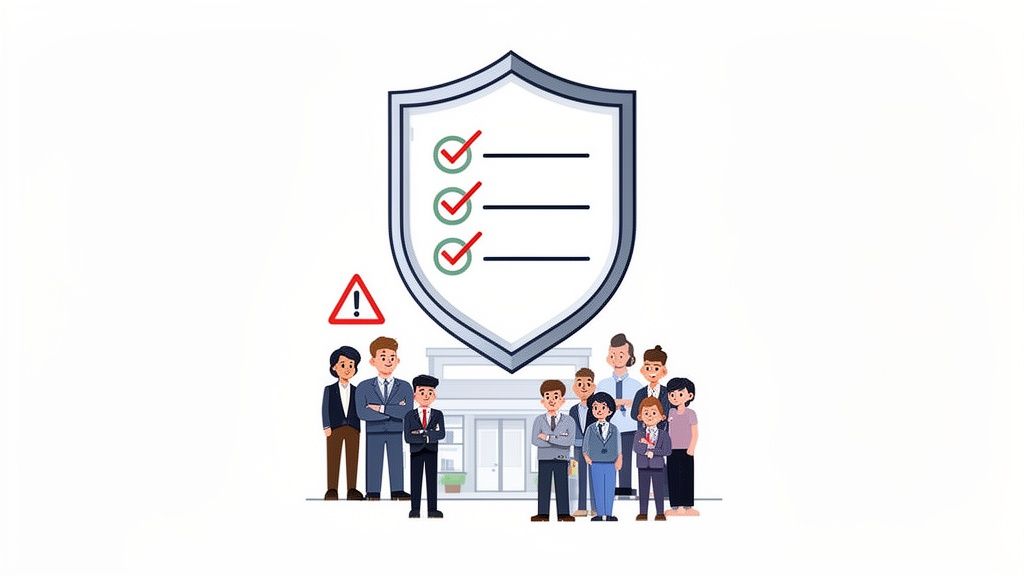
Protecting Your Business and Brand Reputation
One bad hire can have a ripple effect that touches every part of your organization. The fallout can go way beyond a simple mismatch in skills or a poor culture fit. Here’s what’s really at stake:
- Negligent Hiring Claims: If an employee causes harm and a background check could have flagged that risk, your company could be found liable. This is one of the biggest reasons why thorough screening is so important.
- Workplace Safety: For any job that involves working with the public, vulnerable people, or valuable company assets, proper vetting is absolutely essential. It's about keeping everyone safe.
- Brand Damage: An incident involving an employee can blow up into a public relations nightmare overnight, eroding the customer trust you've worked so hard to build.
A well-documented, consistently applied background screening policy is your first line of defense. It proves you've done your due diligence and are committed to creating a secure, professional environment.
Setting the Stage for a Compliant Process
Building a process that’s both effective and legally sound means understanding the key stages. Each one has a specific job to do, protecting both your company and the candidate. For a deeper dive into the specifics, especially in the UK, this guide to UK pre-employment checking is a great resource.
At its heart, any compliant background check process breaks down into three main phases.
- Pre-Check and Consent: This first step is all about compliance. You need to give the candidate clear, written notice about what you're checking and get their explicit permission to move forward.
- Verification and Reporting: This is the fact-finding stage. You, or a background check company, will gather and verify the information—from criminal records to employment dates—and pull it all together into a report.
- Review and Decision: Finally, you'll review the report, measure it against your company's hiring criteria, and make a decision. If you're thinking of not hiring someone based on the report, there are specific legal steps you absolutely must follow.
Navigating Legal Consent and Compliance
Before you even think about running a background check, you have to get the candidate's permission. This isn't just a courtesy; it's a non-negotiable legal step that, if handled incorrectly, can land you in serious legal trouble and derail your entire hiring process.
The foundation of a compliant check rests on two documents: the disclosure and the authorization. They might sound similar, but they do two very different—and equally critical—jobs. Think of the disclosure as the "what and why" and the authorization as the "yes, you can."
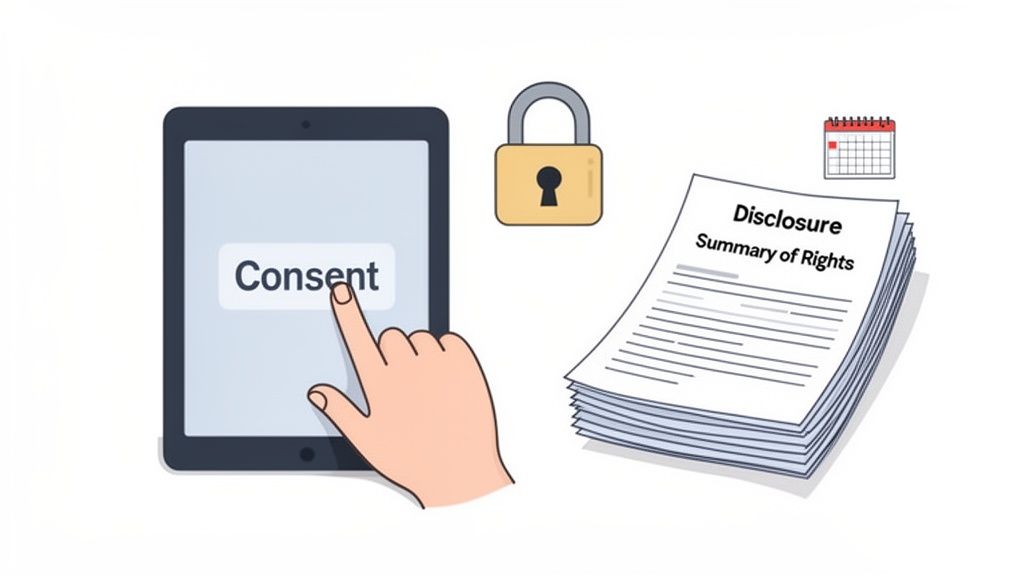
Disclosure vs. Authorization: Getting It Right
Let's clear up the difference. Under the Fair Credit Reporting Act (FCRA) in the U.S., you must provide a clear, standalone document telling the applicant you might use information from a background check for employment decisions. The keyword here is standalone. This document cannot contain any other language or information.
Next up is the authorization. This is the form where the candidate gives you explicit, written permission to actually conduct the check. It's their official green light.
A solid authorization form will typically ask for:
- The candidate's full name, date of birth, and address history.
- Their Social Security Number for accurate identification.
- A clear statement authorizing you (or your third-party vendor) to obtain their records.
A common pitfall I see is companies bundling these two forms or burying the disclosure deep within a lengthy job application. The law is crystal clear: the disclosure has to be separate and easy to spot.
Global and Local Compliance Hurdles
Compliance doesn't stop at the US border. If you're hiring internationally, you're playing by a different set of rules. In Europe, the General Data Protection Regulation (GDPR) sets an incredibly high bar for data privacy and consent. Unlike the FCRA's one-time authorization, GDPR often requires a more specific and ongoing legal basis for processing someone's personal data.
State and even city laws add another layer of complexity. For instance, many states now have "ban the box" laws that restrict when you can even ask about criminal history. To get a better handle on your obligations, it's worth reviewing resources on understanding legal requirements for employee background checks.
To help navigate the complexities of European hiring, our GDPR compliance checklist for employers is a great starting point.
My Pro Tip: Always wait to present the disclosure and authorization forms until after you've made a conditional job offer. This timing helps ensure you're making hiring decisions based on qualifications first, which is a key practice for staying on the right side of anti-discrimination laws.
Navigating the web of background check laws can feel overwhelming. Here’s a quick breakdown of the major regulations you're likely to encounter.
Key Background Check Regulations at a Glance
| Regulation | Key Requirement for Employers | Geographic Scope |
|---|---|---|
| FCRA | Provide a standalone disclosure and get written consent. Follow pre-adverse/adverse action steps. | United States (Federal) |
| RGPD | Establish a clear legal basis for processing data. Uphold data subject rights (e.g., access, erasure). | European Union |
| EEOC Guidance | Ensure screening policies do not have a discriminatory impact on protected classes. | United States (Federal) |
| "Ban the Box" Laws | Prohibit asking about criminal history on initial applications. Timing of inquiries is restricted. | Varies (State/Local in US) |
This table is just a snapshot, so it's always a good idea to consult with legal counsel to ensure your process is fully compliant with all applicable laws in your specific locations.
Creating a Process That Works
Your goal should be to make this legal step as transparent and straightforward for the candidate as possible. A clunky, confusing process doesn't just reflect poorly on your company—it can cause top talent to walk away.
I've found the best approach is to send a secure digital link containing all the necessary forms: the disclosure, the authorization, and a summary of their rights under the FCRA. This creates a clean, easy-to-track audit trail for your records and gives the candidate a much smoother experience.
This focus on compliance is a huge reason why the global background check market is booming. Valued at USD 7.38 billion in 2024, it's projected to hit USD 17.7 billion by 2033. This surge shows just how seriously businesses are taking employee vetting. In fact, 37% of global employers say regulatory compliance is their top reason for screening.
Getting the legal foundation right from the start isn't just about avoiding fines; it’s about protecting your organization and building trust with your future employees.
Choosing the Right Screening Components for Each Role
When it comes to background checks, one size definitely does not fit all. Running the same exhaustive screening on your summer intern as you do on your new CFO is inefficient, expensive, and can even get you into legal hot water.
The secret to a solid, compliant process is simple: match the check to the job. Every screening component you use needs a clear business reason tied directly to that role's responsibilities. For instance, pulling a credit report for a janitorial candidate probably isn't relevant and could be seen as discriminatory. But for a senior finance manager handling company funds? That’s a perfectly reasonable and necessary step.
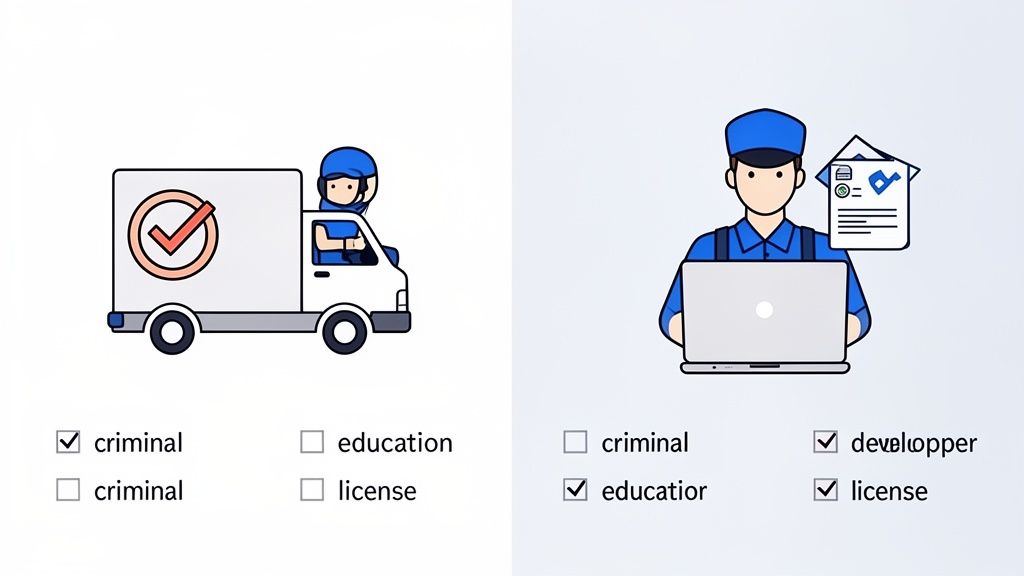
Building Role-Specific Screening Packages
I like to think of background check components as building blocks. For each job description, you pick and choose the right blocks to build a screening package that’s both thorough and relevant. This isn't just about managing risk; it’s about treating your candidates fairly.
Let's walk through the most common building blocks and where they fit best.
Identity and Social Security Number Trace: This is your foundation. It’s the first step to confirm your candidate is who they say they are. It also uncovers previous addresses, which is critical for knowing where to run criminal record searches.
Criminal Record Checks: This one's a staple, but the details matter. A national database search is a good start, but it can have gaps. To be truly comprehensive, you should also run county-level searches in every jurisdiction where the candidate has lived.
Employment Verification: This check confirms job titles and dates of employment from a candidate's work history. It’s a straightforward but surprisingly effective way to catch resume padding. In fact, some studies show that as many as 38% of background check reports turn up discrepancies on resumes.
Education Verification: If a role requires a specific degree or certification, this is non-negotiable. It confirms the school, attendance dates, and degree earned, protecting you from hiring someone who doesn't have the qualifications they claim.
Specialized Checks for Specific Risks
Once you have the basics down, some roles will require a deeper dive due to their unique duties. This is where job relevance is absolutely crucial.
A targeted background check is a fair background check. Your goal isn't to uncover every detail of a person's life, but to verify their fitness for a specific role and its inherent responsibilities. This focus protects both the applicant and the organization.
Think about these specific scenarios:
Motor Vehicle Records (MVR) Check: This is a must for anyone who will be driving for your company, whether it's in a company vehicle or their own. Think delivery drivers, field technicians, or outside sales reps. An MVR check will show you their license status, traffic violations, and any DUIs.
Credit History Report: Use this one sparingly and only for roles with significant financial trust. We're talking about accountants, executives with P&L responsibility, or loan officers. The point isn’t to judge their personal debt but to spot red flags like a pattern of financial mismanagement that could pose a risk in that specific job.
Professional License Verification: You absolutely need this for any position that requires a state or industry license to practice. This includes roles like nurses, lawyers, electricians, and real estate agents. The check confirms the license is active, in good standing, and free of disciplinary actions.
Drug Screening: This is common in industries where safety is everything, like manufacturing, transportation, and healthcare. If you go this route, make sure you have a clear, consistent policy that’s applied to everyone in a safety-sensitive role.
Real-World Application Comparing Two Roles
Let's see how this plays out with a couple of roles at a fictional e-commerce company, "QuickShip."
Scenario 1: The Delivery Driver
For a driver, your background check needs to be laser-focused on safety and reliability, since they're operating your vehicles and representing your brand to customers.
- Essential Checks:
- Identity & SSN Trace
- Nationwide & County Criminal Search
- Motor Vehicle Record (MVR) Check
- Pre-employment Drug Screen
Scenario 2: The Software Developer
For a developer, the priorities shift completely. You’re concerned with verifying their technical skills and protecting your company’s intellectual property. They won’t be driving a company van, so an MVR check is irrelevant.
- Essential Checks:
- Identity & SSN Trace
- Nationwide & County Criminal Search
- Education Verification (to confirm that Computer Science degree)
- Employment Verification (to check their experience with key technologies)
By tailoring the process this way, QuickShip gets the exact information it needs for each hire. This approach is more efficient, saves money, and is far more legally sound than running the same generic check on everyone. It ensures that every piece of information you gather is tied to a legitimate business need.
In-House vs. Third-Party Screening: Who Should Run Your Checks?
Once you know what you need to check for a role, the next big question is who is going to do the digging. This is a classic fork in the road for any hiring team: do you try to handle it all yourself, or do you bring in a professional screening service, often called a Consumer Reporting Agency (CRA)?
On the surface, a DIY approach looks like an easy way to save some cash. But as anyone who's gone down that road can tell you, it's a path loaded with hidden costs and serious legal tripwires. Partnering with a CRA, on the other hand, brings in specialized expertise and a much-needed legal buffer, but you have to find the right one.
The Gritty Reality of In-House Screening
Going it alone means your HR team is on the hook for everything—sourcing public records, pulling court documents, calling up past employers, and verifying every single degree. It’s a ton of manual legwork.
While you get total control, the DIY method is deceptively complicated. The money you think you’re saving gets eaten up fast by the sheer hours your team will spend chasing down information. More importantly, the risk of getting compliance wrong is massive. A simple misstep in following FCRA rules or mishandling someone's data can land you in a world of legal trouble and tarnish your company's reputation.
Why Partnering with a CRA Just Makes Sense
Professional CRAs live and breathe compliant, accurate background screening. They have direct lines into verified databases, finely-tuned processes for verification, and a deep bench of experts who understand the ridiculously complex legal landscape.
Here’s what a good third-party partner brings to the table:
- Compliance Expertise: CRAs are pros when it comes to federal, state, and even local laws. They’re your first line of defense against breaking regulations like the FCRA.
- Better Data, Better Accuracy: They tap into comprehensive databases and resources most companies can't access, which means you get a much more thorough and reliable report.
- Speed and Efficiency: Their whole operation is built for speed. Faster turnarounds are a huge deal when you're trying to lock down a great candidate before a competitor does.
- Lifting the Administrative Load: Outsourcing this frees up your HR team to focus on what they do best—recruiting, interviewing, and building your team—instead of being buried in paperwork.
Partnering with a CRA isn't just about handing off a task; it's about importing expertise and offloading a significant amount of legal risk. A solid partner acts as a compliance shield, protecting you from common but very costly mistakes.
How to Choose the Right Screening Partner
Picking a screening partner is just as critical as picking your next hire. They aren't all the same, and the best fit will depend on your company’s size, industry, and the specific types of checks you need. Before you sign on the dotted line, you need to ask some tough questions.
Your Vetting Checklist for a CRA
- What's your real-world turnaround time? A slow process is a candidate-killer. You need a partner who can consistently deliver reports in just a few business days.
- How do you guarantee your data is accurate? Dig into their methods. Do they rely on a single national database, or do they go the extra mile to check primary sources like county court records?
- Show me your compliance credentials. Are they accredited by the Professional Background Screening Association (PBSA)? How do they prove they're keeping up with constantly changing laws?
- Will your platform play nice with our HR software? A smooth integration between your systems makes the entire workflow, from getting consent to seeing the final report, so much easier.
- What does your support team actually look like? When you have a question about a report or a tricky compliance issue, you need to know you can reach a knowledgeable human being, fast.
- Let's talk pricing. How does it work? Get the full story. Do they charge per report, offer packages, or use a subscription model? Make sure there are absolutely no hidden fees.
Choosing the right partner shifts your background check process from a liability into a strategic advantage for your hiring. While a platform like Superdocu is great for managing the initial steps like collecting consent forms securely, you can also explore specialized document verification software to add another layer of security to your internal processes. In the end, a reliable CRA is your ticket to getting the accurate, compliant information you need to build a team you can trust.
So, the background check report is in. This is where things get serious, and you need to tread carefully. Your next moves aren't just about company policy; they're dictated by some very specific laws designed to keep the hiring process fair for everyone.
It’s tempting to just scan for red flags, but your real job is to interpret the information in its proper context. The best tool for this? A clearly written background check policy. This document is your North Star—it should spell out exactly what might be a dealbreaker and must be applied the same way for every candidate in a similar role. No exceptions.
Evaluating Information the Right Way
Finding a criminal record on a report doesn't automatically mean "no." The U.S. Equal Employment Opportunity Commission (EEOC) actually pushes for what’s called an individualized assessment. Before you jump to any conclusions, you really ought to use the "nature-time-nature" test.
It boils down to asking three simple but crucial questions:
- What was the offense? How serious was it?
- When did it happen? Was it last year or a decade ago?
- What’s the job? Is the offense even remotely related to what they’d be doing every day?
Think about it this way: a DUI from ten years back probably has zero bearing on a graphic designer's ability to do their job. But for a delivery driver? That’s a completely different story. That conviction is suddenly a major, job-related concern. This kind of thinking helps you sidestep snap judgments that could land you in hot water.
The Adverse Action Process Explained
If you look at a report and think you might have to pass on a candidate because of what you found, you have to initiate the formal adverse action process. This is a non-negotiable requirement under the Fair Credit Reporting Act (FCRA), and skipping it can lead to some hefty legal trouble. The process is broken down into two distinct notices you send to the candidate.
A huge mistake I see companies make is rushing this. They either combine the two notices into one or make a final decision right away. The law is clear: you have to give the candidate a real chance to see the report and correct any mistakes before you close the door.
Let’s walk through exactly what you need to do to stay on the right side of the law.
Sending the Pre-Adverse Action Notice
Before making a final call, your first step is to send the candidate a pre-adverse action notice. This is basically a heads-up, letting them know that something in their report is giving you pause.
This notice absolutely must include two things:
- A full copy of the background check report you’re looking at.
- A copy of the document "A Summary of Your Rights Under the Fair Credit Reporting Act."
Once you've sent it, you have to wait. The FCRA doesn't give a hard-and-fast deadline, but the industry standard is at least five business days. This isn't just a formality—it gives the candidate time to spot a potential error and get it fixed with the screening company.
Issuing the Final Adverse Action Notice
Let's say the waiting period passes and you don't hear from the candidate, or their response doesn't change your decision. Now you can make it official. It's time to send the final adverse action notice.
This letter formally tells the candidate your decision and has to include some specific details:
- A clear statement that you've made an adverse decision (i.e., you won't be hiring them).
- The name, address, and phone number of the background check company that provided the report.
- A sentence explaining that the screening company didn't make the hiring decision and can't tell them why it was made.
- A reminder of their right to dispute the report and get another free copy from the screening company within 60 days.
Following this two-step process to the letter is the only way to make sure your hiring decisions are fair, transparent, and legally sound.
Automating Your Process for Better Efficiency
Let’s be honest: manual background checks are a huge time suck. They’re slow, riddled with chances for human error, and can make for a clunky, frustrating first impression on your top candidates. Think about it—a single misplaced form or a delayed email can bring the entire hiring process to a halt. When that happens, your best applicants are left waiting, and they might just take an offer from someone else.
The good news is that modern tools can completely change this dynamic. They get rid of the most tedious administrative headaches. Instead of chasing signatures and manually keying in data, you can build a smooth, automated workflow that hums along in the background. This frees up your HR team to focus on the work that actually matters.
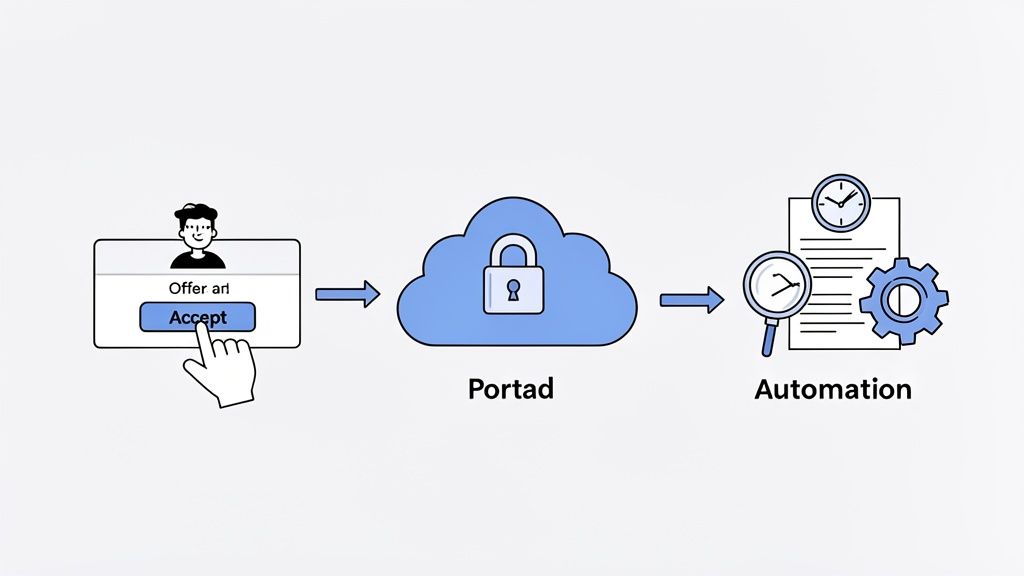
This diagram shows just how simple it can be. What was once a manual, multi-step chore becomes a seamless, automated flow.
Designing a Seamless Automated Workflow
Picture this: a candidate accepts your conditional job offer. That one click can kick off an entire automated sequence.
Right away, an automated request is sent from a branded portal, inviting the candidate to fill out their consent and disclosure forms online. It’s a professional and secure experience right from the get-go.
Once they hit submit, the system can check that all the information is complete and then automatically send the necessary data straight to your third-party screening partner. No more manual data entry, no risk of typos, and a perfect digital audit trail is created every step of the way.
This isn't some futuristic idea; it's a practical must-have for anyone serious about hiring competitively. The push for smarter, faster hiring is undeniable: 48% of employers now rank automation as a top priority. A positive applicant experience is also crucial, with 68% saying it sets the tone for the entire employment journey. Platforms that can automate your document workflow are no longer just a nice-to-have—they're an essential part of a modern background check process.
Secure Document Retention and Data Disposal
Automation also takes the headache out of one of the trickiest parts of background checks: handling sensitive documents securely and in compliance with the law. How long are you supposed to keep those consent forms? When should you get rid of a background check report? Trying to manage this manually is just asking for compliance trouble.
A cloud-based system solves this by keeping all your documents in one secure, access-controlled place. You can set up automated retention and disposal policies that follow legal rules like the FCRA and GDPR.
Here’s a real-world example of how it works:
- Set Retention Periods: You can configure the system to automatically archive documents for the legally required time—say, one year from the hiring decision.
- Automate Disposal: After that period is up, the system flags the documents for secure deletion. This ensures you aren’t holding onto sensitive data longer than you should be.
- Maintain Audit Trails: Every single action, from collection to deletion, is logged. If you ever face an audit, you have a clear, defensible record of your compliance efforts ready to go.
By automating retention and disposal, you shift from a reactive, manual process to a proactive, compliant one. It takes all the guesswork out of data management and builds a stronger foundation of security and trust.
Turning a complex, paper-based process into an efficient, automated workflow doesn't just save time. It creates a better experience for your candidates and strengthens your legal footing.